Art Jurshak Jr.
Blood ShotArt Jurshak Jr. is the withdrawn son of Art Jurshak Sr., an alderman whose political and insurance interests intersect with Nancy Cleghorn’s investigation of a proposed recycling center and the Xerxes plant. At first, the younger Art appears to be an uncertain acquaintance of Nancy’s and an elusive subject of V. I. Warshawski’s inquiries. His return to Vic with information about his father’s threats changes that impression: his reticence is entangled with a family conflict and with documents Nancy had been trying to understand.
Identity and First Appearances
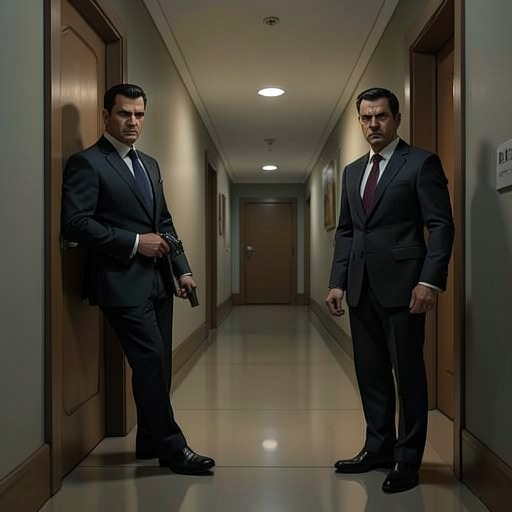
Vic first recognizes Art Jr. at a Methodist church service for Nancy. He is a thin young man with an angular outline and carefully formed features, and he sits toward the back after looking around uncertainly. His self-effacing manner recalls an earlier sighting at the ward office, where he had seemed uncomfortable among the older political regulars. The resemblance between the two moments establishes a pattern: he is present around his father’s institutions, but does not appear at ease within them.
When Vic introduces herself and identifies him as Art Jurshak’s son, his face turns so pale that she worries he may faint. He says he knew Nancy only slightly. Vic has reason to question the distance implied by that answer: Nancy’s funeral has brought him there, and his reaction is intense. Still, the scene does not establish the nature of their relationship. Vic suspects he may have been Nancy’s lover, but suspicion is not confirmation, and Art does not disclose such a relationship in their early conversations.
At the Ward Office
The setting around Art Jr. makes his dependence on his father’s political world visible. The ward office occupies a brick two-flat on Avenue M in East Side. Its exterior still bears the sign identifying Art Jurshak as alderman, while the storefront next door houses the insurance agency that helped establish his foothold in the community. Inside, older men lounge among the furnishings, embodying a local political network that Vic remembers from childhood.
Art Jr. enters this room diffidently and asks whether his father has left anything for him. The question is small, but Vic notices his exposed desire for acceptance from the men waiting there. They watch him without welcoming him; one simply directs him toward Vic. This encounter places him inside a structure dominated by his father without showing him exercising any authority of his own. The contrast is pointed: Art Sr.’s name occupies the building’s exterior, while his son seems to be waiting for recognition from the people within.
That political setting matters to Nancy’s work, though the evidence does not show Art Jr. directing the opposition to SCRAP. Nancy had been denied a hearing on the proposed recycling center despite her claim that the community supported it; she was told that some people opposed the plan. Caroline Djiak connects the decision to the zoning chairman’s political ties to old ward politicians. The office and its adjoining insurance business therefore form part of the world around the dispute, not proof that the younger Art himself arranged the obstruction.
Nancy’s Papers and the Insurance Connection
After reviewing Nancy’s files, Vic finds a photocopy of a 1963 letter to Mariners Rest Life Assurance Company. It states that Jurshak & Parma had become fiduciaries for Humboldt Chemical’s Xerxes plant; an attached actuarial study compares Xerxes’s losses with those of similar companies and requests comparable rate consideration. The document looks routine to Vic, but its age and its lack of an obvious connection to Nancy’s environmental work make its presence among her papers troubling.
The paper gives Vic a reason to approach Art Jr. at home. His family’s house, at 115th and Avenue G, is a new brick building behind a high fence and an electronic gate. When Vic asks about his father’s interest in SCRAP’s recycling plant and his dealings with Nancy, Art grips his desk and denies knowing anything useful. He says he hardly knew Nancy and does not know what his father is doing about the plant. His distress is evident, but he still offers no explanation for the insurance document or its significance.
The larger financial context emerges when Vic obtains the directors’ list for Ironworkers Savings & Loan. It has thirteen names, including Gustav Humboldt, who has remained on the board since joining in the 1940s and, according to Vic’s informant, has missed only eight meetings in fifteen years. Vic suspects that a problem with insurance for the Xerxes workforce is being kept from public view. The list and the 1963 letter sharpen the stakes, but they do not, by themselves, establish what Art Jr. knows or what role he has played.
Hiding and Disclosure
Art Jr. eventually appears at Vic’s apartment in visible turmoil, his usual composure displaced by a flushed face, disordered hair, and restless hands. He explains that he has been hiding at Nancy’s house. After spending Monday night in his car, he took refuge there because he believed the house had already been searched and would not attract further attention. The house had indeed been ransacked, and his decision to stay there places him close to the investigation, though it does not explain his earlier silence.
His reason for coming to Vic is his father’s response to her inquiries. Art Jr. says he called his mother, who told him that Art Sr. had found Vic’s card and reacted with fury, threatening him if he betrayed his father again. He comes to Vic to find out what she knows and ask for help. The disclosure recasts his earlier evasions: he is not simply withholding information from an investigator but is also responding to an explicit threat from the powerful parent whose name and business lead through the case.
Pressed about the Xerxes insurance, Art Jr. asks how Vic obtained the papers. His question confirms that the documents have meaning for him, even though the evidence does not supply a full account of what he knows about the insurance arrangements. His arrival thus moves the investigation forward without making him an all-knowing guide: he opens a path into his father’s affairs while remaining frightened and uncertain.
Family Connections and Narrative Role
A further family detail emerges when Vic asks about Art Jr.’s mother’s maiden name. He says it was Kludka, and explains that his father’s sister married Ed Djiak. That aunt and Ed moved to Canada before Art Jr. was born; he has never met them and learned of the connection through a letter after joining the agency. He says his father told him the siblings had not got along and that his aunt had severed contact.
The information jolts Vic because Art Jr.’s strong resemblance to Caroline Djiak recalls the earlier history of Caroline’s mother, Louisa Djiak, and the Djiak family’s silence about Louisa’s abuse. The recognition belongs to Vic, not to a revelation Art Jr. himself makes: his account of the family link, together with his appearance, helps her connect the generations and understand Caroline’s parentage. In this way, Art Jr.’s role in the investigation expands beyond the insurance papers. His guarded presence at the edge of his father’s political world becomes a route to both the corporate mystery and a family secret, while the evidence leaves his own knowledge, agency, and future unresolved.