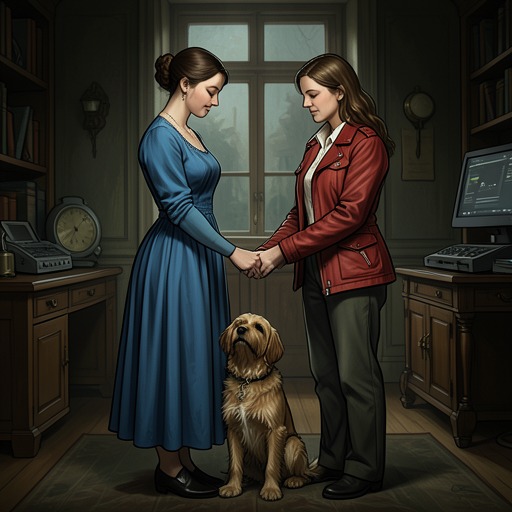
Lotty Herschel’s apartment
Blood ShotLotty Herschel’s apartment is both a refuge for V. I. Warshawski after physical danger and a setting where care, investigative work, and painful disclosures meet. Its spare bed and sitting room offer shelter, while the records brought into its domestic space connect private suffering to the industrial illnesses under investigation.
A refuge under strain
After a physical ordeal, Warshawski waits in Lotty’s sitting room, restless despite Lotty’s efforts to get her to sleep in the spare bed. Lotty prepares hot milk with brandy and, when persuasion fails, leaves her alone. The care is not effortless: Lotty is angry and afraid that Warshawski will expose herself to further danger and die. Her warning that the body repairs itself more slowly with age makes the apartment a place where physical vulnerability cannot be brushed aside, even as Warshawski is too fragmented to respond.
The scene makes refuge emotionally complicated. Lotty’s concern is intimate, but it does not dissolve Warshawski’s impulse to keep moving; she understands that Lotty is afraid of losing her and still cannot resolve the conflict that night. The apartment offers shelter without pretending that shelter can settle the dangers waiting outside it.
A domestic base for the investigation
The apartment also accommodates the handling of evidence. After consulting nephrologist Dr. Christophersen, Lotty brings home photocopied pages summarizing a specialist’s interpretation of the medical records in Curtis Chigwell’s notebooks. The notebooks themselves have been locked in Max Loewenthal’s safe at Beth Israel Hospital because Lotty considers them too frightening to leave where anyone in the streets could get hold of them. At the apartment, Warshawski can examine the summary while Lotty explains what the records may establish.
The summary identifies blood histories for Louisa Djiak and Steve Ferraro, alongside records for approximately five hundred other employees at Humboldt Chemical’s Xerxes plant, covering 1955 to 1982. Changes in several blood measures were consistent with renal, liver, and bone marrow dysfunction. Louisa’s history records that she first saw her physician in 1984, at her daughter’s insistence, when she was diagnosed with chronic renal failure that later progressed to an acute stage. In this way, the apartment becomes a point of contact between a specialist’s medical interpretation and the investigation’s effort to understand harm across a workforce.
Return and care
After another night of danger, Warshawski returns to find Lotty in the sitting room, still wearing the dark skirt and sweater she had put on for the hospital seven hours earlier. Lotty has been pretending to read The Guardian, but puts it down as soon as Warshawski appears. She bathes Warshawski’s face, gives her hot milk, and listens as the account unfolds, including the strange trip up the river and the courage of a Chigwell confronting the consequences of medical betrayal.
The spare room again marks the apartment as a place to recover, but the return also brings the investigation’s family history close to the surface. As Lotty leads Warshawski toward the room, Warshawski recalls that Louisa woke and mistook her for Gabriella Warshawski, and voices her dread of returning to South Chicago to clean up after the Djiaks as her mother once did. The apartment cannot erase that history; it gives Warshawski a place where she can say what the ordeal has brought back and be cared for afterward.