Searching for one’s origins and family secrets
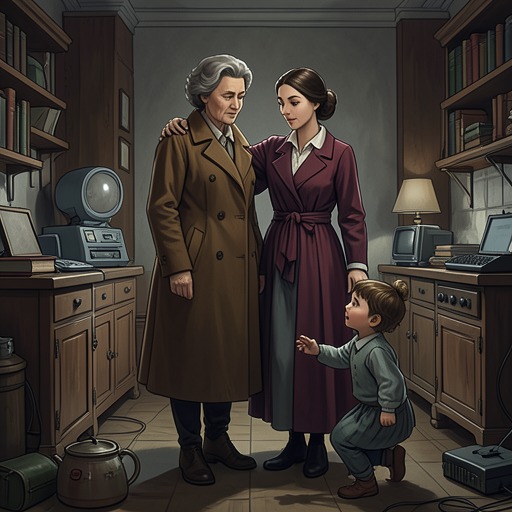
Blood ShotSearching for one’s origins and family secrets is the conflict that brings Caroline Djiak to V. I. Warshawski and forces Louisa Djiak’s buried past into the open. Caroline wants to know who her father was not simply to complete a family tree, but because her mother is dying and she fears being left without family; Louisa, by contrast, sees the inquiry as a threat to the life she has tried to secure for her daughter. The search makes identity inseparable from grief, shame, protection, and the question of who has the right to tell a family’s history.
Identity, Belonging, and the Search
Caroline asks V. I. Warshawski to find her father, whose identity she does not know. She explains that Louisa is likely to die soon and that her maternal relatives have treated her differently from her cousins. The possibility of finding her father’s family offers a chance of belonging, though Caroline recognizes that the result may disappoint her. She allows that her father might be someone she would not want to know; even so, she would rather learn the truth than remain uncertain.
The search is therefore bound to a particular moment of loss. Caroline is not pursuing an abstract account of ancestry: she is trying to understand what family might remain when Louisa is gone. Her request makes the absent father significant both as an unknown person and as the missing link in a family story that has shaped her sense of being treated as an outsider. The possibility of a paternal connection is uncertain, but the need that drives her is immediate.
Louisa’s Silence and Protective Purpose
Caroline has already raised the subject with Louisa. The conversation left Louisa profoundly upset, and Caroline concluded that she could not continue asking her mother directly. That response does not make the question disappear; instead, it shifts the search beyond the relationship in which the secret is most painful. Caroline turns to V. I. Warshawski because she believes an investigator can pursue what her mother will not discuss.
Louisa’s resistance has both an emotional and a protective dimension. When V. I. Warshawski visits her, Louisa recognizes that Caroline has sought help and objects to the investigation. She describes the man from her past as someone who tried to ruin her life and insists that she does not want Caroline near him. She also says that she loves Caroline and has worked to give her daughter a different chance from the one she had. Her opposition is thus not presented as simple indifference to Caroline’s needs: Louisa believes that withholding the past can keep her daughter safe.
At the same time, Louisa’s protection denies Caroline the choice she is asking to make. V. I. Warshawski presses this difference, arguing that Caroline is grown and should be allowed to decide whether to pursue the truth. The conflict is not resolved merely by recognizing Louisa’s love. Her care and Caroline’s need for knowledge coexist, but they lead mother and daughter toward opposite decisions about what should be said.
Family Shame and Competing Accounts
The family’s response places Caroline’s curiosity inside a wider history of stigma. When V. I. Warshawski explains that Caroline is lonely and wants to know who her father was, a woman in the family treats the absence of a father as a source of shame and condemns Caroline for asking about it. V. I. Warshawski challenges that judgment by pointing to Louisa’s age: she was fifteen when she became pregnant. The exchange redirects attention from blaming Louisa and Caroline to the responsibility of the man involved, a responsibility the family’s account has minimized.
Louisa’s history also includes being expelled from her parents’ home after becoming pregnant. She tells V. I. Warshawski that Gabriella Warshawski did not conceal her disapproval of Louisa’s parents for kicking her out. That earlier act of rejection helps explain why Caroline’s inquiry reaches beyond a single unanswered question: the concealed history is connected to the family’s treatment of Louisa and to the unequal belonging Caroline describes among her cousins. The evidence establishes the expulsion and the family’s conflicting reactions, while leaving the father’s identity undisclosed in these encounters.
Narrative Significance
The search places two claims to family truth in direct tension. For Caroline, knowledge may offer connection or at least an end to uncertainty; for Louisa, disclosure risks bringing a damaging figure from the past into her daughter’s life. Neither position erases the other. The story gives the secret weight through the consequences of silence: Caroline cannot continue asking her mother, Louisa’s earlier exclusion remains part of the family history, and V. I. Warshawski must decide whether helping Caroline means pursuing a question Louisa wants closed.
The contrast between protection and autonomy is central to the concept. Louisa’s wish to spare Caroline harm grows from what Louisa herself endured, yet her effort to control the past also withholds information Caroline regards as necessary to understand her place in the family. The inquiry therefore concerns more than uncovering a name. It asks whether love can justify keeping a daughter ignorant, and whether a painful history belongs only to the person who first suffered it or also to the child whose identity has been shaped by its silence.