Xerxes’ toxic working conditions
Blood ShotXerxes’ toxic working conditions are defined by a widening gap between the industrial routine of making Xerxine and the long-delayed evidence of harm to workers. The novel traces that gap from early production, when the risks of airborne residues were not understood and exposure controls were inadequate, to later standards and medical records that documented patterns of disease. Yet recognition did not itself settle responsibility: workers’ illnesses entered a legal system in which causation was contested and other possible explanations were used against their claims.
Production and the changing standard
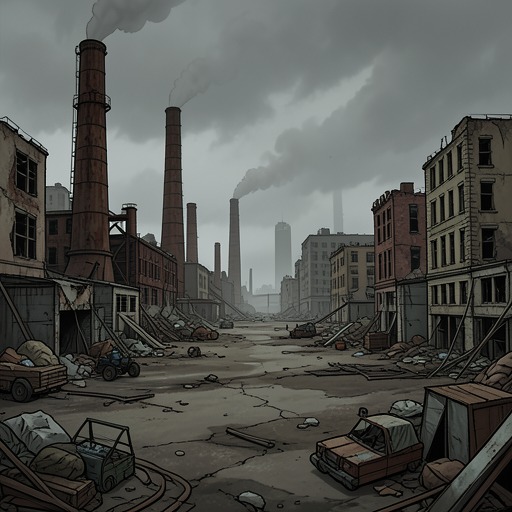
Xerxine was a chlorinated-hydrocarbon solvent made by adding chlorine to ethylene gas. Its uses included cleaning oil from sheet metal and removing paint. During manufacture, however, vapors could escape into the air. When Humboldt Chemical began making Xerxine in the 1950s, the dangers of the substance were not widely understood. The account distinguishes that lack of knowledge from deliberate intent to harm employees, while also making clear that the plant did not carefully control how much vapor reached the air.
Awareness of industrial pollution and worker health grew during the 1960s and 1970s. Researchers, including Irving Selikoff, investigated occupational hazards and found that chemicals such as Xerxine could be toxic at relatively low concentrations. Xerxes responded by installing air scrubbers and sealing its pipes more effectively. By the late 1970s, when the U.S. Environmental Protection Agency issued a Xerxine standard of 50 parts per million, the plant had brought its reported airborne concentration down to federal limits. The later controls mark a change in industrial practice, but they do not resolve what workers had inhaled before those controls were in place.
Workers and contested compensation
Pankowski and Steve Ferraro had both worked at Humboldt Chemical for many years: Ferraro since 1959 and Pankowski since 1961. They came to a lawyer in early 1983, seriously ill, and had left work roughly two years earlier when their health no longer allowed them to continue. Ferraro had liver cancer; Pankowski had aplastic anemia. Because they had stopped working before seeking help, they could not collect disability through the route described in the case, and the lawyer suspected they might not have been told that the option existed.
The company resisted their claim, so the workers sued. The case turned on the difficulty of separating occupational exposure from the conditions surrounding the men’s lives. Both smoked; Pankowski drank heavily; and both had lived in South Chicago, where the general air was also polluted. Humboldt argued that the evidence could not show that Xerxine, rather than smoking or pollution more broadly, had caused their illnesses. It also argued that the men had worked at the plant before the hazards were known, and that the company had operated according to the medical knowledge available at the time. The workers lost. An appellate lawyer saw no viable basis for continuing the case, and the claim appeared to be over.
Medical records and the longer history
Later review of Chigwell’s notebooks gave the issue a broader and more precise evidentiary frame. The records covered approximately 500 Xerxes employees from 1955 to 1982. For Louisa Djiak, they included blood data from 1963 to 1982; for Steve Ferraro, from 1957 to 1982. Changes in measures including creatinine, blood urea nitrogen, bilirubin, hematocrit, hemoglobin, and white blood cell count were described as consistent with renal, liver, and bone-marrow dysfunction. A specialist’s review connected those changes with the toxic properties of Xerxine, while presenting them as evidence consistent with exposure rather than a simple, final proof of the cause of every illness.
Louisa’s records made the delay especially stark. The analysis identified noticeable renal damage by 1967 and severe damage by 1969. She began experiencing diffuse symptoms, including itching, fatigue, and headaches, around 1979, but attributed them to menopause and did not seek medical care then. She first saw a physician in 1984, at her daughter’s insistence, and was diagnosed with chronic renal failure that had since become acute. Other complications made her a poor candidate for a transplant. Ferraro’s records likewise extended across decades and ended with his death from aplastic anemia in 1983. These histories place measurable changes well before formal diagnosis, turning the employment records into a record of illness unfolding over time.
Community stakes and narrative significance
The plant’s hazards belong to a wider landscape of industrial decline and pollution in South Chicago. On a February drive south along Route 41, the air carried a pungent chemical smell even as the South Works was on strike and Wisconsin Steel stood padlocked and rusting. The contrast between shuttered industry and continuing pollution makes the costs of the industrial past visible without reducing them to a single workplace or a single lawsuit. The evidence about Xerxine gives that landscape a specific occupational dimension: health effects could emerge gradually, while the affected workers faced uncertainty about both diagnosis and remedy.
Community efforts to address industrial waste also show that pollution was a question of local power, not only scientific measurement. Caroline Djiak described a proposed solvent-recycling plant with funding, a site, and specifications that had passed the tests she had considered; she said it could create about a hundred jobs and reduce waste going into the ground. The proposal was denied a hearing after officials claimed it lacked full community backing, despite Nancy Cleghorn’s account that the community supported it. Separately, Caroline and Nancy had testified that they received death threats for opposing Steve Dresberg’s proposed PCB incinerator. These disputes place environmental action amid procedural obstruction and intimidation, as well as the health consequences of existing industry.
The account’s central tension is between delayed bodily evidence and institutions that demand a clear, attributable cause. Xerxes adopted controls when scientific understanding and regulation changed, but the workers’ earlier exposure remained difficult to establish in court, particularly against competing explanations such as smoking and regional air pollution. Long-running records and later medical interpretation make the harm legible across decades; they also show why recognition arrived unevenly. The working conditions are therefore not only a story of hazardous production, but of how slowly exposure becomes evidence, and how hard it can be for workers and communities to convert that evidence into protection or redress.