
The Julia Roof Pursuit
BloodhoundsThis flow traces Julie Hargreaves’s increasingly independent investigative work and her decisive confrontation with Gilbert Jones.
increasing Bearing strength in each event
 decreasing
Bearing strength in each eventdecreasingDiamond’s Essential Detective
Diamond’s Essential Detective
A valued colleague
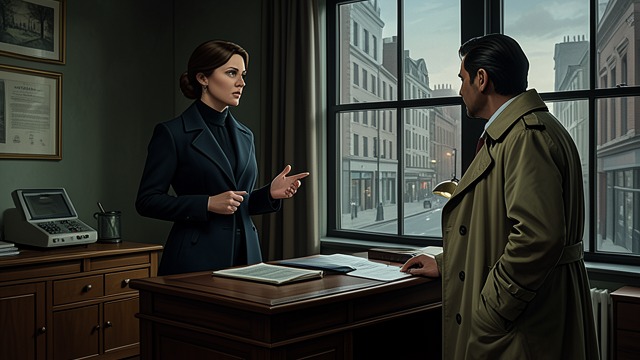
Julie Hargreaves is Diamond’s most capable detective and is seconded to Wigfull’s gallery operation. Diamond resents losing her but recognizes her professional skill.
A role beyond support
Julie helps question witnesses and notices the significance of the Bloodhounds’ shared knowledge. She is willing to challenge Diamond when his temper or assumptions restrict the inquiry.
Her importance develops through practical judgment rather than formal authority. She becomes the person most able to redirect Diamond when he is stuck.
The Autopsy Assignment

The Autopsy Assignment
An order disguised as a request
Diamond assigns Julie to attend Sid’s postmortem because he cannot bear the procedure himself. She accepts without exposing his weakness.
A candid rebuke
On the walk to Sid’s flat, Julie tells Diamond that he was domineering in the briefing and discourages his officers from contributing. Diamond admits that leading a room full of people makes him anxious.
The exchange deepens their working relationship. Julie is not merely a subordinate who follows instructions; she can name a flaw Diamond cannot easily see in himself.
The Alternative Approach
The Alternative Approach
Julie resists the puzzle trap
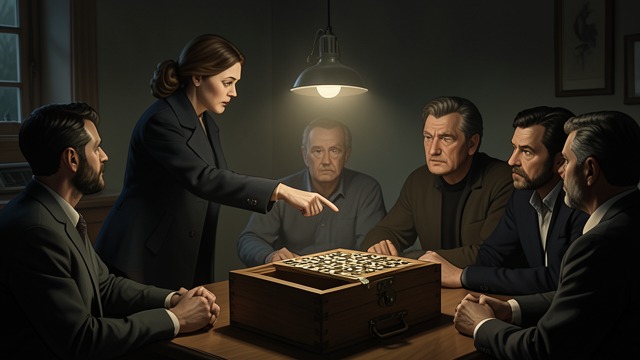
Julie argues that the investigators should interview the suspects rather than obsess over how the boat was entered. She reasons that the stamp planter and the killer are likely the same person.
Diamond finds a new question
Her challenge helps Diamond consider Sid as the stamp thief and ask why he went to the boatyard. That question leads him toward the possibility that Sid came to inspect the apparent puzzle.
Julie’s contribution is intellectual as well as practical. She alters the direction of the investigation by making Diamond test motives and relationships instead of treating the locked room as an isolated trick.
The Paint on Marlowe
The Paint on Marlowe
Attention to an overlooked detail
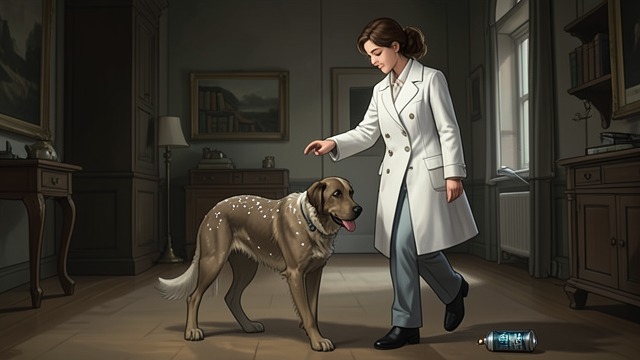
Julie notices white flecks on Marlowe’s coat while walking him before an interview. She recognizes them as spray paint and realizes that the dog, like Rupert’s beret, may have been exposed to paint before the gallery party.
A theory reopened
She immediately calls Diamond and explains that the paint may not link Rupert to the gallery graffiti. Her observation undermines a seemingly strong piece of evidence.
Julie’s care for the dog becomes an investigative advantage, but her call also shows that she is willing to interrupt routine when a detail matters. Diamond finally listens without dismissing her concern.
The Rooftop Arrest
The Rooftop Arrest
A risky interview
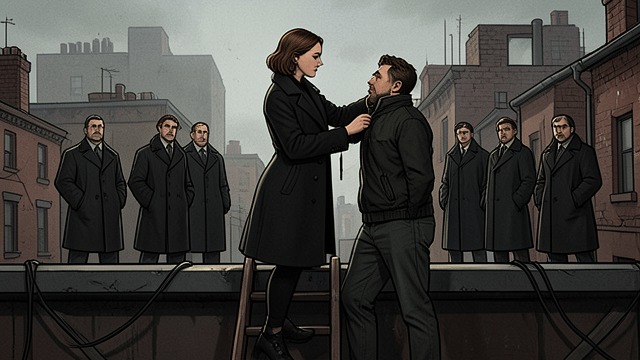
Julie goes to question Bert Jones at the Sports Center. When his answers about work records make her suspicious, he bolts up a fire escape and runs across the roof.
The investigator takes control
After more than an hour on the roof, Julie has Jones secured in an effective hold. Diamond’s search party arrives expecting to rescue her, only to learn she has already made the arrest.
The episode resolves her trajectory from capable colleague to independent investigator. Diamond’s fear for her safety exposes his dependence, while her competence confirms that she does not need him to finish the crucial task.
During the first investigation of the stamp threat
The day after Sid’s murder
After the padlock explanation seems to solve the locked room
During Julie’s visit to the Sports and Leisure Centre
Near the novel’s ending, during the Sports Center evacuation
