
Rupert Darby’s Last Act
BloodhoundsThis flow follows Rupert from disruptive outsider to apparent suspect and finally to a victim framed through paint, riddles, and a staged hanging.
increasing Bearing strength in each event
 decreasing
Bearing strength in each eventdecreasingThe Unruly Arrival
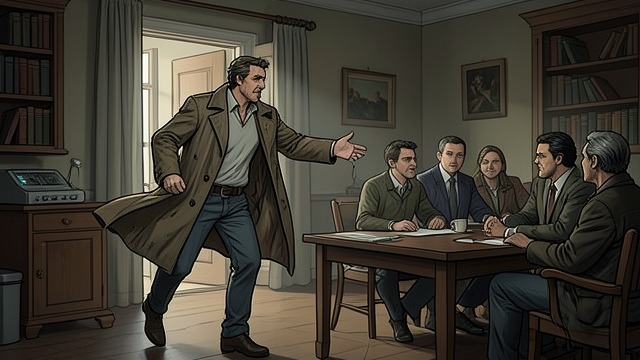
The Unruly Arrival
A noisy entrance
Rupert arrives late with Marlowe, whose shaking coat disrupts the meeting. Rupert refuses to apologize in the manner Miss Chilmark expects and challenges the club’s tastes.
A deliberate outsider
He mocks puzzle mysteries and insists that crime fiction should confront violence and social misery. His manner provokes arguments but also keeps the group from becoming complacent.
Rupert’s abrasiveness makes him easy to dislike and easy to suspect. His theatrical appearance becomes a tool others can exploit when they need a visible culprit.
The Life of the Barfly
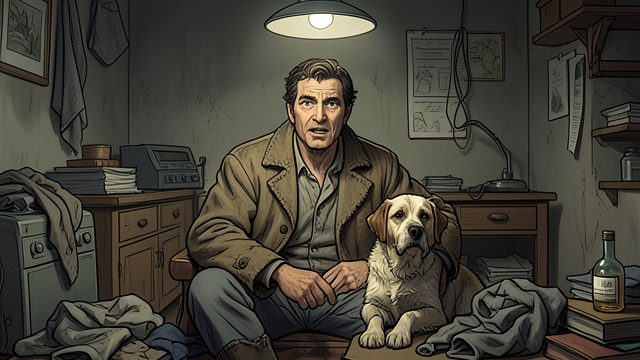
The Life of the Barfly
A shabby domestic world
Diamond finds Rupert in a disordered house with a hungry dog, old clothes, and little evidence of conventional stability. Rupert’s public-school accent contrasts with his rough surroundings.
Candor as performance
Rupert speaks openly about his criminal record, his drinking, and his arguments with the Bloodhounds. His willingness to shock makes him seem less vulnerable to blackmail than the police first imagine.
His social image is both genuine and cultivated. The same irreverence that makes him memorable later makes it easy for Jones to select him as a stranger whose identity can be manipulated.
A Beret Marked White
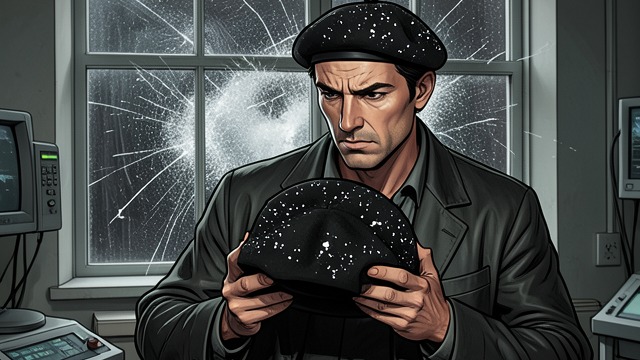
A Beret Marked White
Paint appears on the hat
Rupert is seen with white flecks on his black beret after the gallery window is sprayed. Shirley-Ann remembers the marks as possible paint, and police connect them with the accusation against Jessica.
Suspicion settles
The evidence seems to show that Rupert wrote the message and may have been trying to redirect blame. His distinctive beret makes the inference unusually tempting.
The apparent clue becomes part of a trap. The paint had been placed on Rupert earlier, and its presence says less about his actions than investigators initially believe.
A Hanging in Sydney
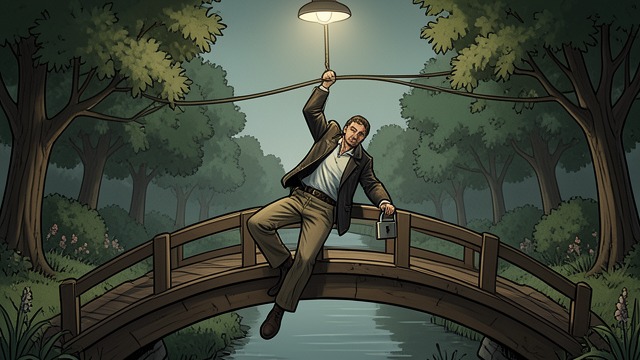
A Hanging in Sydney
The body found
A jogger discovers Rupert hanging from a bridge in Sydney Gardens. His death resembles the event described by the third riddle, and a padlock is found among his possessions.
Suicide becomes an easy story
Wigfull interprets the death as a desperate suicide by a guilty man. Diamond is uneasy: the riddle may have announced the murder rather than predicted a voluntary death.
The setting transforms Rupert into the apparent ending of the case. His death appears to close the story, which is exactly why Diamond suspects that someone chose it as a means of controlling the investigation.
A Victim Framed
A Victim Framed
A stranger selected
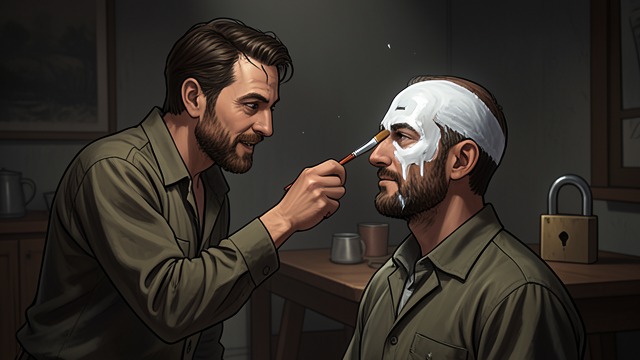
Gilbert Jones admits that he marked Rupert with paint and chose him as the person to blame. Rupert was a stranger to Jones, which made him useful for a frame-up.
Death made into an answer
Jones and Jessica arranged Rupert’s hanging and used the third riddle to make it appear that Rupert had predicted his own end. The murder was intended to divert police attention from Jones.
Rupert’s death exposes the cost of treating a convincing narrative as truth. His life of provocation made the false story seem plausible, but it did not make him responsible for the crimes.
The first Bloodhounds meeting Shirley-Ann attends
During Diamond’s first interview at Hay Hill
The evening of the gallery preview
The morning after the third riddle arrives
Near the ending, when Jones explains the staged hanging
