
Jessica, Barnaby, and A.J.
BloodhoundsThis flow traces the unusual triangle of marriage, friendship, financial support, and complicity that surrounds the gallery and the crimes.
increasing Bearing strength in each event
 decreasing
Bearing strength in each eventdecreasingA Gallery Partnership

A Gallery Partnership
Jessica’s working world
Jessica manages the Walsingham Gallery and presents herself as confident, knowledgeable, and independent. A.J. helps at the gallery and teases visitors while supporting its daily work.
A relationship hard to classify
Shirley-Ann initially suspects that A.J. is Jessica’s lover, but the evidence is ambiguous. Jessica is married to Barnaby, who is less involved in the gallery’s daily operation.
The uncertainty matters because personal ties may offer motives as well as alibis. The gallery is both Jessica’s livelihood and a place where several relationships overlap.
A Husband’s Trust

A Husband’s Trust
Barnaby’s support
Barnaby finances the gallery’s private view and remains on friendly terms with A.J. He does not behave like a husband who feels threatened by the other man’s closeness to Jessica.
Intellectual intimacy
Barnaby explains that Jessica and A.J. share an intense, nonsexual form of intellectual play. He believes Jessica is faithful, even though she spends substantial time with A.J.
His account complicates Shirley-Ann’s assumptions about affairs and jealousy. The household’s emotional arrangement is unusual, but its unusual nature does not itself establish a crime.
Money Behind the Gallery

Money Behind the Gallery
A private income revealed
Barnaby explains that A.J. has a large stake in the gallery and helps meet its substantial overheads. The support is not funded only through A.J.’s art sales.
Suspicion shifts
Diamond realizes that A.J.’s money may come from the payments Miss Chilmark has been making to the man she believes is her son. The gallery’s survival may therefore depend on an exploited woman’s resources.
The connection turns a confusing friendship into a material part of the crime’s motive. The relationships remain emotionally complex, but financial dependence makes the partnership consequential.
Jessica’s Concealment
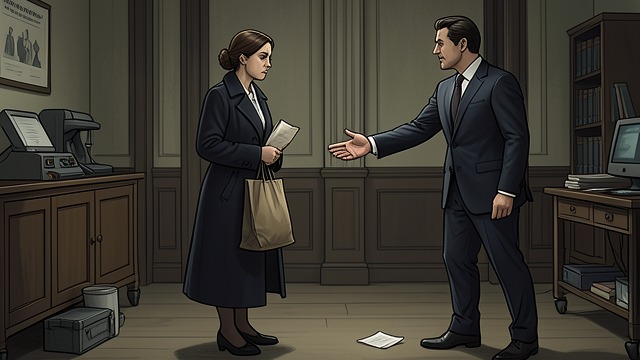
Jessica’s Concealment
Evidence redirected
Diamond tells Jessica that the paper bag’s rhyming lists may have been written by her and used to make police suspect Sid. She has withheld the fact that she wrote them.
A.J. enters the question
When Diamond suggests she may be shielding A.J., Jessica reacts strongly. Her actions may not make her the original thief, but they point to a personal reason for misleading investigators.
Her loyalty becomes an active force in the inquiry. Protecting someone she cares about places her in danger of becoming an accomplice to a cover-up.
Friendship Turned Complicity

Friendship Turned Complicity
A cover-up joins the crimes
Jessica helps redirect suspicion from A.J. and participates in the later plan to frame Rupert. Her relationship with A.J. moves beyond gallery partnership and intellectual play into criminal complicity.
Consequences for the household
Barnaby’s generosity and trust cannot protect Jessica from the consequences of her choices. The gallery’s financial support and the private arrangement among the three adults are implicated in a scheme that becomes lethal.
The emotional triangle is neither a simple love affair nor a harmless eccentricity. It shows how loyalty, money, and a desire to protect another person can draw someone into violence.
When Shirley-Ann first visits the Walsingham Gallery
At Jessica’s gallery preview
During Diamond’s interview with Barnaby
During Jessica’s questioning at the police station
Near the ending, after Jones’s scheme is reconstructed
