
Chilmark and Rupert: From Feud to Regret
BloodhoundsThis flow traces Miss Chilmark’s hostility toward Rupert, the conflict magnified by Marlowe, and the grief that makes her reconsider her judgments after his death.
increasing Bearing strength in each event
 decreasing
Bearing strength in each eventdecreasingAn Old-Fashioned Antagonism
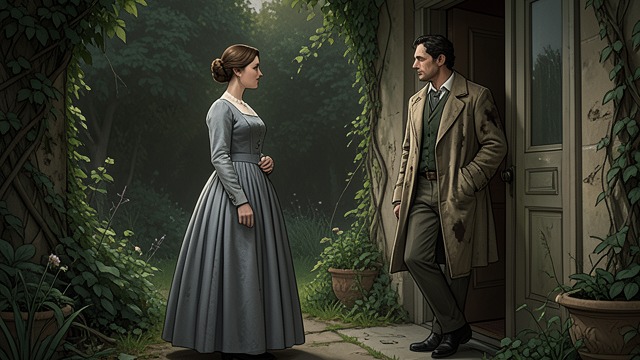
An Old-Fashioned Antagonism
A clash of manners
Miss Chilmark values decorum and social standing, while Rupert delights in provocation and public-house irreverence. Their exchanges reveal longstanding irritation rather than a single disagreement.
A neighborly edge
The two live near each other, yet Miss Chilmark refuses to visit Rupert’s disordered home. She interprets his appearance and reading choices as evidence of moral failure.
Their conflict is shaped by class judgment and personal dislike. The differences that make them entertaining opponents also encourage the group to underestimate what either might conceal.
Marlowe as the Flashpoint
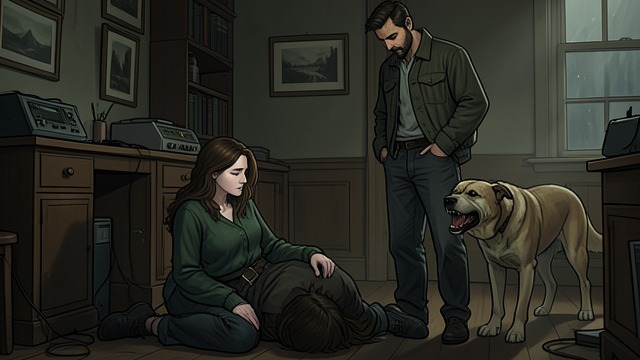
Marlowe as the Flashpoint
Fear and accusation
Marlowe jumps onto Miss Chilmark, who panics and hyperventilates. She insists that Rupert’s dog is dangerous and that Rupert deliberately distresses her.
The room divides
Jessica treats Miss Chilmark’s symptoms, while Rupert defends the dog and resents being ordered to remove him. Polly tries to restore the meeting without fully resolving the dispute.
The incident magnifies the conflict because each person reads the same event through existing assumptions. For Miss Chilmark it confirms persecution; for Rupert it confirms that the group is intolerant of the dog.
Rupert Made a Suspect
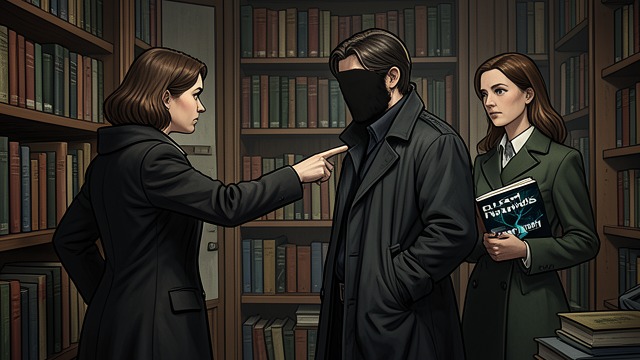
Rupert Made a Suspect
A ready accusation
Miss Chilmark tells Shirley-Ann that Rupert is the person she suspects. She uses his behavior, appearance, and taste for violent books to support her judgment.
Shirley-Ann pushes back
Shirley-Ann rejects the idea that a person’s reading or appearance proves criminality. Miss Chilmark then offers a more plausible possibility: Sid may have discovered something compromising about someone at the club.
The exchange shows how animosity can distort reasoning even when a person occasionally reaches a sound observation. Rupert’s reputation makes him an easy target long before the evidence is properly evaluated.
An Unexpected Softening
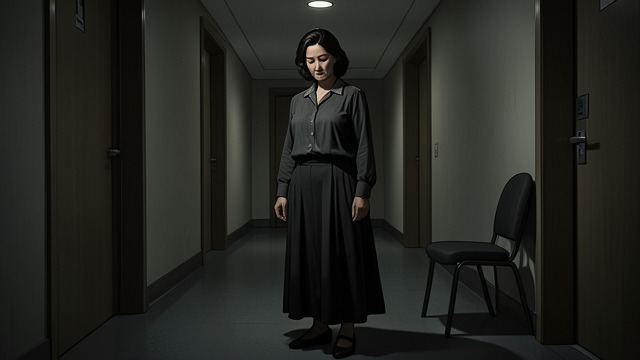
An Unexpected Softening
Grief revises memory
When Diamond finds Miss Chilmark at the hotel, she admits that she is trying to take a more charitable view of Rupert. She recognizes that some incidents may have been negligence rather than deliberate persecution.
Hostility loses its certainty
Rupert’s death does not make Miss Chilmark his friend, but it unsettles her confident account of his motives. She can no longer assume that every humiliation was planned.
The shift is small but meaningful. An enemy’s absence makes room for reconsideration, and Miss Chilmark’s change in tone exposes the human cost of allowing prejudice to harden into certainty.
The Neighbor Left Behind
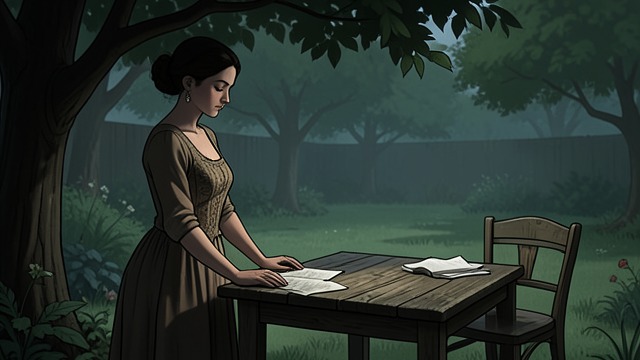
The Neighbor Left Behind
A changed perspective
Miss Chilmark has spent years treating Rupert as a nuisance and moral inferior. After his death, she recognizes that she may have misread the motives behind his behavior.
Regret without resolution
Her reconsideration cannot restore him or undo the group’s earlier hostility. The truth that he was framed makes her previous certainty more painful.
The emotional thread does not turn the pair into friends. Instead, it shows how hindsight complicates a relationship defined by antagonism, especially when the person judged is no longer available to answer back.
At Shirley-Ann’s first Bloodhounds meeting
During the second Bloodhounds meeting
After Sid’s murder becomes public
At Lucknam Park, after Rupert’s death
After the circumstances of Rupert’s death are questioned
