
The Riddle as Performance
BloodhoundsThis flow traces how the novel turns detective-fiction conventions into a criminal performance and then distinguishes literary ingenuity from real moral responsibility.
increasing Bearing strength in each event
 decreasing
Bearing strength in each eventdecreasingThe Puzzle Argument
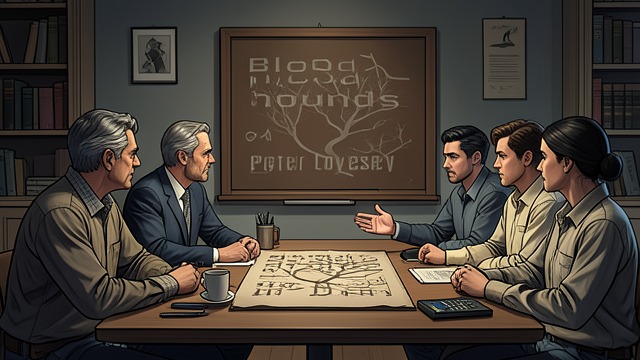
The Puzzle Argument
Competing ideals
Milo defends the classic detective puzzle, while Jessica and Rupert question its credibility and its distance from modern crime. Shirley-Ann and Polly occupy more flexible positions.
The club’s central question
The debate concerns whether a crime story should primarily challenge the reader or confront the social reality of violence. No consensus emerges.
The argument prepares the novel’s central experiment: a real crime will imitate a puzzle, forcing the characters to discover whether literary habits help or hinder investigation.
A Real Locked Room
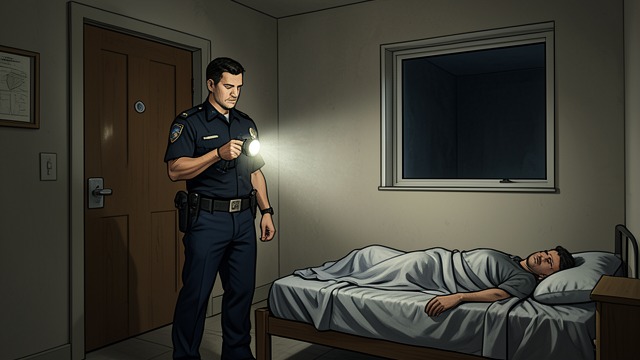
A Real Locked Room
Fiction enters police work
The murder resembles the locked-room mysteries the Bloodhounds admire. Milo, Sid, and the police all recognize the uncanny connection between the real boat and the literary chapter.
The detective resists the genre
Diamond dislikes being forced into a fictional puzzle. He insists that a police investigation must begin with facts about the body, the doors, and the people involved.
The novel lets the classic puzzle provoke investigation without granting it magical authority. The solution will be mechanical and ordinary, not a supernatural exception to reality.
Improbability and Reality
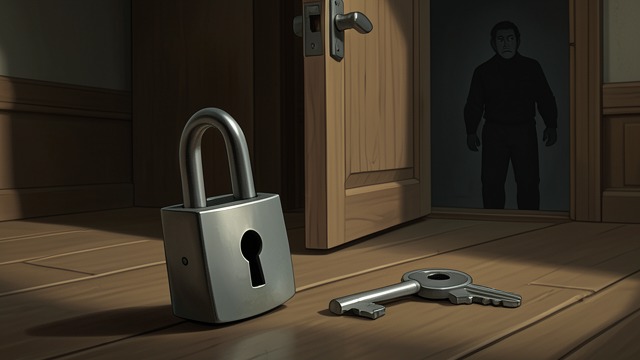
Improbability and Reality
Milo’s appeal to fiction
Milo explains that readers enjoy not knowing what happened and values the improbable as a source of wonder. Diamond remains skeptical of explanations that depend on literary tricks.
The puzzle yields to routine
Diamond eventually finds the boat’s method through the ordinary behavior of a padlock. The impossible appearance of a locked room comes from an unnoticed assumption, not an impossible act.
The solution respects the reader’s desire for surprise while rejecting the idea that real crime must obey a fictional formula. The improbable is compelling, but it still has to be tested against physical facts.
The Bloodhounds Become Players
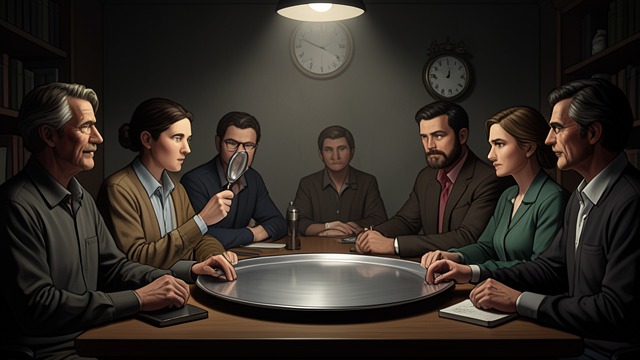
The Bloodhounds Become Players
A story staged for readers
The stamp appears during a club meeting at precisely the moment Milo is about to read about locked-room puzzles. The members are not simply discussing fiction; they are made part of a criminal scene.
Expertise exploited
Jones understands the group’s interests well enough to arrange a discovery that will astonish them and invite them to interpret what they see. Their literary knowledge becomes a vulnerability.
The novel turns reading into a form of participation. The club’s members have rehearsed puzzle conventions in conversation, but they are unprepared for a criminal who uses those conventions to manipulate them.
A Puzzle Cannot Excuse Harm
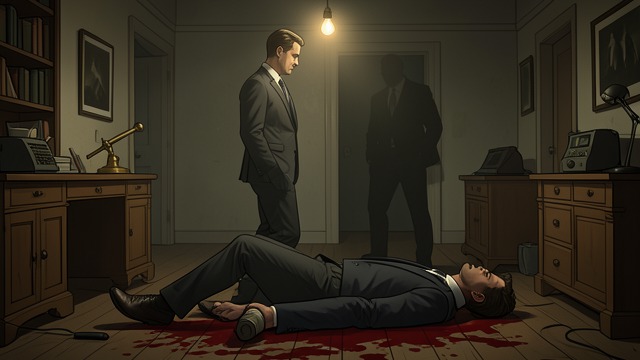
A Puzzle Cannot Excuse Harm
Cleverness exposes a grievance
Jones presents the crimes as proof that he was smarter than the Bloodhounds and the police. His elaborate method began in humiliation and grew through a desire for admiration.
Human cost outweighs ingenuity
Sid’s death, Rupert’s murder, and the use of other people as props destroy any innocence the performance might have claimed. Solving the puzzle restores facts but cannot make the crimes playful.
The novel’s final distinction is ethical: an ingenious crime remains a crime. The admiration that puzzle fiction invites must not obscure the lives damaged by a real person’s need to win.
At the first Bloodhounds meeting
After Sid is found inside Milo’s boat
During Milo’s interview at the boat
When the Penny Black appears in the book
At the novel’s ending, after Jones explains his motives
