
The Return of Meaning After Loss
BloodhoundsThis flow traces how the novel allows explanation, memory, and care to follow death without pretending that they can undo it.
increasing Bearing strength in each event
 decreasing
Bearing strength in each eventdecreasingSid Reduced to a Remark
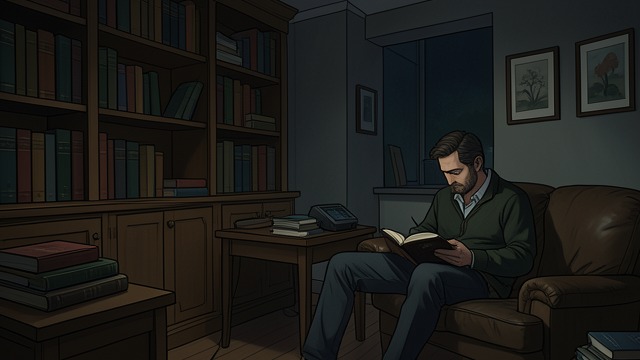
Sid Reduced to a Remark
A member seen as quiet
Sid speaks only a few times, and some members describe him as someone who contributes little. His social presence is measured by how rarely he makes himself heard.
A life beyond the group
His orderly flat, solitary work, and extensive reading reveal a person with habits and interests not visible in the crypt. Yet the people around him know little of his inner life.
The novel uses Sid’s invisibility to question how communities define a person. A quiet member can be known by his silence while remaining unknown in nearly every other way.
The Shock of His Death
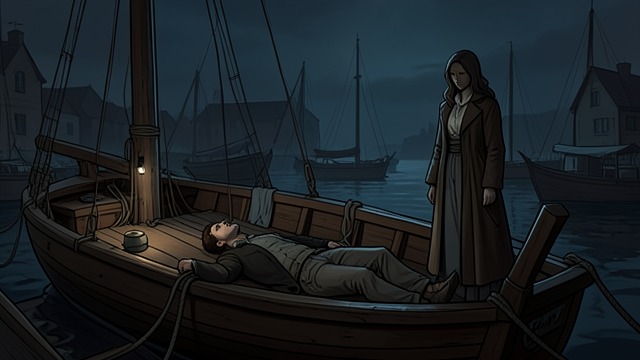
The Shock of His Death
News reaches the group
Polly tells Shirley-Ann that Sid has been found dead on Milo’s boat. Her own interviews with police have left her troubled by the things she said before learning he was dead.
Memory becomes moral
Polly regrets calling Sid dead wood. A casual judgment now feels cruel because it was spoken about a man whose life has ended.
The reaction shows that grief changes the weight of ordinary speech. What seemed like a harmless description becomes a measure of the group’s failure to see Sid fully.
A Motive Found Afterward

A Motive Found Afterward
Curiosity explains the journey
Diamond concludes that Sid probably went to the boat because he wanted to understand the locked-room mystery. His interest in the puzzle led him into a situation he did not know was dangerous.
The victim’s agency restored
The theory gives Sid a reason for being there without making him the mastermind of the theft. He was curious and observant, but not necessarily the author of the scheme.
This distinction matters because an investigation can honor a victim by explaining his actions without turning him into a convenient villain. Sid’s curiosity is a human motive, not a confession.
Rupert Remembered Differently
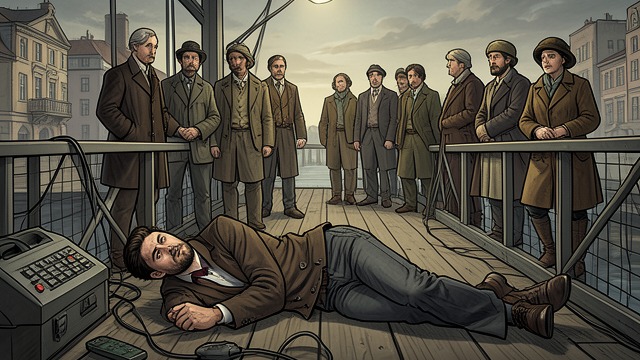
Rupert Remembered Differently
A troublesome presence
The Bloodhounds and Miss Chilmark have often found Rupert disruptive, offensive, or exhausting. His appearance and public persona invite ridicule as readily as attention.
A life taken from him
Once Diamond suspects the hanging was staged, Rupert becomes more than a likely culprit or a comic outsider. His vitality, irreverence, and attachment to Marlowe make the body found on the bridge a personal loss.
The investigation changes how characters remember him. Death does not make him blameless in every argument, but it makes the certainty of their earlier dismissals harder to sustain.
Care as a Small Repair
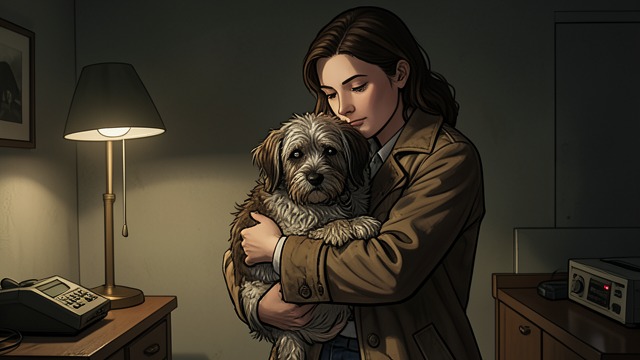
Care as a Small Repair
Julie takes Marlowe in
Julie decides to offer Rupert’s dog a home. Her practical choice acknowledges that the investigation’s consequences extend beyond the people who can give statements.
The case remains irreversible
Jones’s arrest provides an explanation, but it cannot restore Sid or Rupert. Marlowe’s future is one small matter that can still be changed for the better.
The gesture does not provide sentimental compensation for murder. It offers a limited form of responsibility after a chain of events in which people were treated as instruments.
At the Bloodhounds meeting before his death
The morning after Sid is found
During Diamond’s reconstruction of the boat visit
After Rupert’s hanging is questioned
Near the ending, after the case’s second death
