Francis Yearly
Bones & AllFrancis Yearly is Maren’s biological father, a man whose life joins an unresolved childhood assault, an act of cannibalism, and a family history built through both adoption and secrecy. Maren first learns his name from her birth certificate, then discovers that he is institutionalized and increasingly unable to answer her questions. His notebook becomes the account he can no longer reliably give aloud: a record of the violence that made him fear his own nature, and of the care that once made another life seem possible.
Identity and Discovery
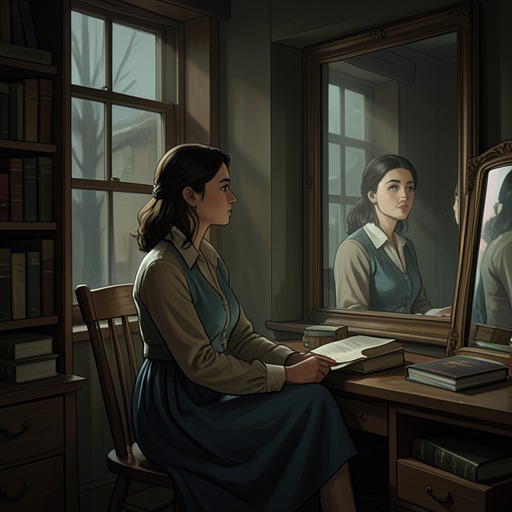
Maren encounters Francis Yearly first as a name, not a person. Her birth certificate identifies Janelle Shields as her mother and Francis Yearly as her father. Seeing his name in faded type makes her father’s existence feel newly real. The document also gives her a destination: Sandhorn, Minnesota, where she believes she may find him. Though she hopes to repair her relationship with her mother, she cannot abandon the question of who her father is or why he left.
Her search is not merely geographical. Maren suspects that Francis may share the cannibalistic nature she associates with her family, and tells Sullivan that she wants to know where her father came from and why he left them. Sullivan warns her against digging into the past, but Maren insists on knowing. Her determination rests partly on the absence left by her mother’s departure: she has nowhere else to go, and the unanswered history of her father has become a possible route toward understanding herself.
A Childhood Formed by Violence and Adoption
Francis’s adoptive mother, Barbara Yearly, tells Maren that he was found at a rest stop along Route Thirty-five outside Duluth, about eighty miles from her home. Two witnesses had seen a strange-looking man take the boy off a Trailways bus and lead him behind the building. When they eventually unlocked the restroom, they found Francis unconscious and covered in blood; the man had disappeared. Police took the child to a hospital, but neither his parents nor his attacker were found. Francis remembered nothing from before the hospital.
Barbara and her husband visited him through an adoption agency and brought him into their home, naming him Francis after the husband’s father. Barbara says they had known that the boy’s discovery was mysterious, but had been too eager to overlook what that might mean. Their decision was shaped by his resemblance to Tom Yearly, their other son. In Francis’s later account, Tom’s absence hangs over family life: at times Barbara set a fourth place at dinner, and Francis was sometimes called by Tom’s name. The adoptive home gave him regular meals and a warm, clean bed, but it also made him feel like an inadequate replacement, measured against the imagined achievements of the boy he resembled.
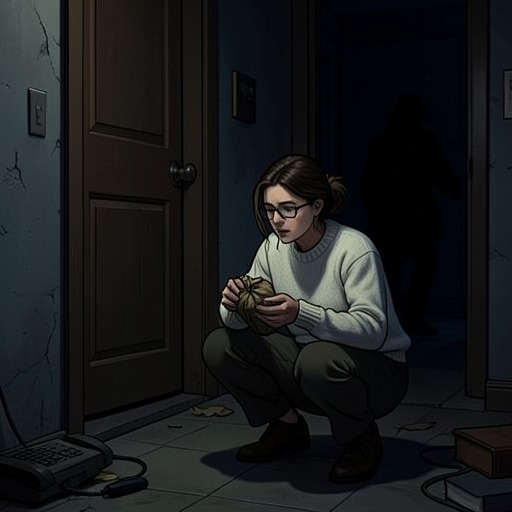
The trauma did not remain a blank in Francis’s memory. In the notebook he left for his child, he describes a small boy led into a restroom by a man who was trying to abuse him. Francis says that he ate the man. He remembers being a child with milk teeth, grinding the man’s bones, and becoming hungrier as he ate. He distinguishes this from ordinary people eating human flesh as food: his account presents the act as bound up with the assault and with a hunger he could not control. The memory explains why he sees himself as monstrous, while the long period of forgetting shows how little he could initially make sense of what had happened.
Marriage, Secrecy, and the Life He Wanted
Francis’s notebook recalls meeting Janelle during a summer when they lived and worked around a caretaker’s cabin at Plover Lake. They swept porches and kept pipes from freezing for wealthy residents; on Thursday evenings, ranger friends came over for drinks and poker. The recollection is domestic and specific: once, after the group drove a truck onto the frozen lake, Janelle had grilled cheese and hot cocoa ready when they came back inside. Francis remembers her as someone who made a shared life feel ordinary and welcoming.
Janelle’s parents came for the wedding in the spring. Francis sensed that they resented not having known him before he asked Janelle to marry him, and worried that her mother suspected his secret. He writes that Janelle knew he was hiding something before they married, but continued to love him without demanding that he tell her. He wondered whether he might never have to disclose what he had done. His fear of being unworthy of her coexisted with the hope that love might let him live as an honest man and a good husband.
The notebook is also addressed to a child whose name and gender Francis does not know. He hopes the child will come to him, fears being hated, and worries that his memory will deteriorate until he cannot answer questions. He believes the child may never be told about him, and says that, in that case, the silence may be for the best. Maren’s visit reveals the painful limit of this imagined connection: her father had not known about her. The same document that gives her access to his history confirms that she was absent from the life he once pictured for his future child.
Institutionalization and the Notebook
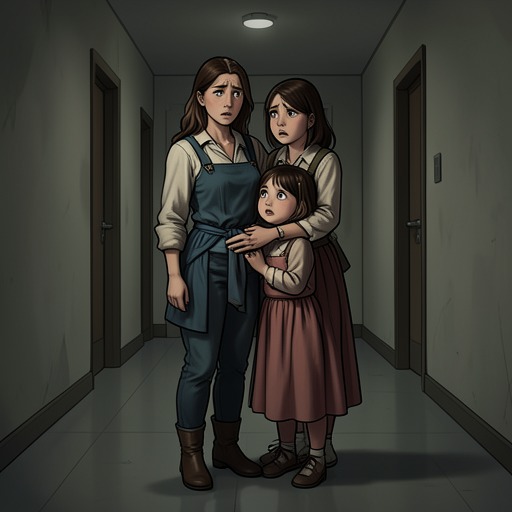
When Maren visits, Travis leads her through several swinging doors and unlocks the room where Francis is kept. The room’s restraints hang from the handlebars of a white bed, and Francis sits with his back to the door. His appearance is far removed from the boy in the yearbook photograph: his eyes are pale and watery, his jaw and neck tense, and he does not smile or speak when introduced to his daughter. Barbara had already told Maren that he had been institutionalized for some time, extinguishing her hope of finding a father who could simply welcome her home.
An orderly tells Maren that Francis wants her to read his notebook, which he wrote for her. The rough, difficult-to-read handwriting gives his account a material presence even as his spoken voice is unavailable. Francis anticipates that he may not be able to answer questions by the time his child arrives, because his memory is full of blanks and may continue to fail. Writing is therefore both a message and an attempt to preserve a self that he fears will disappear. His account does not offer Maren a reunion in the conventional sense; it gives her testimony from a father who cannot speak to her directly.
Family, Inheritance, and Narrative Significance
Francis’s story unsettles any simple equation between biological descent and family belonging. The Yearlys adopted him despite the mystery of his arrival, but their care was shadowed by the comparison with Tom. Janelle offered love without requiring immediate confession, while Francis’s fear kept a central part of himself hidden. His own child, meanwhile, grows up without knowing his name until she finds it on a certificate. Family appears here as a set of competing conditions: blood, adoption, secrecy, protection, and the everyday acts through which people make a home.
That tension deepens when Sullivan tells Maren that Francis is his son. The claim follows Maren’s discovery of Francis’s staff ID and arrives as a shock, complicating the account in which Francis was an unidentified child found at a rest stop and later adopted by the Yearlys. The evidence establishes Sullivan’s assertion, but does not resolve how it fits with Francis’s childhood memory or his adoptive history. Francis’s origins thus remain partly concealed even after his notebook reveals the central secret of his life.
Francis’s importance to the narrative lies in the way his written confession reaches Maren across absence. His story connects an act committed in childhood to the adult’s fear of being irredeemably monstrous, but it also preserves evidence of tenderness: the home he built with Janelle, the love he believed she gave him, and the child he hoped might one day read his words. The notebook cannot restore the years they lost or answer every question about his past. It does, however, replace the blank on Maren’s birth certificate with a complicated human history.