Janelle leaves Maren after her sixteenth birthday
Bones & AllJanelle leaves Maren after her sixteenth birthday in a reversal that turns a day of apparent closeness into a farewell. The next morning Maren wakes to an empty apartment and a note from her mother, who says she loves her but cannot continue. Left with money, the note, and no belongings that might suggest Janelle intended to return, Maren experiences the departure as abandonment and as confirmation of her worst beliefs about herself.
The birthday as a farewell
On May 30, Maren’s sixteenth birthday, Janelle enters singing “Good morning, good moooooooorning! We’ve talked the whole night through…” Maren has noticed that her mother always sounds sad singing it. Their teasing exchange does not resolve that sadness: Janelle opens the curtains, smiles with her eyes closed in the sunlight, and asks what Maren means. The morning begins as a planned day of fun, its brightness carrying a quiet note of unease that Maren recognizes only afterward.
The day includes an intimate dinner. In the dim restaurant, light from a red glass votive holder flickers across Janelle’s face as she raises her soupspoon. Mother and daughter talk about school and work, then about Maren’s possible college studies and future occupation. A candle arrives in a square of tiramisu, and the waiters sing “Buon compleanno a te.” These ordinary gestures of attention matter because they offer Maren a picture of shared life extending beyond the birthday: her mother is asking what she might study and become.
After dinner, Janelle takes Maren to see Titanic at a last-chance cinema. For three hours Maren loses herself in a story of beauty, bravery, love, survival, and happiness—the kinds of outcomes she feels real life has denied her. She leaves the theater able to take pleasure in the story’s promise, then goes to bed tired and content, expecting to eat leftovers and read her new book the next morning. In retrospect, the celebratory day’s completeness becomes painful: Maren decides it was too special not to have been the last thing they did together, and that Janelle had planned it that way.
The note and the empty apartment
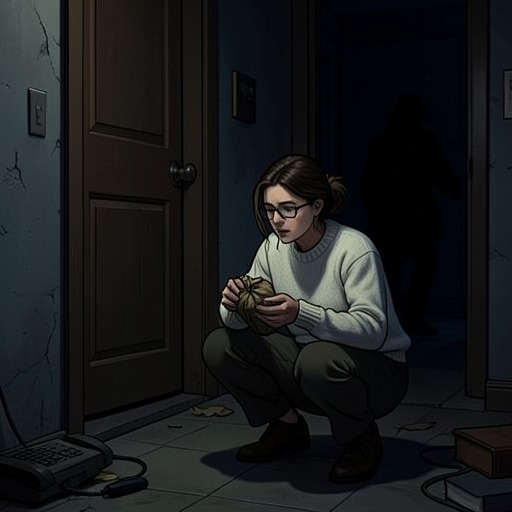
When Maren wakes, the apartment is too still and she cannot smell coffee. In the kitchen, she finds a note on the table: “I’m your mother and I love you but I can’t do this anymore.” The declaration of love does not soften the fact of the departure. Maren cannot accept that Janelle is gone; even the familiar furniture seems disconnected from her, as though the chair, table, and window no longer belong to her world.
A thick white envelope on the table contains money, though Maren knows what it holds without opening it. Rather than treating the money as reassurance, she feels sick and leaves the kitchen. Its presence makes the departure concrete: Janelle has left practical provision, but not an explanation that Maren can inhabit as a relationship. The note and envelope remain the only things her mother has left for her in the apartment.
Maren’s immediate aftermath
Maren goes to Janelle’s bed, burrows under the comforter, and curls up, wanting sleep to undo what has happened. The rest of the day passes in a daze. She does not open her new copy of The Lord of the Rings; the only words she reads are those in the note. Later she wanders through the house, too sick to think about food, and lies awake after dark. Her response moves from disbelief to physical withdrawal and despair, without any comforting interruption or return from Janelle.
Maren interprets the abandonment through what she understands about her mother’s fear. She recalls thinking that Janelle had considered turning her in and hated herself for bringing her into the world; Maren concludes that she had always been a burden and a horror, and that Janelle had acted as she did because she was afraid of her. That is Maren’s devastating reading of the departure, not an explanation supplied by the note. She cannot cry, feels she has been left with nothing to mourn over, and asks herself what kind of life remains. The birthday’s talk of college and the future thus stands against the isolation of the next morning: a future had been discussed, but Janelle is no longer there to share it.