Lee
Bones & AllLee enters Maren’s life by stepping between a drunken man and a woman he is harassing in a Walmart aisle. Wearing a green baseball jersey, jeans, and work boots, he tells the man to stop. The intervention lets the woman leave, but it also draws Maren’s attention to Lee: he is a stranger who acts when those around him have not. Later, when Maren tries to get herself hit by a truck, Lee pulls her out of its path and gently helps her to her feet. His rescue is physical and immediate, without any claim that he can repair the despair behind her attempt. When they recognize that they are both Eaters, the relief of no longer being alone changes their encounter into the beginning of a partnership.
Identity and Introduction
Lee is a young man whom Maren estimates to be around eighteen to twenty. After the rescue, he brushes grit from her shoulder and acknowledges that the truck would have hurt her worse than the fall. When she realizes he is the same person she had encountered earlier, he explains that he followed the drunk man into the men’s room and locked the door. The disclosure connects his public intervention to a more private act of pursuit: Lee does not simply object to cruelty from a safe distance; he follows the aggressor.
They exchange names while driving toward an address on Route 13 in Pittston, Iowa. The address belongs to Barry Cook, and Lee has taken the envelope bearing it from papers in the truck. The pair drive there in silence before Lee asks Maren who she is. That small exchange gives their alliance a concrete beginning: Maren is no longer merely someone he has rescued, but a person with whom he is traveling and to whom he has offered his own name.
A Companion on the Road
Lee’s life is organized around movement and temporary work. He tells Maren that he mostly does farmwork, staying at a farm for a day or two or longer according to what its owners need. In winter, he has gone south to Florida in an old Camaro, parked on the beach, and slept in a tent on the dunes. His joking description of himself as a snowbird gives a light name to a life without a settled home. When Maren asks whether he was alone, he says that he is always by himself, then makes an exception for her.
His offer to accompany Maren to Virginia makes that exception consequential. Lee first says that he needs to return to his own destination for at least a few hours, but promises that afterward he can take her where she needs to go, despite the long drive. The invitation is practical rather than grand: he does not offer a cure for her homelessness or grief, but a place beside him and transportation. For Maren, who has lost the feeling of having somewhere to go home to, that limited offer becomes a second chance at friendship.
Lee’s care appears in ordinary arrangements as well as moments of danger. One night, he gives Maren his sleeping bag and folds the spare blanket into a pallet for himself on the truck’s flatbed. They spend some time talking under the dark sky about subjects unrelated to Maren’s missing father, hitchhiking, or the things they are not meant to eat. Lee invents constellations by tracing them with a finger: a giraffe, a blimp, and a chocolate-chip cookie. The playful sky briefly makes the roadside feel companionable, although Maren’s association with Jamie Gash causes the conversation to falter. She falls asleep first; when she wakes, Lee is already apart from her, sitting at a picnic table and heating water for coffee on a camp stove. Their quiet morning routine preserves both sides of their relationship: Lee offers care, but he remains accustomed to solitude.
Hunger, Violence, and the Past
Lee speaks plainly about his condition. When Maren asks whether eating people is a way of hoping to learn something, he dismisses the idea: he simply eats them. His account of his childhood babysitter gives one specific history behind that matter-of-factness. He remembers her as sadistic, pinching him when he failed to answer her questions about schoolbook facts. He called her the Pinkerwitch, though he can no longer remember her name and thinks it may have been Pinker. His recollection is not a complete portrait: her face has faded, but he remembers her long teeth, the smile he hated, and a stale, sour smell. The contrast between an indistinct face and persistent sensory details makes the memory feel less like a settled explanation than an old injury that remains vividly present in fragments.
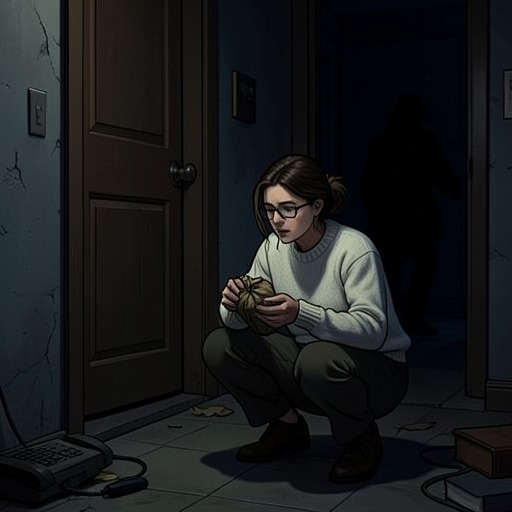
Lee also recounts the arrival of one of his mother’s boyfriends during an evening with Rachel and Kayla. The three had been sharing root beer and laughing before the man appeared. Lee describes a familiar household pattern: the boyfriend sprawled on the couch among empty beer cans, ordering Lee to fetch another drink and insulting him when he refused. Lee answered back while the man advanced through the room shouting abuse. As the confrontation escalated, Lee locked the door and pulled the blinds. He recalls the men as too drunk to understand what was coming. The account links his capacity for intervention to a history in which threats were not abstract; it also shows how little safety the adults in his household provided.
Relationships and Chosen Family
Lee’s history with Rachel is introduced as a relationship that once mattered to him, though the account supplied through his memories does not establish how it ended. He brought her home because Kayla wanted to meet her and, he thought, needed someone to confide in. He saw the meeting as a chance for Rachel and Kayla to connect, partly because his mother could scarcely be bothered to keep food in the refrigerator, much less offer Kayla advice. His attention to Kayla’s needs sits beside the harsher household circumstances he describes: his mother’s boyfriend was abusive, and the adults’ behavior left Lee managing the danger himself.
On the road with Maren, Lee becomes a different kind of family member: not a relative with an inherited claim, but a companion who chooses to stay. He says he has no way to find his own father, even if he wanted to, and does not present himself as someone with a stable family to return to. His promise not to go back on his word matters to Maren because she has already experienced abandonment. Lee does not answer her fear with a sweeping assurance; instead, he says that he dislikes people who break their promises, and then follows through by offering to take her to Virginia.
This idea of chosen kinship becomes explicit around Sully’s fire. Sully admits that he once advised against making friends, but has come to think that people like them need not make an already lonely road lonelier. He proposes that they make their own family. Lee stifles a burp and responds in a way Maren cannot tell is sincere or sarcastic. When Maren thanks Sully for dinner and for looking out for her, Lee rolls his eyes as firelight catches them. The gesture prevents the moment from becoming uncomplicated sentiment, but Lee stays within the gathering. The scene places him inside a tentative family formed through shared meals, protection, and proximity rather than conventional kinship.
Character and Narrative Significance
Lee’s kindness is real, but it does not make him harmless. He intervenes to protect a woman and saves Maren from the truck; he also describes a childhood in which violent outcomes followed confrontations with abusive adults. His life on the road gives him independence while reinforcing his isolation, and his humor—whether in his invented constellations or his dry replies—does not erase that condition. Instead, his companionship offers Maren a way to keep moving without pretending that either of them has escaped the past.
The novel makes Lee’s care visible through concrete acts: stepping into an aisle, reaching under Maren’s arm, giving her the sleeping bag, making room for her in his plans, and treating a promise as binding. Those actions stand against the casual cruelty he remembers at home and the loneliness he describes as his usual state. Lee’s significance lies in that tension. He does not become a simple model of goodness or a cure for Maren’s distress; he becomes someone whose choices make connection possible, even while violence and hunger remain part of the life he shares with her.