Summer of 1980
Bones & AllSummer of 1980 is the season in which Francis Yearly met Janelle and began the relationship that would shape their family. Recalled years later through photographs and Francis’s written account, it survives as both a record of ordinary happiness and an ideal that later grief, secrecy, and self-reproach could not leave untouched.
Meeting at Laskin National Park
At twenty-two, Francis was working as a forest ranger at Laskin National Park, mostly patrolling campsites to prevent visitors from dumping trash or cutting their own firewood. Janelle took entrance fees at the gate shack. On his first day, they talked and laughed over an inflatable woman in a red wig sitting in a single man’s car. Francis later described recognizing, even in that small exchange, that he would always love her.
The park gave them room for more than their assigned work. Swimming and hiking were easy to fit around their duties, and Francis acknowledged that neither he nor Janelle worked as hard as they could have. In retrospect, the summer’s distinctive quality lies partly in its unexceptional pleasures: time together in a landscape where work could be set aside and affection could take root.
A Shared Life Beyond the Summer
When the summer ended, Francis and Janelle arranged to stay in a caretaker’s cabin on Plover Lake. They earned money by sweeping porches and protecting wealthy residents’ pipes from freezing. Their circle included fellow rangers Sam, Flip, and Robby, who visited on Thursday nights for drinks and poker around the woodstove. On one winter outing, they drove Flip’s truck onto the lake after it had frozen solid, an acknowledged risk that gave the group a thrill. Back indoors, Janelle served grilled cheese and hot cocoa.
The move from park romance to a shared domestic life culminated in marriage. Janelle’s parents came out for the wedding in spring. They tried to welcome Francis, but resented not having had the chance to know him before he proposed; he, in turn, feared that Janelle’s mother suspected the secret he was keeping. The unease did not cancel the marriage, but it marks how the couple’s happiness already existed alongside something Francis could not bring himself to disclose.
The Album and the Recovered Season
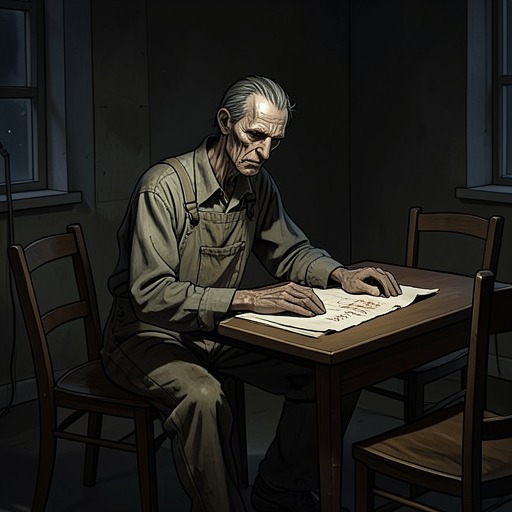
The summer reaches Maren through a leather photo album Francis shares with her during her later visit. Stamped in gold leaf with the title OUR PERFECT SUMMER, it carries Janelle’s inscription, J.S. + F.Y. inside a red heart, with 1980 beneath. The album makes a season into an object that can be opened and revisited, but its images also reveal how much Francis has invested in the memory.
The photographs show Janelle on a wooded trail in her green ranger uniform and hiking boots, on horseback, and laughing over a hot fudge sundae. Francis remembers her before she colored her hair in the bathtub, and frames the images with the painful thought that he ruined her life. The pictures preserve her youth and their shared happiness; his commentary shows that, for him, they have also become evidence of what he believes he later destroyed.
Love, Secrecy, and Fatherhood
Francis’s account places the romance against the childhood that shaped his fear of being a parent. The Yearlys had taken him in after Tom’s death, but he grew up feeling like an unsatisfactory replacement for the dead boy. He believed the family kept him because sending him away would mean breaking a promise, and he lived with the persistent comparison to the son they had lost. Barbara Yearly later recalled that Francis had been found under mysterious circumstances, a past the family had been too eager to overlook. These details help explain why Francis measures his own hopes for family against both obligation and shame.
Janelle did not know Francis’s secret before they married. She knew he was withholding something, yet continued to love him without demanding that he tell her; he hoped he might never have to reveal it. In his account, the secret reaches back to childhood, when he ate a man who had led him into a gas-station restroom. He describes the act as unlike ordinary cannibalism and says that eating only made him hungrier. This is the history hidden beneath the season’s bright images, not a fact Janelle knew when they fell in love.
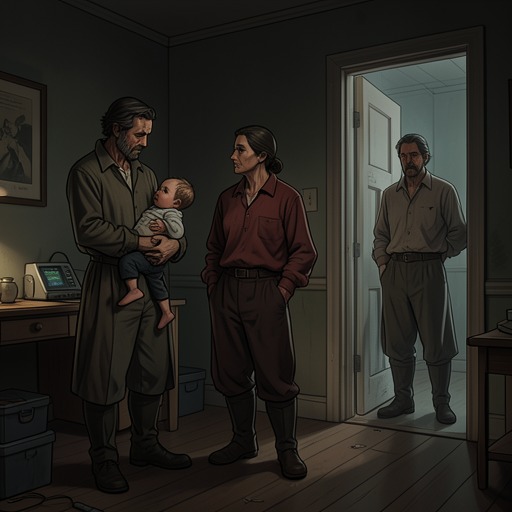
When Janelle told Francis she was pregnant, he promised himself he would be a real father and give the child a different childhood from his own. He remembers her as especially happy during the pregnancy, singing lullabies as if the baby had already been born; Maren’s reading of this account brings her the knowledge that her mother had wanted her. Later, while Janelle worked at a hotel to help them save money, Robby drunkenly made insulting claims about her. Francis knew Robby was lying, but could no longer remember their perfect summer without hearing those words. The season thus remains foundational without remaining untouched: its love was real, but Francis’s retrospective telling shows how concealment and later injury altered the memory through which he tried to explain his life to his daughter.