Tom Yearly
Bones & AllTom Yearly is the deceased son of Barbara Yearly and Dan, and the absent child whose memory comes to dominate Frank Yearly’s upbringing after Barbara and Dan adopt him. Tom’s life is only glimpsed through family recollections and Frank’s account, but those fragments show how grief turns his memory into a presence in the household: loved and mourned by his parents, idealized as Frank’s older brother, and eventually recast in Frank’s nightmares as a watching, monstrous figure.
Identity and Death
Tom Yearly was Barbara Yearly and Dan’s little boy. A black-and-white portrait above a light switch shows him seated on a tricycle, posed before a blank studio background on his third birthday. The photograph preserves a small, specific occasion, but the narrative supplies no account of what happened afterward. Barbara is deeply affected by the loss and declines to describe its circumstances; she says that no one will ever know what really happened. Tom’s death therefore remains an acknowledged family wound and an unresolved absence, not a mystery the narrative solves.
Dan died of throat cancer almost nine years before Maren’s visit to Barbara Yearly. Frank Yearly was already in a home by then. Barbara takes comfort in imagining that Dan and Tom are together, linking the two losses without suggesting that their circumstances were alike. Her remark also makes clear that Tom remained emotionally present to her decades after the photograph was taken.
The Adoption and the Family’s Unspoken Past
After Tom’s death, Barbara and Dan adopted Frank Yearly. Barbara acknowledges that they knew the boy had been found under mysterious circumstances, but that they had been too eager to overlook this uncertainty. The circumstances she describes belong to Frank’s arrival, not to any explanation of Tom’s death. She refuses to elaborate, insisting that the truth of what happened will never be known. The family history thus contains two different silences: the unexplained loss of Tom and the unexplored circumstances surrounding the child who came after him.
Frank’s own account identifies the beginning of his life as he remembers it: very small beside a bus at a gas station, led by a man into a restroom, where Frank says he ate the man. He writes that he was a little boy and that the act made him hungrier as he continued. This account establishes a disturbing context for the adoption, but it does not establish any connection between Frank’s act and Tom’s death. Keeping those facts distinct matters: Tom is remembered as the lost child, while Frank is the adopted boy whose origins and secret trouble the family’s story.
Tom’s Place in Frank’s Childhood
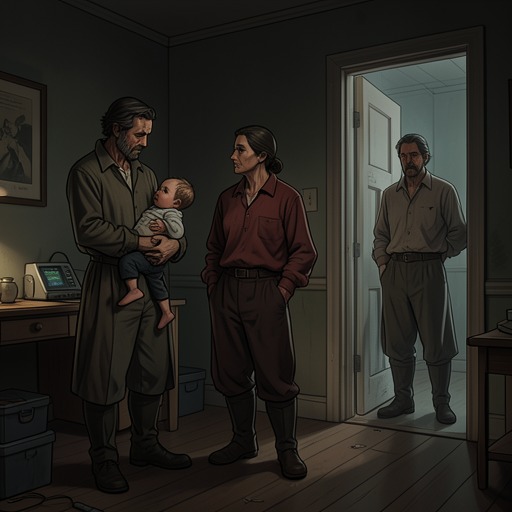
Although Frank was given food, a clean bed, and a home, he describes growing up under the pressure of Tom’s memory. Barbara and Dan sometimes spoke of Tom as his older brother; on Barbara’s bad days, she set a fourth place at dinner. At other times they called Frank by Tom’s name. More often, Frank felt that he was being treated as an unsatisfactory replacement rather than as himself.
The comparisons made Tom into a catalogue of imagined accomplishments. In Frank’s recollection, Tom would have taught him to ride a bicycle, earned straight As, and gone to Harvard or Stanford. He would have rescued broken birds and grown up to be a veterinarian, doctor, lawyer, or engineer. Against this idealized future, Frank was told that he would amount to nobody. The account does not establish what Tom was actually like as he grew older; he died young, and the achievements attributed to him are possibilities projected onto him by the family. Their force lies in what they do to Frank, who is measured against a brother whose childhood ended before any such comparison could be tested.
Tom’s presence follows Frank beyond the dinner table. Even in dreams, Frank cannot escape him: Tom oozes down from the ceiling, sits on the dresser with glowing red eyes, pulls at the sides of his mouth, and flicks a long, thin tongue like a snake’s. The nightmare transforms a cherished but unreachable brother into a grotesque watcher. During the day, Frank also fears being watched and sometimes sees a man in a red flannel shirt by the school fence. Frank does not identify that man as Tom, so the two images remain distinct, though both belong to his account of a childhood shaped by unease.
Memory and Narrative Significance
Tom Yearly is presented indirectly, through the portrait, Barbara’s grief, and Frank’s retrospective testimony to his child. This distance leaves Tom less a fully recoverable personality than a figure assembled from other people’s memories and expectations. Barbara’s brief account supplies the reality of loss; Frank’s account reveals how the family’s mourning became part of his daily life. The portrait’s fixed image of a three-year-old contrasts with the expansive future assigned to him at the dinner table: Tom can never grow into the person his parents imagine, while Frank is continually judged against that impossible future.
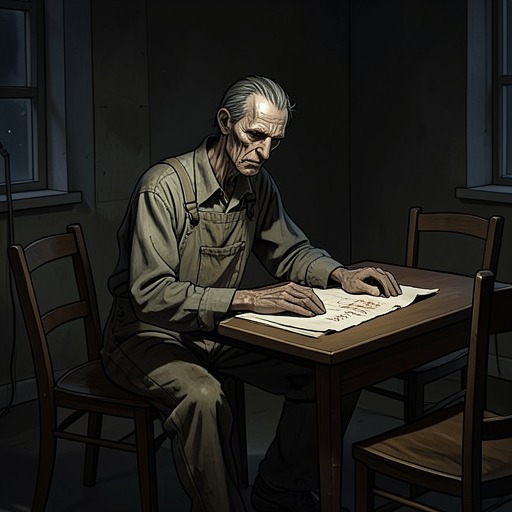
The consequences reach beyond Frank’s childhood. He leaves the Yearlys after finishing high school and wants to attend college, but lack of money delays the plan until he feels too old to join a class without ridicule. In the notebook, he urges his child to go, while acknowledging that he cannot know whether college would have changed his own life. His account of Tom’s imagined achievements gives this advice an intimate backdrop: education and success are bound up with the comparisons that once made Frank feel destined to be a nobody. Later, Tom also remains part of Barbara’s understanding of family, while Frank’s own account of his origins complicates the boundary between adoption, blood, and belonging. Tom’s importance rests not on actions of his own, which the surviving account barely records, but on the lasting emotional structure built around his absence.