Maren’s abandonment by her mother
Bones & AllMaren’s abandonment by her mother is the rupture that converts a precarious but intimate mother-daughter life into Maren’s solitary search for somewhere to belong. Janelle leaves before dawn while Maren is asleep, explaining her departure in a single sentence but leaving behind enough familiar belongings to make the absence feel deliberate rather than like another ordinary move. Maren initially tries to find her mother and repair their relationship; as she travels, however, she comes to read Janelle’s care as fear and guilt. The separation shapes both Maren’s understanding of herself and the direction of her journey.
The departure and its small, decisive note
Maren wakes to an apartment that is too still and lacks the smell of her mother’s coffee. On the kitchen table she finds Janelle’s note: “I’m your mother and I love you but I can’t do this anymore.” Its wording affirms love even as it announces the end of Janelle’s ability to remain. Maren cannot reconcile the two halves. She has not done the bad thing for more than six months, her mother has settled into a new job, and they like the apartment; to Maren, none of these circumstances explains why her mother would go.
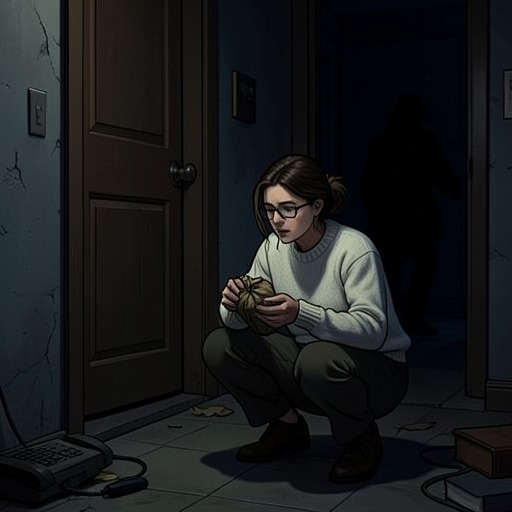
The bedroom makes the departure tangible. Janelle has left the sheets and comforter on the bed, paperback novels she has already read on the nightstand, nearly empty bottles of shampoo and hand lotion in the bathroom, and a few less-pretty blouses on cheap wire hangers. Maren knows that leaving things behind has accompanied their previous moves. This time, the pattern is overturned: the mother has gone, while the daughter has been left behind. The ordinary objects do not soften the abandonment. Instead, they make the familiar home seem intact around the person who is missing.
Maren reads beyond the note’s one sentence, imagining what Janelle has not written: that she can no longer protect Maren from the world when she believes the world needs protection from Maren. The imagined words make the departure more than an unexplained absence. They connect it to Maren’s history of doing harm and to the possibility that her mother has considered turning her in and having her locked up. Yet this is Maren’s interpretation of what the note leaves unsaid, not an explanation Janelle gives her directly.
From a bid for reunion to the road away
At first, Maren does not treat the departure as final. After finding her birth certificate, she discovers the name Francis Yearly in the space for her father. The faded entry gives a name and a place to seek him: Sandhorn, Minnesota. Maren understands that Janelle may have expected her to use the money she left to travel there and find her father, but she recoils from that prospect. Her immediate wish is still to make things right with her mother.
Maren instead follows the address on a Christmas-card envelope to her grandparents, whom she has not seen since before Penny Wilson. She knows her mother would never have taken her to visit them, but believes that Janelle has gone there. With a hundred dollars and her grandfather’s old army rucksack, labeled SHIELDS and U.S. ARMY, she packs what she can carry and sets out to find her. This decision is not a settled acceptance of the separation: it is an attempt to reverse it by locating the person who left.
After reaching Edgartown, Maren eventually boards a local bus in the direction opposite the Shieldses’ house. By then she has concluded that she will never see her mother again, not even through a picture window. At the Greyhound station she asks for the next bus to Minnesota and says she needs to go to Sandhorn. The movement away from Edgartown marks a change in purpose: the journey that began as a search for Janelle gives way to travel toward the father named on the certificate, although Maren had earlier dreaded finding him.
Care remembered, care reinterpreted
The abandonment hurts partly because it follows memories of genuine tenderness. Maren recalls that her mother had been kind and had not spoken to her in the condemning terms other people used. When they had lived somewhere long enough to begin forgetting, Janelle sometimes woke her with a song from Singin’ in the Rain. Another evening, Janelle took her to see Titanic at a last-chance cinema. Maren could lose herself in the story and imagine a brave, beautiful life in which love and survival led to happiness. The contrast between those shared comforts and the empty apartment gives the separation its particular force: the person who had offered Maren shelter and imaginative escape has also decided she cannot stay.
On a later trip with Lee, a question from him brings Maren’s fear about the departure into sharper focus. Alone in a filthy mini-mart restroom, she cries and considers that Janelle may have been afraid of her all along. Maren revises the meaning of years of care: perhaps her mother felt responsible for her, believed her actions were Janelle’s fault, and waited until Maren was old enough to manage without her. She thinks, “The truth is like the waiting jaws of a monster, a more menacing monster than I’ll ever be.” The image captures how the possibility of an explanation threatens to become more frightening than the unexplained loss itself.
Lee does not offer the easy reassurance Maren may want. He brings her a can of Coke and a roast-beef sandwich after she has been crying, but says he will not tiptoe around her feelings. Maren cannot taste the food. She interprets the care Janelle once provided in the same changed light: being fed no longer feels like ordinary maternal kindness, but like a sacrifice made by someone who wished she could confine her. The sandwich and the remembered meals therefore sit on opposite sides of the same painful question: whether care proves love, or whether Maren has mistaken obligation for love.
Lasting consequence and narrative significance
Janelle’s note does not settle what she felt. It says that she loves Maren but cannot continue; Maren’s later conclusion that every kindness came from guilt is an anguished interpretation, not a confirmed account of her mother’s motives. The distinction matters because the separation leaves Maren with an absence she must explain for herself. The novel presents that effort as a shifting process: she first seeks reunion, then understands the money and the father’s name as signs of a plan to send her elsewhere, and finally revisits the past through the fear that her mother had wanted to protect other people from her.
The departure also breaks the family’s recurring pattern of leaving places and belongings behind. Before, a move could mean starting over together; now Janelle’s scattered novels, toiletries, and blouses remain while Maren herself becomes the one who must go. Her route toward Sandhorn is consequently both practical and emotional: it follows the possibility of a father, but begins in the hope of recovering her mother. By the time she boards the bus away from Edgartown, that hope has given way to the expectation of permanent separation. What remains is not a clear answer about Janelle’s love, but the burden of deciding what her absence means.