Monstrosity and Self-Perception
Bones & AllMonstrosity and Self-Perception is shaped by the gap between Maren’s early, bodily knowledge that she is dangerous and her later effort to understand what that danger means. The novel makes monstrosity more than a label imposed from outside: it is a condition she discovers through hunger, recognizes in herself before she can explain it, and struggles to locate in the stories available to her.
Recognition Through the Body
Maren’s first known act of cannibalism occurs when she is too young to remember it. Penny Wilson, the babysitter who lives across the courtyard, is left in a pile of bones after watching Maren for an hour and a half. When Janelle comes home, Maren is asleep beside the remains, with tears drying on her cheeks and blood around her mouth. Her mother sees the gore on Maren’s OshKosh overalls and the blood on her face, but does not understand what has happened until she parts Maren’s lips and finds the hammer of Penny Wilson’s eardrum between her gums. The discovery makes the horror intimate and physical: the evidence of what Maren has done is lodged inside her mouth, while her own account of the event can only come later, through knowledge rather than memory. She says she loathed herself even then, giving that preverbal scene the shape of an original self-judgment.
Years later, standing beside Luke in the darkness at summer camp, Maren experiences hunger as both sensation and warning. She can smell the lake on him, along with the chili powder from dinner and the lack of toothbrushing; this unusually vivid perception precedes the certainty that she is on the verge of repeating something horrible. She does not know anything about Penny Wilson, yet feels that she has done something terrible before. The red tent Luke made for her offers no protection from that recognition. Maren understands that one of them will not come out, and asks to go back. The scene connects her present appetite to a childhood act she cannot consciously recall: before she has facts or a coherent story about her past, her body identifies the danger and anticipates its return.
Monsters in Books and the Possibility of Kinship
Maren’s first models for understanding herself come from books, not from people who share her condition. She finds giants, trolls, witches, ghouls, and the Minotaur in stories, but no straightforward counterpart. In imagining herself within a Greek epic, she casts herself not as its hero but as the narrow escape: Chronos, afraid that one of his children will overthrow him, swallows each newborn. The myth gives Maren an image for a parent’s fear of a dangerous child, but it does not offer her a place among the good. Its recurring act of swallowing also makes the word gobble unbearable to her, turning Thanksgiving into a reminder of the appetite she associates with herself.
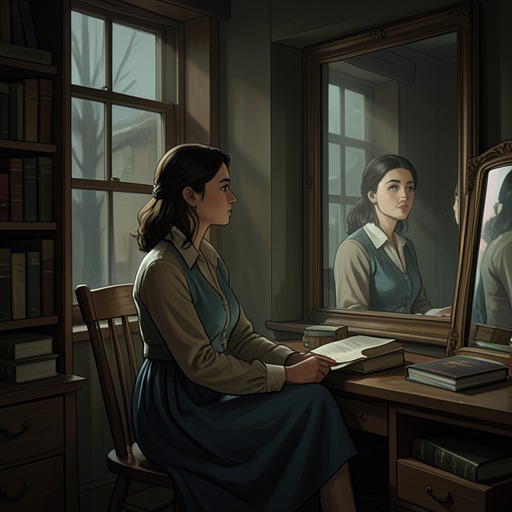
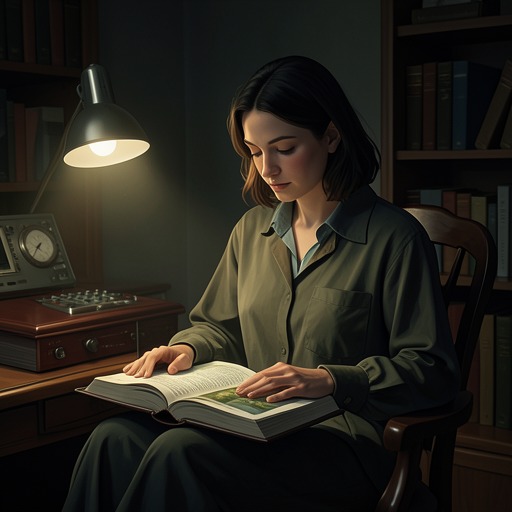
Books are both refuge and evidence of the divide between Maren and her mother. Wherever she goes to school, she spends her free time in the library. When a fourth-grade teacher describes her as a voracious reader, Janelle becomes upset and pretends to feel ill so she can leave the parent-teacher conference; Maren allows that perhaps her mother was not pretending. Janelle never reads her fairy tales, and Maren believes she understands why. She also will not buy Maren The BFG, so Maren reads it during lunch instead. Roald Dahl’s story disappoints her: its heroine never eats anyone, and the man-eating giants receive their comeuppance. The book confirms the moral arrangement Maren fears she cannot escape: the eater is made monstrous, while the story’s good character remains safely outside that identity. Maren concludes that someone like her could never be the good one.
She turns that exclusion into a private archive. In a notebook she collects monster stories, sometimes copying whole passages and always photocopying the illustrations. Its subjects include Goya’s Saturn Devouring His Son, painted around 1820, and Sawney Beane, described as the head of a cannibal clan living in a cave on the Scottish coast. Maren hides in the quietest library corner to avoid questions from librarians about her work. The notebook does not absolve her or make her appetite ordinary; it gives the appetite a history and a set of images, so that she can look at something resembling herself without having to explain it aloud.
When Lee turns the notebook’s pages, its images change from solitary collecting into a point of contact. The etching of Sawney Beane’s lair shows heaps of bones, limbs hanging from the ceiling, faces in the darkness, and uniformed men staring at the evidence of prolonged slaughter. Before this moment, Maren could not imagine herself inside that cave; now it seems almost cozy. Lee reacts with disgust, but recognizes the image of Saturn from another book and wonders whether the figure might have been one of them. He calls the notebook a book of monsters. Maren runs her fingers over its marbled black-and-white cover and explains that it makes her feel less alone. The exchange does not erase the violence represented by the pictures; it lets her see that her condition is not hers alone to name.
That possibility of belonging remains uneasy. Maren’s archive is assembled from myth, art, folklore, and horror rather than from a community she can safely join. Its monsters make visible a kinship that ordinary stories deny her, yet their images remain inseparable from violence and fear. The notebook therefore holds two truths at once: Maren recognizes herself in what culture calls monstrous, and that recognition gives her a measure of company without resolving whether she can be anything other than the monster she sees.
Bodily Evidence, Secrecy, and the Limits of Recognition
The threat of being identified as dangerous extends beyond Maren’s private sense of herself into the possibility of intervention by other adults. After the summer-camp crisis, Janelle tells her that she gave the social worker only part of the truth, describing Maren as upset about a friend at camp and supplying enough detail to be believed. Maren learns that she came close to entering foster care and is amazed that she could have become somebody else’s problem. The next morning, the social worker asks about her home life; Maren says Janelle has always cared for her and that she has always had enough to eat. The worker watches her push scrambled eggs around with a plastic fork but never asks about camp. The exchange leaves the central fact unspoken: institutional questioning comes close to Maren’s secret without naming or understanding it, while her mother’s partial disclosure keeps their life together for the moment.
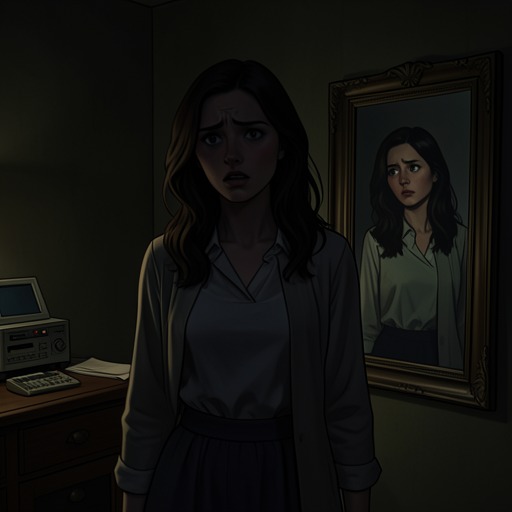
After Maren eats Andy, self-recognition takes the form of attempted bodily erasure. In the bathroom, she finds blood around her mouth, down her chin, and between her teeth. She brushes four times and gargles repeatedly with Listerine, yet still tastes Andy beneath the mint. The cleaning ritual cannot undo what has happened; instead, its repeated failure makes the boundary between an ordinary appearance and the act she abhors feel stubbornly material. She sees bruises along her ribs and shoulder and a cut on her forehead, washes her clothes under the faucet, then turns the shower hotter and hotter as if heat could wash away what she has done. The scene makes self-loathing a practice of inspection and scrubbing, not simply an abstract judgment.
Sullivan’s account of eating gives Maren another, more unsettling measure of what an eater can be. He speaks of his son’s pickled tongue and his granddaughter’s heart in stew, then breathes out a stench Maren associates with a battlefield, a backed-up sewer, and landfills. She understands that he has feasted on corpses and never brushed his teeth; she also knows he has a knife and intends to kill her. The contrast does not make Maren’s own acts harmless, but it shows that shared appetite does not make eaters morally or physically interchangeable. In the moment she recognizes Sullivan as a danger, monstrosity is both a kinship she cannot deny and a boundary she must judge: his condition resembles hers, while his threat to her makes the difference between them immediate.
Secrecy and the Work of Naming
Not all of Maren’s knowledge arrives as memory or bodily sensation; some comes through the questions she eventually asks Janelle. In the car, she asks what Penny Wilson looked like, where she came from, how old she was, whether she read much, and whether she was kind. They are questions about Penny as a person, not about the killing. Maren and Janelle never discuss what Maren did immediately after it happened. The distinction matters: learning about Penny can restore a human life to the remains of the childhood story, while the silence around the act leaves Maren’s own responsibility unnamed between mother and daughter.
That silence helps explain why Maren’s understanding of monstrosity remains unsettled rather than resolving into a single verdict. She encounters her nature first as an act she cannot remember, then as a warning she can feel, and later through inherited images that give the unspeakable a recognizable shape. Yet none of these forms of knowledge settles whether appetite defines the whole person. The novel keeps that question open by placing Maren’s self-condemnation beside her search for likeness, and by making recognition—of bodily evidence, cultural stories, or another eater—something other than absolution. To see herself among monsters is to find a language for her difference, not proof that goodness is impossible.