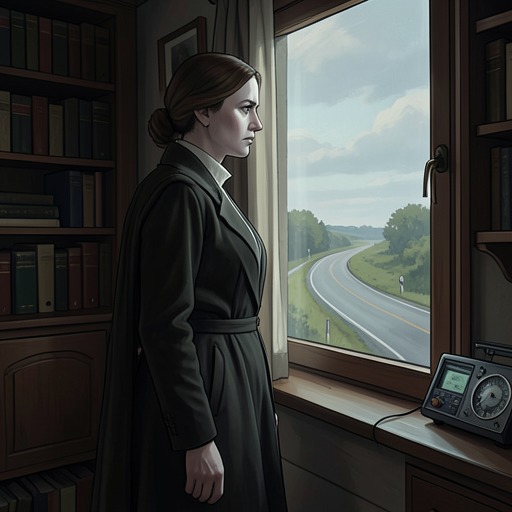
before Cécile’s seventeenth summer
The Father and Daughter Bond
After years at boarding school, [Cécile](entity:character-recall-character-c-cile-6cc1ebc07329) returned to her father, [Raymond](entity:character-recall-character-raymond-45cd0249be7a), and entered a life of Parisian pleasures: new clothes, fast cars, cafés, parties, and brief romances. Raymond was affectionate and generous, and treated his daughter less like a child to be guided than like a beloved companion in his lively, unsteady world.
His succession of mistresses became ordinary to Cécile. He neither offered false explanations nor tried to conceal the nature of his affairs, and she absorbed his belief that love need not entail fidelity or lasting obligation. Their intimacy rested on shared amusement and a mutual preference for freedom over rules.
two years before the summer
Anne’s Early Guidance
When [Cécile](entity:character-recall-character-c-cile-6cc1ebc07329) left boarding school, [Raymond](entity:character-recall-character-raymond-45cd0249be7a) sent her to [Anne Larsen](entity:character-recall-character-anne-larsen-8d80e99bba87), an old friend of Cécile’s late mother. Anne helped the inexperienced girl dress with taste and introduced her to the social world, even steering her toward her first young admirer. Cécile remembered her with passionate admiration and gratitude.
Anne’s composed intelligence and exacting standards stood apart from Raymond and Cécile’s casual pursuit of pleasure. Cécile admired her authority, but also felt diminished by it: Anne seemed to give words and actions a weight that Cécile preferred to avoid.
early summer
The Summer Villa
At seventeen, [Cécile](entity:character-recall-character-c-cile-6cc1ebc07329) went with [Raymond](entity:character-recall-character-raymond-45cd0249be7a) and his current mistress, [Elsa Mackenbourg](entity:character-recall-character-elsa-mackenbourg-44067e2f86b2), to a rented white villa above a secluded cove on the [Mediterranean Sea](entity:location-recall-location-faab9330cc7a). The house, the pine woods, and the hot, shining water promised a holiday without demands. Cécile felt entirely happy in the easy companionship of her father and Elsa.
Her days belonged to swimming, sun, and idleness. She savored simple sensations and even watched sand run through her fingers as though it were time. The vacation’s languor established the pleasurable, unexamined life that would soon be disrupted.
the sixth day of the holiday
Cécile Meets Cyril
[Cyril](entity:character-recall-character-cyril-51499c3422f2), a law student staying nearby with his mother, capsized his small sailboat in front of the cove. [Cécile](entity:character-recall-character-c-cile-6cc1ebc07329) helped him recover his belongings and was struck by his dark, open face and his reassuring physical presence. He offered to teach her sailing, and their shared outings quickly became part of her days.
Cécile usually preferred the older men in [Raymond](entity:character-recall-character-raymond-45cd0249be7a)’s circle to young students, whom she considered self-absorbed. Cyril unsettled that preference: he seemed kind and steady, and his attractiveness made her feel that she could trust him.
during the first week of July
Anne Is Invited
One starry evening, [Raymond](entity:character-recall-character-raymond-45cd0249be7a) announced that [Anne Larsen](entity:character-recall-character-anne-larsen-8d80e99bba87) was coming to stay. He had invited her after hearing that she was tired from her work, and had not thought through the awkwardness of bringing her into a holiday already shared with Elsa. [Cécile](entity:character-recall-character-c-cile-6cc1ebc07329) immediately understood that Anne’s presence would change the atmosphere.
After Elsa went upstairs, Cécile sat with her father and warned him that Anne would not suit his usual romantic pattern. Raymond admitted that he had failed to consider the situation, but the two laughed together at the complication. Their close, conspiratorial bond seemed capable of absorbing almost anything.
the afternoon before Anne’s arrival
Cécile’s First Kiss
On the beach, [Cyril](entity:character-recall-character-cyril-51499c3422f2)’s hand brushed [Cécile](entity:character-recall-character-c-cile-6cc1ebc07329)’s shoulder as he sat beside her. The touch, arriving in the heat and drowsiness of the afternoon, suddenly made her feel the force of her attraction. She had grown used to their sailing lessons and physical closeness, but now his nearness stirred her in a new way.
Cyril kissed her gently. A car horn interrupted them, and Cécile left him without explanation, surprised by the intensity of the moment and by how quickly pleasure had displaced her calm.
the afternoon of the scheduled train arrival
Anne Arrives at the Villa
Anne arrived by car rather than by train and found [Cécile](entity:character-recall-character-c-cile-6cc1ebc07329) at the villa. When Cécile explained that [Raymond](entity:character-recall-character-raymond-45cd0249be7a) had gone to the station with Elsa, Anne’s controlled expression broke: she was visibly shaken to learn that Elsa was staying there. She quickly regained her composure, but Cécile had seen a vulnerability in her that she had never imagined.
Cécile wondered whether Anne loved Raymond, despite his apparent incompatibility with Anne’s standards. When Raymond returned, Anne greeted him warmly and accepted the flowers he had brought. His delight at seeing her made Cécile consider how readily people might fall in love with him.
the evening Anne arrived
Anne’s Standards at Dinner
At the first dinner, Anne and [Raymond](entity:character-recall-character-raymond-45cd0249be7a) traded stories about their acquaintances. [Cécile](entity:character-recall-character-c-cile-6cc1ebc07329) enjoyed Anne’s sharp, memorable judgments, even when Anne dismissed a man Cécile liked as intellectually inadequate. Anne’s polished certainty fascinated Cécile, who imagined keeping a notebook of such phrases.
Later, Anne called Elsa kind, looking directly at Cécile as though testing her response. Cécile stumbled through an agreeable answer and went to bed irritated with herself. Anne’s presence already made Cécile more self-conscious, while her thoughts returned to [Cyril](entity:character-recall-character-cyril-51499c3422f2) and the possibility of another meeting.
the years before the summer
Cécile’s Parisian Past
[Cécile](entity:character-recall-character-c-cile-6cc1ebc07329) recalled the years after boarding school as a succession of easy, vivid pleasures. She had spent little time reading or studying; instead, she went to cinemas and cafés, met boys, and discovered the excitement of kisses and late nights. In the evenings she joined [Raymond](entity:character-recall-character-raymond-45cd0249be7a) at parties, where her youth itself entertained their company.
She adopted a romanticized cynicism, repeating Oscar Wilde’s idea that sin was the last vivid color in the modern world. Yet the pose was more fantasy than practice. Cécile imagined a life of transgression without reckoning with the pauses, habits, and ordinary feelings that shaped real life.
the morning after Anne arrived
Cyril’s Apology
[Cyril](entity:character-recall-character-cyril-51499c3422f2) apologized for kissing [Cécile](entity:character-recall-character-c-cile-6cc1ebc07329), worrying that her family circumstances and her youth made it too easy for him to take advantage. Cécile rejected his solemn guilt and told him that he would be like a brother to her. The declaration was a playful evasion rather than a refusal of desire.
Cyril embraced her, and Cécile felt affection and pleasure rise together. They kissed again, without shame or remorse. Afterwards she swam alone, exhilarated by the water and by the sense that happiness could remain uncomplicated.
the morning after Cyril’s apology
The Holiday Takes Shape
On the beach, [Raymond](entity:character-recall-character-raymond-45cd0249be7a) appeared with Anne and Elsa. Anne urged [Cécile](entity:character-recall-character-c-cile-6cc1ebc07329) to eat more, asked about her failed examination, and insisted she must prepare to retake it. Raymond joked that his daughter could always find a man to support her, but Anne ended the exchange by declaring that Cécile would work during the holiday.
Cécile begged to be spared study, but Anne did not promise to relent. Watching Raymond’s fixed attention on Anne, Cécile sensed the ingredients of a drama: a seducer, a worldly young woman, and a woman of will. She found a pink-and-blue shell and decided to keep it as a good-luck charm.
the first weeks of the holiday
Anne Draws Close to Raymond
Anne treated Elsa with surprising patience, never using the sharp remarks [Cécile](entity:character-recall-character-c-cile-6cc1ebc07329) expected from her. [Raymond](entity:character-recall-character-raymond-45cd0249be7a) seemed grateful for that kindness and found reasons to draw Anne into the family’s affairs. Cécile gradually noticed that his looks and gestures carried desire as well as gratitude.
Anne’s restraint appeared to reassure Cécile, who told herself that the two had known each other too long to fall in love suddenly. Meanwhile, [Cyril](entity:character-recall-character-cyril-51499c3422f2) remained the center of her attention. They sailed, danced, and exchanged affectionate words, while Raymond grew increasingly captivated by Anne’s poise.
during the weeks before the Cannes outing
Cécile Provokes Anne
When Elsa left the table with [Raymond](entity:character-recall-character-raymond-45cd0249be7a) for a siesta, [Cécile](entity:character-recall-character-c-cile-6cc1ebc07329) made a suggestive joke about the couple. Anne rebuked her for treating love as a chain of isolated sensations and tried to explain the continuity of tenderness, longing, and absence. Cécile recognized that her own brief romances had never taught her that kind of attachment.
The rebuke left Cécile ashamed and resentful. She felt Anne’s judgment expose an emotional poverty she had never examined, and wanted Anne to become angry rather than remain calmly right. [Cyril](entity:character-recall-character-cyril-51499c3422f2)’s attention helped her turn away from the discomfort, but Anne’s words stayed with her.
during the first half of the holiday
Cécile Condemns Respectability
After tea with [Cyril](entity:character-recall-character-cyril-51499c3422f2)’s mother, [Cécile](entity:character-recall-character-c-cile-6cc1ebc07329) attacked the older woman’s satisfaction with a conventional life of marriage and motherhood. She argued that a person deserved credit for choosing a difficult, transgressive path rather than merely fulfilling expected duties. Anne dismissed the argument as fashionable but shallow, and [Raymond](entity:character-recall-character-raymond-45cd0249be7a) said it made little sense.
Cécile was less attached to the theory than to the need to prove herself capable of thought. Anne’s condescension hurt because Cécile wanted to be taken seriously by her. The argument sharpened the contrast between Anne’s respect for order and Cécile’s ideal of choosing one’s own life, even if that life lacked direction.
several weeks into the holiday
The Cannes Evening
[Raymond](entity:character-recall-character-raymond-45cd0249be7a) proposed an evening of dancing and gambling in [Cannes](entity:location-recall-location-23b09ab6bf4c). [Cécile](entity:character-recall-character-c-cile-6cc1ebc07329) dressed in the only evening gown she owned, and for a while she and her father recovered their familiar excitement as they danced together. Anne appeared in a striking gray dress, and Raymond was openly astonished by her beauty.
At the casino, the group scattered. Elsa became anxious when she could not find Raymond, and Cécile guessed that he and Anne were together. She searched the grounds and found them in Raymond’s car, close and absorbed in one another. Anne said she would return with Raymond, leaving Cécile to manage Elsa.
late that night in Cannes
Elsa Leaves the Villa
[Cécile](entity:character-recall-character-c-cile-6cc1ebc07329) confronted [Raymond](entity:character-recall-character-raymond-45cd0249be7a) and Anne about abandoning Elsa, but her anger turned into a cruel insult about Raymond’s sexual affairs. Anne slapped her. Raymond demanded an apology, and Anne then spoke to Cécile with unexpected gentleness, asking her to handle Elsa delicately and checking whether the slap had hurt.
Cécile returned to Elsa with a lie that Anne had been ill. Elsa saw through the reassurance and began to cry, joined in bewilderment by the drunken South American who had been keeping her company. Elsa said they had been happy together, then left, promising to collect her bags later. Cécile felt she was losing a friend despite their shallow acquaintance.
the morning after the Cannes outing
Raymond and Anne Decide to Marry
The next morning, [Cécile](entity:character-recall-character-c-cile-6cc1ebc07329) found [Raymond](entity:character-recall-character-raymond-45cd0249be7a) and Anne looking tired but happy. Anne told her that she and Raymond wanted to marry. Cécile offered immediate approval, while privately struggling with the sudden prospect of a changed household and a more orderly life.
She briefly imagined the three of them becoming a refined, settled family. Raymond drew her close and assumed she was delighted. Cécile played the affectionate daughter, even as she sensed that she was being absorbed into a bond between two adults whose shared past and future did not fully include her.
the week after the marriage announcement
A Week of Family Happiness
Elsa did not return, and the three remaining at the villa began planning their future household. [Raymond](entity:character-recall-character-raymond-45cd0249be7a) and [Cécile](entity:character-recall-character-c-cile-6cc1ebc07329) enthusiastically proposed schedules and rules, though neither had much experience of living by them. Anne seemed relaxed and affectionate, and Raymond appeared deeply in love with her.
Cécile enjoyed being mistaken for a daughter in a conventional family rather than a young woman out with her father. She sincerely wished their happiness might last. She still saw [Cyril](entity:character-recall-character-cyril-51499c3422f2), kissing him when they pleased, but Anne’s newly visible sensuality made Cécile wonder what a more enduring love could feel like.
near the end of the happy week
Anne Forbids Cyril
Anne came upon [Cécile](entity:character-recall-character-c-cile-6cc1ebc07329) and [Cyril](entity:character-recall-character-cyril-51499c3422f2) together in the pine woods and told him she did not expect to see him again. After he left, she warned Cécile that a careless romance could end in a clinic, forbade her to see Cyril, and ordered her to study. Anne said she was now partly responsible for Cécile and would not let her ruin her life.
At dinner Anne reported the encounter to [Raymond](entity:character-recall-character-raymond-45cd0249be7a), who reluctantly supported the restriction. Cécile protested that she had only kissed Cyril, but the adults treated the matter as a question of responsibility and discipline. She felt abandoned by her father and understood how little her preferred life of carelessness could defend itself against Anne’s arguments.
the day after the ban
Bergson and the Turning Point
Forced to sit with her philosophy books, [Cécile](entity:character-recall-character-c-cile-6cc1ebc07329) tried to understand a difficult passage by Bergson. Her frustration shifted into a mounting conviction that Anne’s influence would remake her and [Raymond](entity:character-recall-character-raymond-45cd0249be7a). She feared becoming an obedient, polished daughter in a life that was comfortable but no longer her own.
Cécile missed the old complicity with her father and resented Anne for making her feel divided against herself. She admitted that the supposed threat came partly from heat, the absence of [Cyril](entity:character-recall-character-cyril-51499c3422f2), and her own laziness, but the insight did not dissolve her hostility. The desire to drive Anne away began to take form.
two days after Cécile’s crisis
Elsa Returns for Her Bags
Elsa came back to collect her belongings, now sun-browned and newly dressed after time spent with a man named Juan. [Cécile](entity:character-recall-character-c-cile-6cc1ebc07329) welcomed the familiar world Elsa represented and noticed that she had become more attentive to small expressions and feelings than she would have been earlier in the summer.
When Elsa asked whether [Raymond](entity:character-recall-character-raymond-45cd0249be7a) was happy, Cécile saw a chance to enlist her. She claimed that Anne was controlling Raymond and that the marriage would destroy their former life. Elsa, still attached to Raymond, was ready to believe that she alone could challenge Anne.
the afternoon Elsa returned
Cécile’s Scheme
[Cécile](entity:character-recall-character-c-cile-6cc1ebc07329) persuaded Elsa that [Raymond](entity:character-recall-character-raymond-45cd0249be7a) still loved her and that she had the standing and allure to win him back. She described Anne as an intriguer who had trapped Raymond with respectability, then urged Elsa to act for the sake of Raymond and their supposed shared love. Elsa left convinced that she had a mission.
Cécile arranged for Elsa to stay with [Cyril](entity:character-recall-character-cyril-51499c3422f2) and told her to ask him for hospitality. Alone afterward, she calculated how Raymond might react to seeing Elsa with a younger man. Her excitement at manipulating Elsa mingled with disgust at her own lies, but she also felt a new pride in her ability to read and influence another person.
later that afternoon
Cécile Reconsiders
At the beach, Anne was cheerful and kind to [Cécile](entity:character-recall-character-c-cile-6cc1ebc07329). The sight of her generosity made Cécile regret the plot she had just set in motion. She imagined confessing the whole scheme and expected that she would advise Elsa to leave, return to her studies, and let the family’s happiness continue.
Anne’s laughter encouraged Cécile to keep silent rather than confess. Cécile told herself she would start studying the next day and perhaps even succeed in school. She also recognized, with uneasy fascination, the pleasure of having discovered how readily one person’s vanity and longing could be touched by carefully chosen words.
the following morning
Cyril Proposes Marriage
[Cécile](entity:character-recall-character-c-cile-6cc1ebc07329) went to [Cyril](entity:character-recall-character-cyril-51499c3422f2)’s villa after drinking too much the night before. Cyril welcomed her anxiously and said Elsa had told him that Anne was making her unhappy. He then declared that he wanted to marry Cécile, explaining that he was ready to leave his studies and had prospects through an uncle.
Cécile loved Cyril’s tenderness but did not want to marry him. She was tired and frightened by the seriousness of his proposal, and tried to place responsibility on Anne and [Raymond](entity:character-recall-character-raymond-45cd0249be7a). Cyril agreed to help with the scheme against Anne if that was what it took to secure their future together.
that morning
The Plot Takes Effect
[Cécile](entity:character-recall-character-c-cile-6cc1ebc07329) explained her plan to [Cyril](entity:character-recall-character-cyril-51499c3422f2) and Elsa: they would appear to be lovers, and [Raymond](entity:character-recall-character-raymond-45cd0249be7a) would be made to see Elsa in Cyril’s company. Cécile persuaded herself that she could stop the performance whenever she wished. Cyril disliked the deception but accepted it because he believed it might allow him to marry her.
Cécile and Cyril kissed, and she chose to begin the charade out of curiosity and indolence as much as deliberate malice. The plan gave her a sense of control, while Cyril’s proposal and affection fed her confidence. She imagined a future with him, though she remained unsure whether she wanted marriage or simply the pleasures he offered.
later that morning
Elsa Appears with Cyril
[Cécile](entity:character-recall-character-c-cile-6cc1ebc07329) returned to the beach and found [Raymond](entity:character-recall-character-raymond-45cd0249be7a) and Anne together. Soon [Cyril](entity:character-recall-character-cyril-51499c3422f2) sailed past the cove with Elsa aboard. Raymond was astonished to see Elsa and imagined she had attached herself to the young man and his mother. Anne, however, watched Cécile rather than the boat and asked whether Cécile blamed her.
Anne apologized for having been too strict and touched Cécile’s hair and neck. Her tenderness nearly broke Cécile’s resolve: Cécile wanted to abandon the scheme and place herself in Anne’s care. Yet Raymond did not notice the exchange, and the performance had already begun to alter the family’s balance.
the following days
The Pretended Romance Continues
[Raymond](entity:character-recall-character-raymond-45cd0249be7a) showed no open jealousy when he saw Elsa with [Cyril](entity:character-recall-character-cyril-51499c3422f2), which reassured [Cécile](entity:character-recall-character-c-cile-6cc1ebc07329) and also wounded her pride. When he remarked that Elsa had become more beautiful, Cécile replied that love suited her. Raymond grew angry at the thought that a younger man might claim a woman who had once been his.
Cécile continued to avoid Cyril and Elsa, telling herself she would not be drawn further into their performance. She pretended to study, but spent her afternoons reading a book about yoga and occasionally laughing at her own disguise. At meals she performed intellectual seriousness, using bits of Kant to impress Anne and exasperate Raymond.
one afternoon during the scheme
Anne Catches Cécile Pretending
Anne found [Cécile](entity:character-recall-character-c-cile-6cc1ebc07329) posed in a yoga position, surrounded by a book marked with dismissive notes rather than serious study. She also asked about a philosophical essay Cécile had claimed to be writing. Cécile had never begun it, and Anne saw through the performance immediately.
Anne accused Cécile of lying to her and [Raymond](entity:character-recall-character-raymond-45cd0249be7a). Cécile, humiliated by Anne’s calm contempt, ran through the heat to [Cyril](entity:character-recall-character-cyril-51499c3422f2)’s villa. She reached his bedroom in a state of anger and confusion, and the encounter turned into a decisive physical crossing between them.
the afternoon Anne discovers the false studying
Cécile and Cyril Become Lovers
[Cyril](entity:character-recall-character-cyril-51499c3422f2) woke as [Cécile](entity:character-recall-character-c-cile-6cc1ebc07329) entered his room. She panicked at the thought of his mother finding her there, but Cyril caught her and drew her back. Fear, desire, tenderness, and anger converged in their first sexual encounter. Cécile felt she had discovered a kind of love she could no longer discuss with her former casualness.
Afterward, she called Cyril her lover and told him she might have given her life for him in that moment, though she remained wary of calling herself constant. Returning to the villa, she sat near Anne in silence. When several matches failed to light her cigarette, Anne watched her closely, then silently offered her a lit one instead of asking questions.
a few days after Cécile and Cyril become lovers
The Locked Bedroom
During another argument about holiday work, Anne locked [Cécile](entity:character-recall-character-c-cile-6cc1ebc07329) in her bedroom. Cécile, unused to being confined, first tried the door and window in panic. Once the panic passed, she became still and began carefully planning retaliation. The disproportion between the punishment and the revenge taking shape in her mind revealed a new capacity for cruelty.
[Raymond](entity:character-recall-character-raymond-45cd0249be7a) released her that evening and asked whether they should talk. Cécile brushed off the idea and promised to apologize to Anne. She also hinted that she might marry sooner if life with Anne became unbearable, deliberately touching Raymond’s fear of losing their old closeness.
the evening Cécile is released
Cécile Reassures Her Father
[Cécile](entity:character-recall-character-c-cile-6cc1ebc07329) apologized to Anne, who accepted the apology without making the disagreement larger. She then told [Raymond](entity:character-recall-character-raymond-45cd0249be7a) that Anne’s life was more successful and meaningful than theirs, and that Cécile would eventually absorb Anne’s ideas. Her calm acceptance unsettled Raymond, who feared losing the companion who had shared his old habits.
Cécile claimed that their former life need not be denied, only abandoned. Raymond tried to defend their years together as neither stupid nor unhappy, but Cécile held to her new position. The conversation concealed her actual plan and made her appear reconciled to Anne’s authority.
the next morning
Raymond Sees Elsa with Cyril
[Cécile](entity:character-recall-character-c-cile-6cc1ebc07329) took [Raymond](entity:character-recall-character-raymond-45cd0249be7a) for a walk and led him through the pine woods at the appointed time. They found [Cyril](entity:character-recall-character-cyril-51499c3422f2) and Elsa asleep together on the ground, arranged to look like a happy couple. Raymond stared at Elsa, visibly shaken, while Cécile urged him not to wake them and led him away.
Raymond called Elsa a bad woman and admitted that seeing her with Cyril affected him despite his claims not to love her. Cécile guided his thoughts toward the idea that Elsa was young and now beyond his reach. She watched him return to Anne and hold her with renewed intensity, then left trembling with shame at having provoked both of them.
that afternoon
Cécile and Cyril’s Secret Afloat
[Cécile](entity:character-recall-character-c-cile-6cc1ebc07329) met [Cyril](entity:character-recall-character-cyril-51499c3422f2) on his sailboat and stopped him from talking about the morning. They made love in the heat, hidden from the shore by the open water. The danger and secrecy intensified the pleasure, and afterward they laughed together, grateful for the sea and the physical world they could still share.
Cécile began to understand that her attachment to Cyril was real but did not necessarily mean she wanted the future he imagined. Their secret intimacy helped her escape, for a time, the shame and responsibility created by the plot. The staged romance with Elsa continued to draw [Raymond](entity:character-recall-character-raymond-45cd0249be7a) toward jealousy.
a few days later
The Saint-Raphaël Gathering
[Raymond](entity:character-recall-character-raymond-45cd0249be7a) arranged an evening in [Saint-Raphaël](entity:location-recall-location-ca7e6ffe2939) with Charles Webb, an old acquaintance who had once been Elsa’s lover. [Cécile](entity:character-recall-character-c-cile-6cc1ebc07329) knew Elsa wanted to attend and recognized that the meeting could intensify Raymond’s jealousy. Anne drove the family in her American car, and Cécile felt the three of them briefly resemble a family on its way to a shared future.
At the bar, Raymond announced that he and Anne would marry on October 5. Webb and his wife congratulated them, but Elsa soon appeared with [Cyril](entity:character-recall-character-cyril-51499c3422f2). Raymond’s delight at Elsa’s beauty slipped into anger, and Cécile diverted Anne’s attention by pointing out another man watching her.
the night of the Saint-Raphaël gathering
The Lovers on the Dance Floor
At a nightclub, Elsa and [Cyril](entity:character-recall-character-cyril-51499c3422f2) arrived together, making their apparent relationship impossible to ignore. [Raymond](entity:character-recall-character-raymond-45cd0249be7a) called it a passing infatuation, but his anger betrayed how strongly Elsa’s renewed beauty and availability affected him. Anne watched without visible jealousy, and [Cécile](entity:character-recall-character-c-cile-6cc1ebc07329) admired her composure.
Cécile drank heavily and told Anne that Cyril was her lover, but Anne assumed she was drunk. On the drive home, Cécile fell asleep against Anne’s shoulder while Raymond asked Anne whether she believed his declaration of love. Anne confessed that repeated declarations frightened her, and Cécile stayed quiet as the couple’s tenderness continued around her.
the morning after the Saint-Raphaël gathering
Anne Questions Cécile
Anne brought [Cécile](entity:character-recall-character-c-cile-6cc1ebc07329) coffee and asked whether she truly enjoyed the company of people like the Webbs. Cécile defended their vulgarity as a source of fascination, then asked whether Anne thought she was intelligent. Anne said she did, but observed that experience gave her an advantage and that it would be disastrous if Cécile influenced her instead.
Anne warned that men like Webb could end in loneliness and dependence as they aged. Cécile realized that such a future might also await [Raymond](entity:character-recall-character-raymond-45cd0249be7a), but she could not imagine the orderly, quiet life Anne represented. She feared being bored and losing the agitation that she and her father used to feel alive.
during the final weeks of the holiday
Cécile Understands Raymond
[Cécile](entity:character-recall-character-c-cile-6cc1ebc07329) reflected on [Raymond](entity:character-recall-character-raymond-45cd0249be7a)’s character and concluded that he was loving but irredeemably light in his habits. He did not deliberate over desire or translate it into a complicated moral crisis; he treated it as a physical appetite to satisfy. Anne offered him intelligence, sensuality, and admiration, but Cécile doubted whether he understood the obligations his marriage would carry.
Raymond’s desire for Elsa grew as she became forbidden and as she came to symbolize his lost youth. Cécile knew she could facilitate an affair by giving Elsa permission and taking Anne elsewhere, but she deliberately refrained. She wanted Raymond’s desire to lead him into an error that would force Anne to accept their former way of life.
one morning near the end of the holiday
Elsa Reports Raymond’s Invitation
Elsa sent word that everything was arranged and told [Cécile](entity:character-recall-character-c-cile-6cc1ebc07329) that [Raymond](entity:character-recall-character-raymond-45cd0249be7a) had apologized for his earlier conduct. He had complimented her and invited her to tea in the village. Elsa asked whether she should go, treating Cécile as the guide to her romantic campaign.
Cécile recoiled from the responsibility and told Elsa to decide for herself. Elsa insisted that the scheme had been Cécile’s idea and that Raymond needed to be freed from Anne. Cécile fled to [Cyril](entity:character-recall-character-cyril-51499c3422f2), seeking relief in their physical closeness rather than confronting the consequences of what she had set in motion.
that afternoon
Anne Sees the Affair
After swimming, [Cécile](entity:character-recall-character-c-cile-6cc1ebc07329) found Anne running awkwardly from the direction of the woods toward her car. Cécile understood that Anne had discovered [Raymond](entity:character-recall-character-raymond-45cd0249be7a) with Elsa. She ran after her and begged her not to leave, insisting that the situation was a mistake and her own fault.
Anne was crying. At last Cécile saw her not as an imposing force but as a solitary, vulnerable woman who had hoped to build a life with Raymond. Anne said that neither Cécile nor Raymond needed anyone, and left despite Cécile’s pleas. Cécile understood that Anne’s pain was partly the result of her own actions.
the evening Anne leaves the villa
Anne’s Fatal Car Accident
[Raymond](entity:character-recall-character-raymond-45cd0249be7a) returned after being with Elsa, and [Cécile](entity:character-recall-character-c-cile-6cc1ebc07329) threw herself against him, calling him a scoundrel and sobbing. He did not understand what had happened until she told him Anne had left. At dinner, he admitted that he had kissed Elsa in the woods and that Anne must have arrived at that moment.
Cécile and Raymond wrote letters full of apologies, convinced that Anne might return. A telephone call interrupted their hopeful work: Anne had crashed on the dangerous [Estérel Mountain Road](entity:location-recall-location-66483ff680ff), and the car had fallen down a steep drop. At the clinic, Raymond learned that she had died. The accident left open the possibility that her departure and death had not been entirely separate.
the night of the accident
The Letters of Apology
Before the accident was reported, [Cécile](entity:character-recall-character-c-cile-6cc1ebc07329) and [Raymond](entity:character-recall-character-raymond-45cd0249be7a) had written Anne two elaborate letters of apology under a large lamp. Their careful expressions of remorse made them feel that reconciliation was close. Cécile imagined Anne returning to the family home in [Paris](entity:location-recall-location-657453741ed3) and the three of them resuming their life together.
The letters remained on the table after the telephone call. Their hopeful tenderness became painfully useless, and Cécile later watched them fall to the floor as Raymond brought her a drink. The moment marked the collapse of their belief that they could repair the damage with words.
the afternoon after Anne’s death
The Return to the Villa
[Cécile](entity:character-recall-character-c-cile-6cc1ebc07329) and [Raymond](entity:character-recall-character-raymond-45cd0249be7a) returned to the villa and found Elsa and [Cyril](entity:character-recall-character-cyril-51499c3422f2) waiting on the steps. They seemed insubstantial beside the absence of Anne, who had never belonged to their love triangle and whom they had not known or loved. Cyril reached for Cécile, but she recognized that she did not need him and had never loved him as he loved her.
Inside, Anne’s jacket, flowers, bedroom, and scent remained. Raymond closed the shutters and poured drinks. The two of them began the familiar retreat into pleasure, unable to face the full meaning of what had happened.
several days after the accident
The Funeral in Paris
At Anne’s funeral in [Paris](entity:location-recall-location-657453741ed3), [Cécile](entity:character-recall-character-c-cile-6cc1ebc07329) and [Raymond](entity:character-recall-character-raymond-45cd0249be7a) greeted her elderly relatives beneath a clear sky. People looked at Raymond with sympathy, apparently aware of his intended marriage. Cécile saw [Cyril](entity:character-recall-character-cyril-51499c3422f2) searching for her and avoided him, unable to explain the resentment she felt toward him.
Some mourners called the death a terrible accident. Because Cécile still doubted whether it had been accidental, she found a grim satisfaction in their certainty. In the car afterward, Raymond held her hand, and Cécile thought that they were alone together and unhappy. For the first time, she wept.
the month after the funeral
Grief Becomes Manageable
For a month, [Cécile](entity:character-recall-character-c-cile-6cc1ebc07329) and [Raymond](entity:character-recall-character-raymond-45cd0249be7a) lived like a widower and an orphan, eating together and avoiding the outside world. They mentioned Anne cautiously, afraid that an unguarded memory might release unbearable words. Over time, they learned to speak of her as someone dear whom they might have been happy with, while taking refuge in the idea of chance rather than divine purpose.
The restraint gave their grief a livable shape, but it did not restore the future they had imagined with Anne. Their shared tenderness helped them avoid speaking of responsibility, just as it helped them continue without fully confronting what Cécile had helped cause.
the winter after the summer
Life Resumes in Paris
[Cécile](entity:character-recall-character-c-cile-6cc1ebc07329) met a young man named Philippe at a friend’s house and spent a week going out with him. [Raymond](entity:character-recall-character-raymond-45cd0249be7a), poorly suited to solitude, also began seeing an ambitious young woman. Their household gradually returned to its former rhythm of flirtation, conquest, and shared amusement.
Cécile and Raymond spoke about their romantic lives and were happy again in the ordinary sense they understood. They planned to rent a different villa near Juan-les-Pins the following summer. Their recovery seemed to confirm the life of pleasure they had reclaimed, though it did not erase the memory of Anne.
near the end of the novel
The Return of Tristesse
At dawn in [Paris](entity:location-recall-location-657453741ed3), when the sound of cars reaches [Cécile](entity:character-recall-character-c-cile-6cc1ebc07329) in bed, the summer returns to her memory. She repeats Anne’s name quietly in the darkness, unable to keep the past at a distance through distraction or new pleasures. The loss persists beneath the revived ease of her life with [Raymond](entity:character-recall-character-raymond-45cd0249be7a).
Cécile calls the feeling that rises within her [Tristesse](entity:concept-recall-concept-tristesse-75edac031422). The sadness is not a complete moral reckoning, but it carries the knowledge that Anne was vulnerable, that Cécile helped destroy her happiness, and that pleasure cannot permanently silence memory. The novel’s opening meditation on an unfamiliar sadness finds its source in the summer’s irreversible consequences.