
Guilt and Moral Awareness
Bonjour tristesseCécile’s guilt grows from an abstract suspicion of selfishness into an irreversible recognition of the person harmed.
increasing Bearing strength in each event
 decreasing
Bearing strength in each eventdecreasingA Casual Moral World

A Casual Moral World
Rules dismissed
Cécile accepts Raymond’s view that fidelity and commitment are conventions. She is more interested in pleasure than in moral judgment.
A lack of preparation
Her confidence leaves her unprepared to distinguish a harmless indulgence from a choice that damages another person.
The Uneasy Conscience
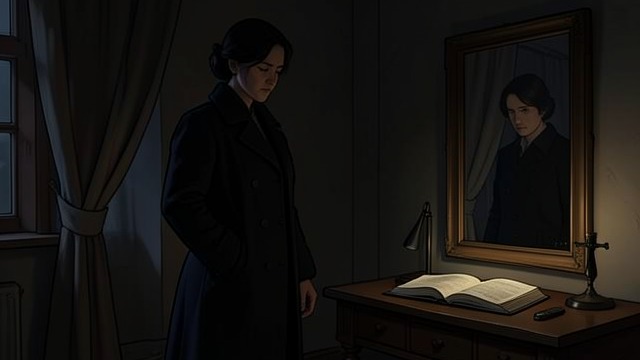
The Uneasy Conscience
Self-judgment awakens
Cécile recognizes that her hostility toward Anne may be selfish and cruel. She dislikes the feeling but cannot dismiss it.
Insight without restraint
Awareness does not immediately stop her. Cécile continues to scheme while also condemning herself for doing so.
The Temptation to Confess

The Temptation to Confess
Kindness changes the stakes
Anne’s gentleness makes Cécile want to abandon the plot and entrust herself to her. For a moment, affection threatens to overcome resentment.
Confession withheld
Cécile does not reveal the scheme. The moment matters because she sees a possible path to trust and still leaves it unused.
Recognition at the Car

Recognition at the Car
A person revealed
Seeing Anne cry breaks the idea that she is merely a controlling force. Cécile recognizes her as a vulnerable woman who had hoped for happiness.
Responsibility made concrete
Cécile knows that her choices helped expose Anne to this pain. Her plea for forgiveness cannot reverse the harm or stop the departure.
Memory as Moral Weight

Memory as Moral Weight
Grief persists
Cécile resumes ordinary life, but memories of Anne interrupt her solitude. Sadness becomes an unavoidable name for what remains.
No simple absolution
The novel offers no confession or certainty capable of closing the moral question. Cécile’s continued pleasure and her guilt coexist.
Before the summer’s conflict
After Cécile begins plotting against Anne
After Anne comforts Cécile by the cove
As Anne departs after discovering Raymond and Elsa
At dawn in Paris, near the end
