Départ et accident mortel d’Anne
Bonjour tristesseThe departure and fatal crash of Anne Larsen are the irreversible climax of the harm Cécile has helped bring about. At the car, Cécile suddenly understands Anne as a vulnerable person rather than an obstacle in the way of her and Raymond’s desires. Her pleas and apology come too late: Anne leaves, and news of a fatal crash on the Estérel Mountain Road turns a moment of remorse into lasting uncertainty about whether her death was accidental or chosen.
Causes and Background
Earlier that afternoon, Cécile is on the beach while Raymond is preparing to go to the village. She does not warn him or even ask him to be careful. Anne, meanwhile, has stayed away, occupied with her collection and drawing in her room while Raymond courts Elsa. The contrast makes the immediate cause of Anne’s departure visible in the household’s divided attention: the betrayal is taking place while Anne is apart from it, and Cécile has chosen not to intervene.
After two hours, when the sun no longer warms her, Cécile returns to the terrace and opens a newspaper. Anne then appears, coming from the woods and running awkwardly, with her elbows close to her body. Cécile is struck by the image of an old woman who might fall. Anne disappears behind the house in the direction of the garage, and Cécile abruptly understands where she is going. That recognition sends Cécile running after her; the scene’s first reversal is inward, as Cécile grasps that Anne is leaving before she has found the words to stop her.
The Attempt to Stop Anne
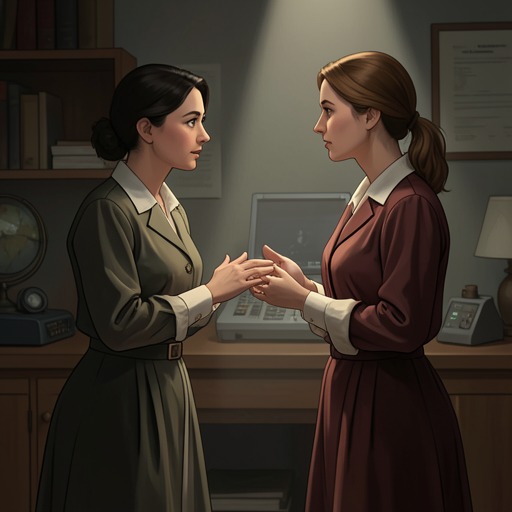
Anne is already in her car and turning on the ignition when Cécile reaches her. Cécile throws herself against the door and begs Anne not to go, calls the departure a mistake, accepts the blame, and promises an explanation. Anne does not look at or listen to her; she leans forward to release the brake. The exchange is therefore not a negotiation between equals. Cécile’s sudden remorse collides with Anne’s determined effort to leave, and the car’s running engine makes the separation immediate rather than merely threatened.
Cécile next tells Anne that she and Raymond need her. Anne straightens, visibly devastated, and cries. The moment forces Cécile to recognize the person her actions have injured: someone with a childhood and an adolescence behind her, a forty-year-old woman living alone who loved a man and had hoped to be happy with him for ten or twenty years. Cécile understands Anne’s face as the consequence of her own actions and is left trembling against the car door. The recognition is specific and belated: what Cécile had treated as an arrangement to manipulate has become a person’s damaged life.
Anne answers that neither Cécile nor Raymond needs anyone. Cécile begs forgiveness, but Anne asks what there is to forgive. Tears continue to roll down Anne’s otherwise still face, and she addresses Cécile with tenderness as a poor little girl. She briefly places a hand on Cécile’s cheek, then drives away and disappears around the corner of the house. The gesture does not cancel the departure or restore the relationship; its brief compassion instead sharpens the difference between Anne’s response and Cécile’s earlier callousness.
The Crash and Its Uncertainty
Raymond arrives after Anne has gone, having taken time to remove Elsa’s lipstick and brush pine needles from his suit. Cécile turns on him, calls him a scoundrel, and breaks into sobs. His questions show that he does not yet know what has happened. The scene links the departure to the betrayal at the villa, while showing how late the household’s recognition comes: Raymond asks for an explanation only after Anne has left.
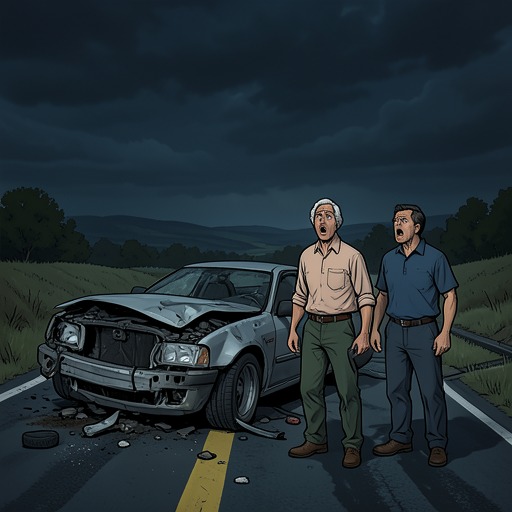
At ten that evening, the telephone rings. Cécile and Raymond initially hope Anne is calling to forgive them and return. Raymond answers eagerly, but his voice fades as he listens. The call brings news that Anne has had an accident on the Estérel Mountain Road; those reporting it had to find the family’s address by calling Paris first. Raymond then explains that the crash occurred at one of the road’s most dangerous points and that Anne’s car fell fifty metres. He says survival would have been miraculous. The mechanics of the report establish the fatal outcome, but do not settle whether the crash was an accident.
During the night, Cécile remembers the road appearing in the headlights, Raymond’s motionless face, and the clinic door. Raymond refuses to let her see Anne again. While waiting on a bench, Cécile looks at a lithograph of Venice and thinks of nothing; a nurse tells her that this was the sixth accident at that spot since the beginning of the summer. The repeated crashes make the location’s danger concrete, supporting the possibility that Anne’s death was accidental without proving it.
Aftermath and Significance
Cécile also considers suicide, but frames it as an uncertainty rather than a discovery. She imagines that she and Raymond, if they had possessed the courage, might have killed themselves with a gun and left an explanatory note intended to haunt those responsible. Anne, by contrast, leaves them what Cécile calls an enormous chance: the dangerous road and the instability of the car allow them to believe that the crash was an accident. Cécile recognizes that she and Raymond may be weak enough to accept that explanation. She also questions whether Anne would have killed herself for people who, as Anne had said, needed no one, living or dead. Raymond and Cécile never discuss anything but an accident, so the doubt remains unresolved.
When Cécile and Raymond return to the house the next day, Elsa and Cyril are waiting on the stairs. Cécile sees them as people who neither knew nor loved Anne, surrounded by their own romantic complications and embarrassed beauty. Cyril touches Cécile’s arm, but she recognizes that she had not loved him: she had found him kind and attractive and loved the pleasure he gave her, without needing him. She resolves to leave the house, Cyril, and the summer; Raymond takes her arm, and they go inside together.
Anne’s absence remains materially present in her jacket, flowers, room, and perfume. Raymond closes the shutters and brings out a bottle and two glasses, the only remedy they can reach for. Their apology letters still lie on the table. Cécile sweeps them onto the floor; Raymond hesitates before stepping around them with his filled glass. She regards the scene as symbolic and distasteful, then drinks at once. In the half-darkness, with the sea beating on the beach, the discarded letters and the untouched traces of Anne mark the limits of their remorse: they can acknowledge what happened, but neither apology nor drink can bring her back.