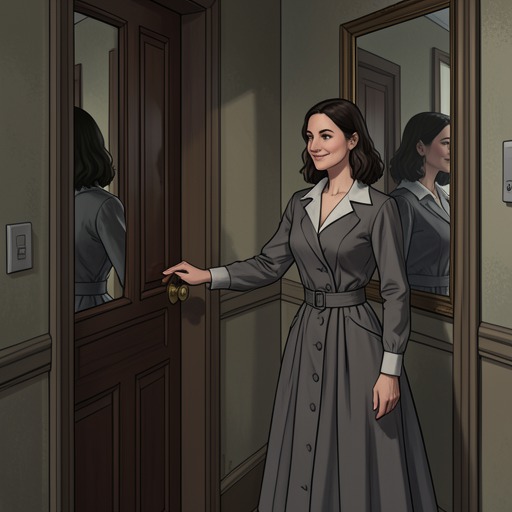
Le culte du plaisir
Bonjour tristesseLe culte du plaisir is the principle that shapes Cécile’s early account of happiness and her bond with Raymond: pleasure is treated as a reliable guide to living, while routine, restraint, and anticipated obligation seem like threats. The novel gives this principle concrete form in money, leisure, travel, social freedom, and physical experience. It also tests its limits. As Cécile’s pursuit of enjoyment becomes entangled with deception and loss, the ease she once valued proves unable to protect her from remorse or grief.
Origins in a shared way of life
Cécile is seventeen during the summer at the center of her recollection. Since leaving boarding school, she has entered a life with Raymond that prizes enjoyment and spontaneity. He is affectionate and generous toward her, and she regards him as both father and friend. His pattern of relationships with women is familiar to her, even when she has not fully accepted how frequently those relationships change. Because Raymond does not conceal his affairs behind elaborate explanations, Cécile learns to treat adult love with a cynical detachment that seems to fit their household.
Her account of pleasure is also material and social. In Paris, money enables the pleasures of riding quickly in a car, buying new clothes, records, books, and flowers, going to the cinema, and spending time at café terraces. Evenings out with Raymond expose her to a social world in which she can be entertained and noticed despite her age. Her memories of early romantic encounters belong to the same accumulation of agreeable experiences, rather than to relationships she describes as lasting attachments. This freedom from scarcity and settled routine helps explain why she calls the pursuit of pleasure the most coherent element in her character.
Cécile does not present this outlook as the result of a sustained intellectual program. She recognizes that she has read little, and describes her youthful taste for a philosophy of transgression as something she adopted in imagination more readily than in practice. The grand idea of a life devoted to wrongdoing and excess leaves out the ordinary pauses, interruptions, and everyday kindnesses that actually make up a life. The gap between her dramatic ideal and her habitual, easy-going existence is part of the concept’s irony: pleasure is both her genuine orientation and a pose she sometimes uses to make herself seem more knowing than she is.
The summer as an image of pleasure
The holiday setting gives this outlook a physical and social frame. Raymond has rented a large, isolated villa on the Mediterranean Sea, away from the road and above a small cove. Cécile remembers the early days as a succession of beach hours, swimming, rest, and freedom from Paris. These routines are not incidental scenery: they make pleasure feel self-sufficient, as if the summer could continue without the demands of ordinary life. Raymond’s exercises to keep fit for his romantic pursuits add a lighter, comic version of the same attention to enjoyment and appearance.
Cécile initially agrees to Elsa Mackenbourg joining the holiday because she expects her father’s current companion to be easy company and wants the trip to proceed without objection. That acceptance reflects the household’s accommodating attitude toward desire: Raymond’s relationships are treated as part of the conditions of their shared leisure. The villa and its holiday rhythm allow Cécile to imagine that happiness consists in preserving a world of movement, comfort, and personal choice, not in asking what those choices may require of other people.
The summer’s new attachment to Cyril complicates, but does not immediately displace, that outlook. Cécile describes the relationship as a source of real pleasure and as an experience she can think about as well as feel. At the same time, she becomes more reticent about intimacy around Raymond and Anne Larsen, whose closeness makes her newly conscious of adult relationships. Her changed modesty marks a shift in self-perception: pleasure is no longer merely an amusing topic or an easy entitlement but something that alters how she understands herself and other people.
Pleasure, control, and responsibility
Cécile’s pursuit of enjoyment becomes more consequential when she helps create situations designed to influence Raymond’s feelings. With Elsa and Cyril, she arranges appearances that can make Raymond believe the two are involved. Elsa is instructed to respond with conspicuous laughter when Cécile and Raymond arrive, and Cécile takes an intense interest in directing the scene and observing its effect on her father. What begins as a private game acquires emotional force: the staged image of Cyril with Elsa affects Cécile as well as Raymond. Her role as director does not leave her outside the feelings she has set in motion.
This is one of the clearest limits of Cécile’s pleasure principle. She can take satisfaction in the ingenuity and excitement of her scheme, and can use cynicism to make uncomfortable situations seem manageable. But her retrospective account also records an emerging division within herself. She makes excuses for her hostility toward Anne Larsen, then hears an opposing judgment that accuses her of self-deception. She knows that wanting to exclude Anne from the life she shares with Raymond is both a desire of her own and a cause for moral unease. Pleasure and self-justification coexist with a growing capacity to recognize harm.
The small incident with the repeatedly extinguished match condenses this tension without resolving it. After secretly seeing Cyril, Cécile returns to find Anne reading. When Cécile struggles to light a cigarette, Anne watches, raises her face, and then gives her a lighted cigarette without forcing an explanation. Cécile later assigns symbolic importance to this exchange but remains uncertain what it means. The scene sets her private excitement and fear beside Anne’s restraint and practical kindness; it also shows how an ordinary gesture can remain vivid in memory after Cécile’s confidence in her own motives has weakened.
Raymond and the cost of ease
Raymond’s character helps explain why pleasure feels like a shared inheritance rather than a youthful rebellion for Cécile. She describes him as deeply loving toward her, capable of suffering on her behalf, and good, delicate, and understanding. Yet she also recognizes his incurable lightness, inconstancy, and reluctance to think through desire. He tends to explain distress in physical terms and to treat an attraction as something to satisfy quickly before it creates complications. His approach is not simply an absence of feeling: he admires Anne Larsen and values her intelligence and experience, but Cécile doubts that he fully understands the seriousness of Anne’s attachment or the obligations that marriage would bring.
Cécile identifies herself with Raymond in their shared resistance to habit and expectation. She imagines that a breakup would trouble him less than a settled life, just as she fears boredom and tranquillity more than agitation. This resemblance gives their intimacy warmth, but also forms a closed perspective: because both prefer movement and ease, they can mistake freedom from constraint for freedom from consequence. Cécile’s efforts to provoke Raymond’s desire and conceal her own actions draw other people into that shared pursuit, while her father’s habitual lightness makes him poorly equipped to recognize what his choices mean to Anne.
Remorse and the changed meaning of pleasure
The narrative looks back from a later awareness of remorse. Cécile admits that she tries to escape conscience through ordinary distractions, such as lighting a cigarette, putting on a record, or calling a friend. These acts do not undo what she has done; they interrupt her attention to it. She is troubled not only by the memories themselves but by her reliance on forgetfulness and mental lightness instead of confronting them. The pleasure principle therefore persists as a method of evasion even when it can no longer provide uncomplicated happiness.
After Anne’s death, the remembered holiday world is altered by the objects left in the house: Anne’s jacket, flowers, room, and perfume, as well as the apology letters still on the table. Raymond closes the shutters, pours drinks, and steps around the letters; Cécile drinks quickly. The scene presents their familiar recourse to immediate comfort, but no longer as carefree leisure. The objects and unfinished apologies make the cost of their earlier choices present in the room, while the sea continues outside. In the account’s final movement, Cécile cries beside Raymond. Pleasure has not disappeared from the history she tells, but it can no longer stand as a sufficient account of happiness: her recollection joins it to self-knowledge, loss, and a sadness that neither she nor Raymond can simply distract away.