
Navigators and the Wider World
Book of EstherThis flow follows the essay’s account of navigational discovery and overseas routes as historical conditions for reaching distant peoples.
increasing Bearing strength in each event
 decreasing
Bearing strength in each eventdecreasingThe Sea’s Old Limits
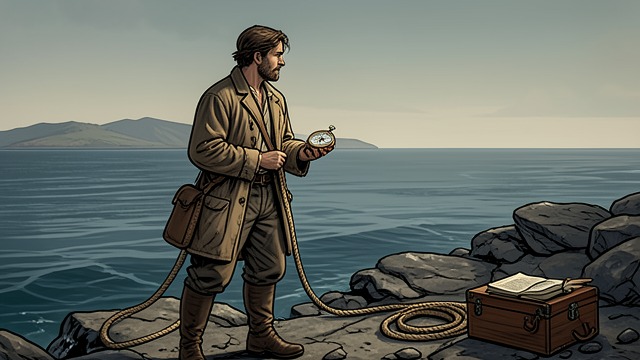
Ocean Travel Is Constrained
Coastal Navigation
Without reliable guidance far from land, voyages are slow and hazardous. Sailors depend heavily on coasts and visible celestial markers.
A Limited Reach
Carson argues that such conditions would make access to distant islands and continents difficult. The obstacles establish why changes in navigation matter to his account of worldwide proclamation.
The Compass Enters Use
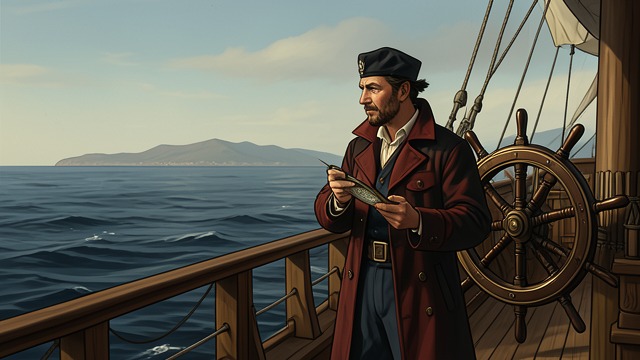
Navigation Gains a New Guide
Direction at Sea
The mariner’s compass makes it easier for sailors to maintain direction across open water, including in darkness or when landmarks cannot be seen. Carson treats the instrument as a decisive aid to long voyages.
A Doorway to Contact
Greater navigational confidence allows ships to reach places previously difficult to approach. The essay interprets that access as a condition later available to missionary and commercial activity.
Portuguese Voyages Begin
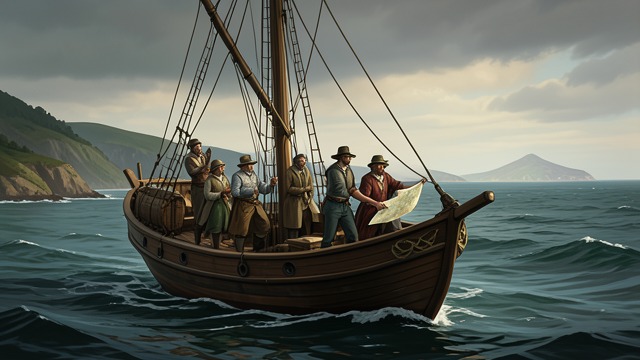
Exploration Moves Down the African Coast
A Small Beginning
An expedition associated with Portugal’s political ambitions sends ships along the African coast. Carson describes this limited undertaking as the beginning of a longer period of maritime discovery.
A Larger Route Emerges
Further voyages extend knowledge of sea routes and distant regions. The gradual expansion of navigation creates connections that later journeys can use.
Atlantic Crossings Expand
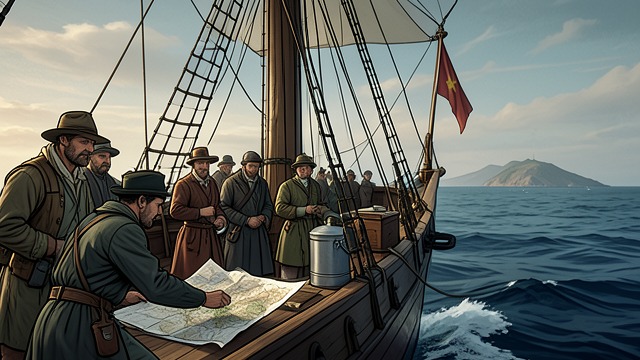
Voyages Reach the Americas
A Westward Passage
Christopher Columbus sails west in search of an Asian route and reaches islands in the Americas in 1492. The later discovery of the continental lands further changes European knowledge of the world.
New Regions Connected
The essay treats newly reachable territories as possible fields for future religious activity. It frames exploration through its consequences for contact and circulation, not merely through the prestige of discovery.
The Cape Route Reaches India
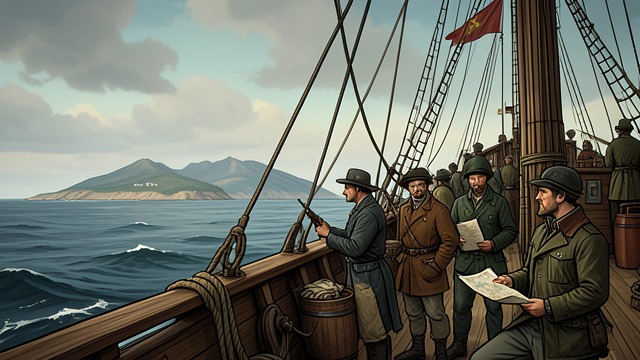
An Ocean Route Links Europe and India
A Passage Around Africa
Portuguese navigators reach India by sailing around the Cape of Good Hope. The route adds a sea connection between Europe and the East Indies.
Consequences for Contact
Carson views new routes as opening access to distant populations and sustaining regular exchange. Navigation becomes one part of a larger system involving ships, commerce, and the movement of texts.
Before the widespread use of the compass in Europe
By the beginning of the Age of Discovery
During the fifteenth century
In 1492 and the years that follow
In 1498
