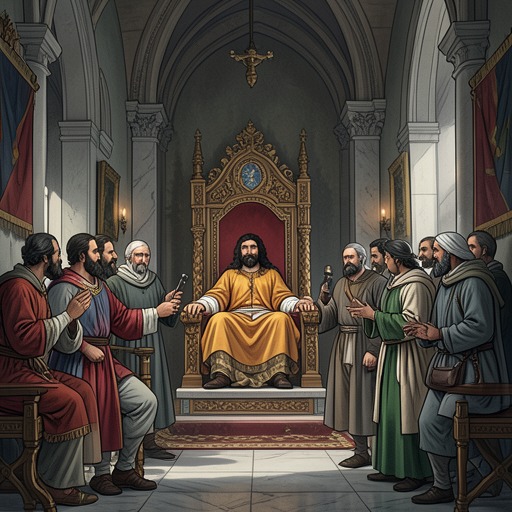
Leo X
Book of EstherLeo X is portrayed as a pope whose character and political choices helped create favorable conditions for the Protestant Reformation. In the book’s account, his luxury, generosity, family ambitions, and easygoing temperament shaped the Church of Rome’s response to Martin Luther: the demands placed on the Church were intensified, while the reformer was not promptly suppressed. The author reads this unintended opening as an instance of Divine Providence working through the actions and failures of powerful people.
Character and Priorities
Leo’s profuseness, luxury, liberality, and schemes for family advancement are identified as features of his rule. The author connects these priorities to the pressure to push the Church’s exactions as far as possible, which helped smooth the way for Luther’s doctrines. Leo’s easy temper and voluptuousness, in the same interpretation, made him disinclined to act immediately against the disturbance caused by the reformer. The account does not offer a fuller personal biography; it presents Leo chiefly through the effects of these traits on the crisis.
Response to Martin Luther
The policy of the Church of Rome toward Martin Luther is described as unusually indecisive. Rather than making an early, forceful attempt to crush him, or seeking to reconcile him through a partial reform of abuses, the court followed a vacillating course. Although the author notes that diplomacy had been perfected at Rome, he argues that the court neglected the most evident options and lost the moment when Luther might either have been ruined or brought back into the Church.
Leo’s own understanding of the challenge contributed to the delay. He attributed the disturbance to jealousy among monastic orders and left the monks to contend with one another. The book also emphasizes that Luther’s break with the Church of Rome was gradual: for a long period after beginning his reforming work, he remained a Papist and conscientiously expressed deference to the apostolic see. Only further inquiry led him to recognize what he considered the system’s fundamental errors. The author regards this gradual development as one reason Luther’s movement was able to gain ground before Leo treated it as a decisive threat.
Political Constraints and the Excommunication
Leo’s political calculations also limited his response. On the eve of an imperial election, his political schemes made him reluctant to offend Frederick, Elector of Saxony, Luther’s protector. This reluctance helped preserve the reformer’s opportunity to continue his work. The book dates Leo’s eventual pronouncement of the bull of excommunication to 1520, stressing how long the response was delayed despite the forceful opposition Luther faced.
Historical and Providential Significance
Leo’s conduct is placed within a wider account of conditions that favored the Reformation. The book also points to rivalries among popes, abuses associated with Church leaders, and the scandalous lives of clergy as circumstances that opened people’s ears to Luther’s teaching. Leo’s personal rule is therefore presented as one part of a broader historical turning: the very exactions and delays that might have served the Church’s immediate interests instead helped a challenge to its authority take root. For the author, this reversal demonstrates Providence using political ambition, misjudgment, and inaction to advance an outcome those actors did not intend.