Roman Empire
Book of EstherThe Roman Empire is presented as a vast political setting whose conditions helped carry the Gospel across national boundaries, while its power also opposed Christianity for three centuries. The book’s central interpretation rests on that tension: an empire that resisted the Christian message nevertheless supplied circumstances that, in the author’s account, facilitated its spread.
An Imperial Setting for the Apostolic Mission
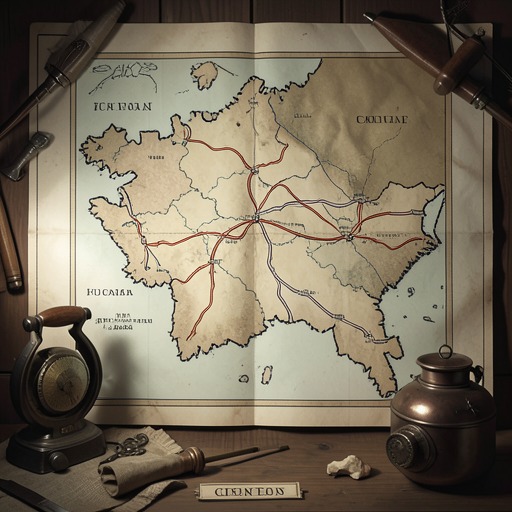
The author describes the Roman Empire as the greatest empire in human history and emphasizes the extensive provinces brought under one ruler. Their political subjection established intercourse between regions, allowing the apostles to travel from one country to another. In this account, imperial unity made distant peoples more accessible to a common message, as though the world had been brought together to hear the Gospel of salvation through Jesus Christ.
A general peace at the time of Christ’s coming forms a second part of the argument. War, the author reasons, would have obstructed communication between nations and drawn attention away from religious concerns. Peace was unusual, and its occurrence at this particular moment is interpreted as a providential condition for the apostles’ future journeys. The empire’s political order thus appears not simply as background, but as part of the historical means by which the message could travel.
Roads, Intercourse, and Civilization
The book also connects Roman rule with a degree of civilization in the conquered countries. It does not claim that the Gospel was addressed only to civilized peoples; rather, it argues that settled conditions made access easier and missionary work more practicable. The author therefore treats the civilization associated with Roman conquest as one of the ordinary historical means that facilitated the Gospel’s progress.
This account makes the empire’s contribution indirect and unintended. The Roman political structure did not, in the author’s reading, create Christianity’s power or purpose. It provided an interconnected provincial world in which the apostles could move and labor. These practical conditions belong to the book’s wider claim that providence can work through ordinary political and social arrangements, rather than requiring a miraculous interruption of them.
Opposition and the Unequal Conflict
The same imperial order that connected provinces also wielded power against the new faith. For three hundred years, the Gospel faced opposition from the Roman Empire, and, as the author stresses, no rebel sword was drawn to protect it. Christianity was established not through an alliance with imperial force but by preachers without learning or political power, confronting the combined resistance of influential Jews and Gentiles and the learning and authority of the age.
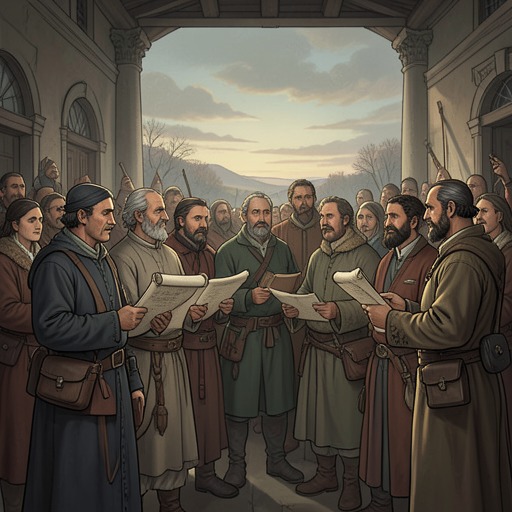
The contrast is sharpened by the apostles’ circumstances: the author characterizes them as illiterate fishermen, set against the intellectual resources of Greek philosophy and the political strength of an empire whose ruler was an enemy of their cause. He argues that their success cannot be explained by worldly influence. Had the apostles been philosophers, or had they enjoyed an imperial patron such as Constantine, the spread of Christianity would have lacked, in his view, one of its strongest proofs of divine origin.
The Empire in the Book’s Providential Interpretation
The Roman Empire therefore occupies a double place in the book’s account of Christian history: it is an obstacle through its opposition and an avenue through the peace, unity, and interregional contact of its rule. The author reads both sides together as evidence that the Gospel’s advance did not depend on the intentions of political powers. Circumstances that might appear merely political, and resistance that might seem capable of defeating the mission, are brought within a larger providential explanation.
This interpretation does not attribute the Gospel’s success to imperial benevolence. It emphasizes the opposite: a faith opposed by the empire nevertheless spread through the world the empire had helped connect. In the book’s argument, the mismatch between the weakness of the messengers, the scale of the opposition, and the extent of the eventual advance points beyond ordinary human means to God’s governance of history.