
The Contest Between Protest and Defense
Book of JobThis thread traces how Job and his companions dispute whether defending God's justice requires silencing an honest account of suffering.
increasing Bearing strength in each event
 decreasing
Bearing strength in each eventdecreasingJob Opens His Complaint
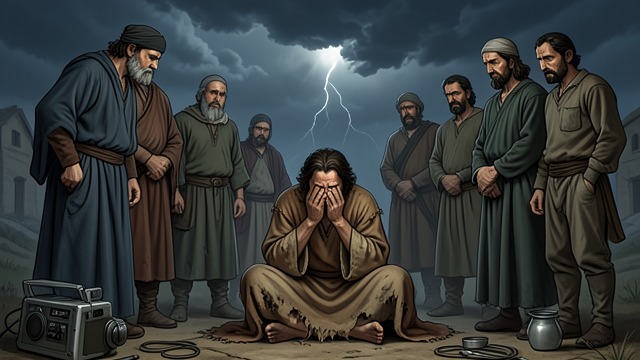
Job Opens His Complaint
Lament
Job curses his birth and describes death as release from toil and oppression.
Challenge
His grief forces the company to confront pain directly. The friends answer not by remaining with his lament but by trying to explain it.
A Defense of Divine Justice

A Defense of Divine Justice
Friends' Argument
Eliphaz and Bildad insist that God does not pervert justice and that wrongdoing brings consequences.
Hidden Assumption
Their defense treats Job's misery as evidence of guilt. It protects a principle by questioning the sufferer's testimony.
Job Challenges Their Speech
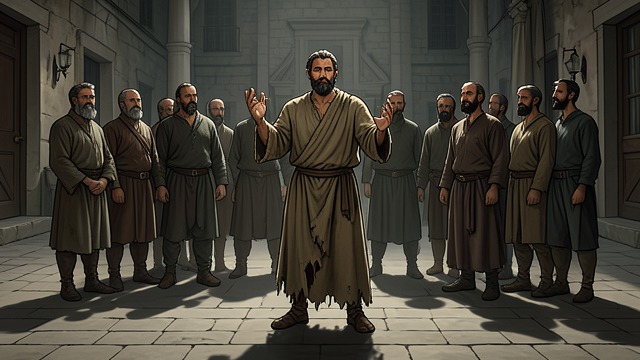
Job Challenges Their Speech
Demand for Candor
Job says his friends offer no proof and asks them to identify his actual error.
Loyalty and Protest
He wants to reason with God, not deceive God with flattering defenses. For him, honest protest can be more faithful than insincere agreement.
Elihu Accuses Job
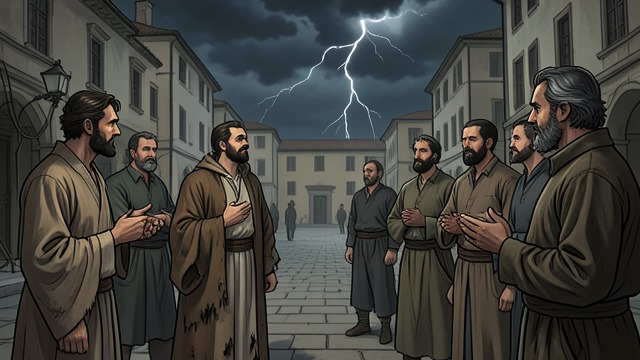
Elihu Accuses Job
New Charge
Elihu argues that Job's self-defense risks making his righteousness seem greater than God's.
Further Division
The dispute now concerns not only what suffering means but whether Job may speak as he does. His demand for justice is treated as a threat to divine honor.
God Rebukes the Defenders
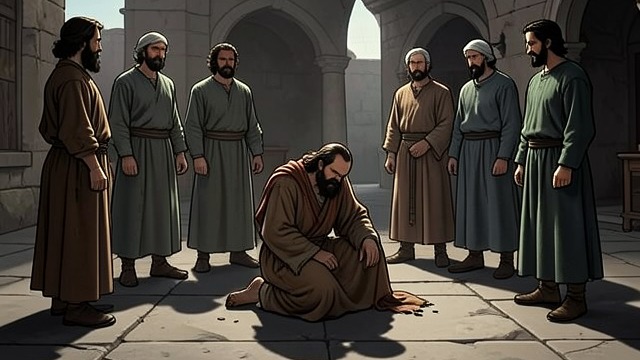
God Rebukes the Defenders
Unexpected Verdict
God condemns the friends' speech and identifies Job as having spoken rightly in comparison with them.
Conflict Reframed
The story does not reward a polished defense that misrepresents Job. It validates the seriousness of his engagement with God, even as the whirlwind humbles him.
After the week of mourning
In the first replies
During Job's replies in the early debate
After the friends stop answering
After Job's response to God
