
The Question of Unmerited Pain
Book of JobThis thread follows how Job's affliction turns a general belief in justice into a lived challenge to the idea that good people are always protected.
increasing Bearing strength in each event
 decreasing
Bearing strength in each eventdecreasingIntegrity Established

Integrity Established
Character
The opening presents Job as upright and devoted, not as a hidden offender awaiting exposure.
The Problem
That portrait prevents an easy explanation of what follows. The reader knows from the outset that catastrophe will not simply confirm a secret moral failing.
The First Losses
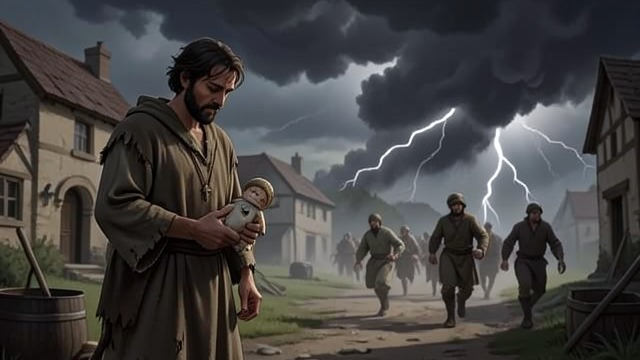
The First Losses
Bereavement
Job loses children, servants, and livestock through violence and disaster.
The Question Sharpens
Because the losses arrive without an accusation of wrongdoing, they unsettle the assumption that prosperity reliably signals virtue and safety.
The Body Becomes the Battlefield
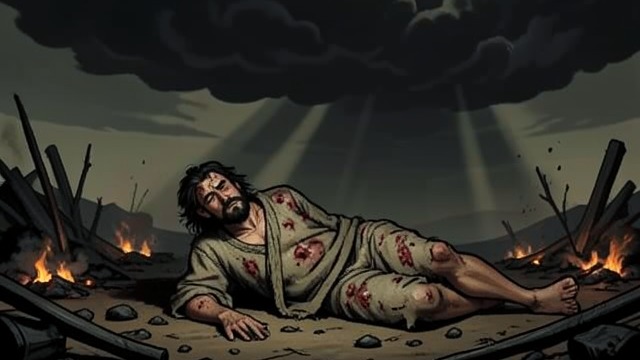
The Body Becomes the Battlefield
Affliction
Satan's second test leaves Job covered in painful sores, seated among ashes.
Exposure
The suffering is no longer limited to fortune or family. Physical pain makes the abstract question of divine justice unavoidable at every moment.
An Innocent Man's Protest
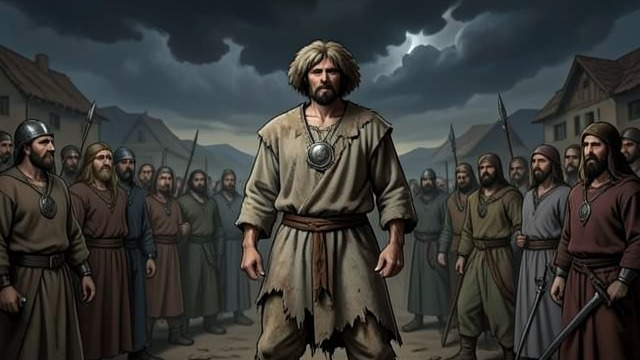
An Innocent Man's Protest
Refusal
Job rejects the friends' claim that his pain proves his guilt and asks why the wicked can prosper.
Moral Cost
His protest does not deny God's power; it insists that power alone cannot make a false explanation just. The argument preserves the reality of innocent suffering.
No Simple Explanation
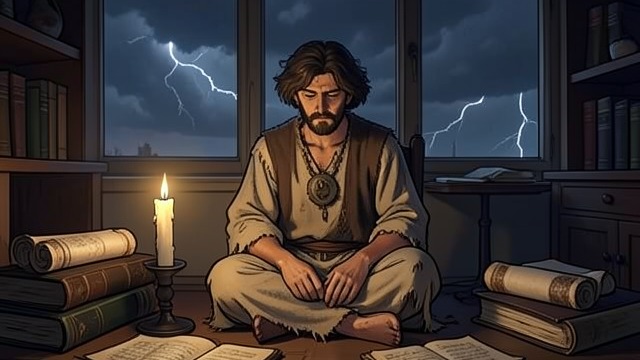
No Simple Explanation
Divine Reply
God answers with questions about the scale and strangeness of creation, not a reason for Job's particular losses.
Lasting Tension
Job is humbled and comforted, but the mystery is not converted into a tidy formula. The ending resists treating suffering as proof of guilt.
Before the calamities
At the beginning of Job's trial
After the first test
During the friends' speeches
At the close of the poem
