
The Mystery of Divine Justice
Book of JobThis thematic arc follows the demand for a morally intelligible world and the poem's refusal to equate justice with predictable earthly outcomes.
increasing Bearing strength in each event
 decreasing
Bearing strength in each eventdecreasingThe Accuser's Bargain

The Accuser's Bargain
Challenge
Satan claims that Job fears God only because God has blessed and protected him.
Question of Justice
The wager makes prosperity suspect as a measure of virtue. It asks whether a moral life has value beyond its reward.
Pain Without a Charge
Pain Without a Charge
Catastrophe
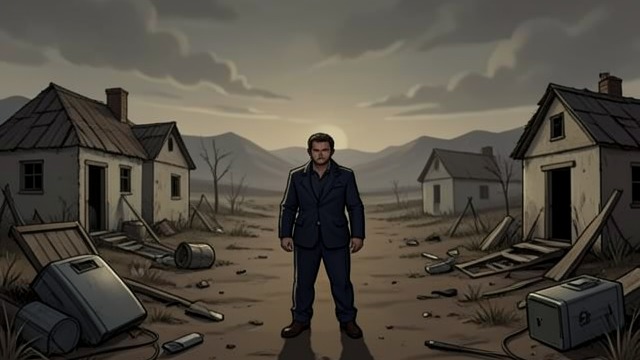
Job loses his family, possessions, and health without being shown to have committed the offenses alleged by his friends.
Moral Pressure
The gap between character and fortune drives the book's central question: whether justice can be recognized from visible outcomes alone.
The Friends' Neat Answer

The Friends' Neat Answer
Certainty
The friends insist that divine justice makes prosperity and suffering reliable moral signs.
Failure
Their answer cannot account for Job's integrity or the prosperity of the wicked. Its order is reassuring, but the dialogue exposes its inadequacy.
Creation Without Human Measure
Creation Without Human Measure
Divine Questions
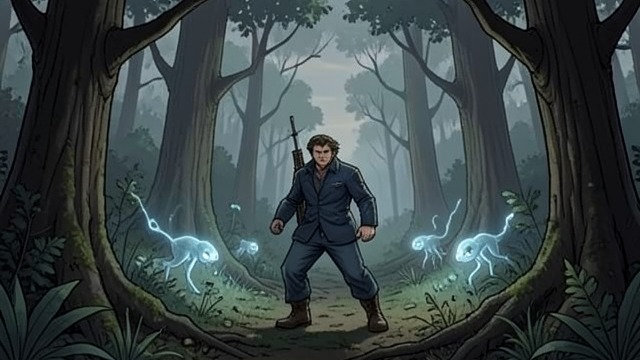
God describes natural forces and creatures whose lives do not fit human plans.
Broader Scale
The speech offers no transparent map of reward and punishment. It presents creation as a reality whose order exceeds what a human observer can readily interpret.
A Mystery Left Open

A Mystery Left Open
Restoration
Job's fortunes return after he prays for his friends.
Unresolved Justice
The renewed life does not explain why the earlier children died or why Job suffered. The book resists making restoration a proof that every wound was deserved or balanced.
Before the losses
During Job's first and second tests
Across the debate
During God's answer
At the closing restoration
