Job's First Calamities
Book of JobJob's First Calamities are a rapid series of raids and disasters that deprive Job of his wealth and kill his sons and daughters. Following Satan's challenge to the basis of Job's reverence, the losses turn the question of whether virtue is rewarded with prosperity into a lived crisis: Job suffers despite being presented as upright, and the narrative does not explain his losses as punishment for wrongdoing.
Background and Stakes
The calamities follow a heavenly challenge. Satan argues that Job reveres God because he, his household, and his possessions are protected and prosperous. God permits Satan to act against what Job owns but forbids him to harm Job himself. Satan then leaves God's presence. This limit defines the first trial: its blows fall on Job's livelihood, servants, and family, not yet on his own person.
The sequence puts the relationship between goodness and worldly success under pressure. If Job's faith rests on material security, the losses should expose it; if his reverence endures, prosperity cannot serve as its sufficient explanation. The event's force comes from the mismatch between Job's standing as an upright man and the scale of the disaster, rather than from any disclosed wrongdoing on his part.
The Succession of Losses
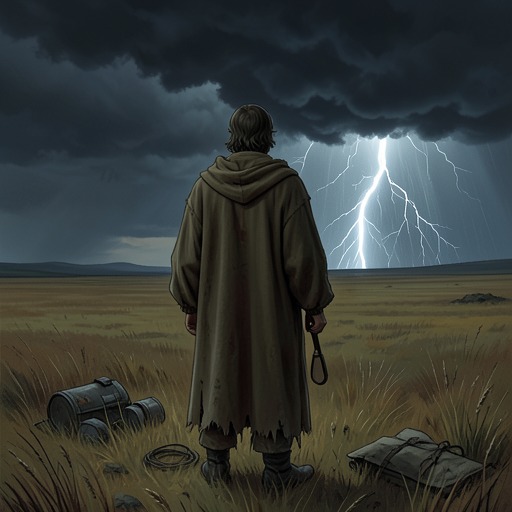
The news arrives in successive reports, each messenger still speaking when another appears. First, the Sabeans seize Job's Cattle and Domestic asses and kill the servants attending them. A lone survivor brings the report. Next, fire from heaven consumes the Sheep and their servants, again leaving one messenger to tell Job what happened.
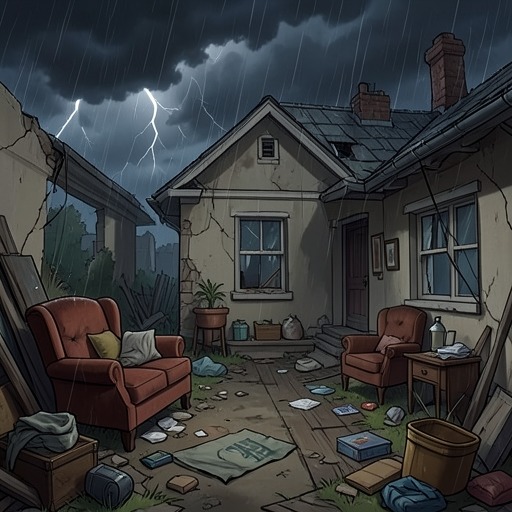
A third report describes the Chaldeans dividing into three bands, carrying off the Camels, and killing the servants. Before that messenger has finished, another arrives with news from the house of Job's eldest brother. Job's sons and daughters had been eating and drinking wine there when a great wind from the wilderness struck the house from its four corners. The house fell, and the children died. The final loss thus reaches beyond property and labor to Job's family, and the repeated arrival of survivors makes the disasters accumulate without pause.
Job's Response and the Aftermath
Job responds through the signs of mourning: he tears his mantle, shaves his head, and falls to the ground. He then worships God and acknowledges the reversal of his fortunes without accusing God of wrongdoing. The narrator explicitly states that, in this response, Job does not sin or charge God foolishly. His worship does not make the losses small; it marks the answer he gives at this first point in the test.
In the later debate, that initial response develops into an unresolved demand to understand his case. Job asks how a human being can be just before God and observes that a person cannot answer God point by point. He stresses the imbalance between them: God is not a human opponent with whom he can meet on equal terms in judgment. Job nevertheless appeals to a witness in heaven and, much later, expresses the desire that the Almighty hear him and that his adversary set out a case in writing. His appeal for a hearing does not erase his earlier worship; it shows how the calamities open into a sustained struggle over suffering and justice.
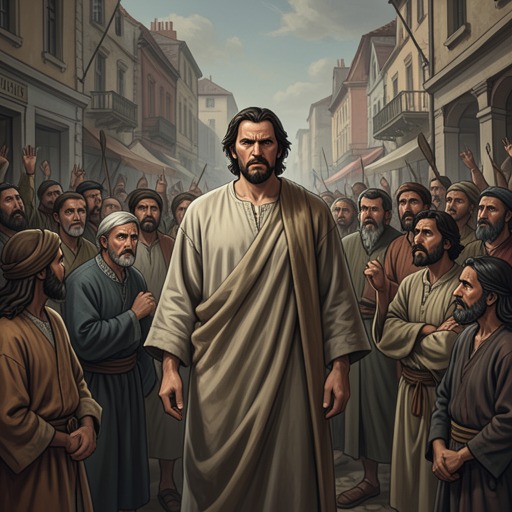
After hearing of Job's affliction, Eliphaz, Bildad, and Zophar come from their respective homes intending to mourn with and comfort him. When they see him from a distance, they weep, tear their mantles, and cast dust toward heaven. They sit with him on the ground for seven days and seven nights without speaking because his grief is so great. Their silence gives way to the arguments that follow, in which Job's suffering becomes the subject of debate rather than a loss that can be answered by ordinary consolation.
Significance in the Book
The calamities establish the book's challenge to the principle that God invariably punishes vice with earthly suffering and rewards virtue with earthly prosperity. The commentary emphasizes that Job is tormented not as the worst of men but as the best, and that the book does not finally explain his misfortunes as punishment for sin or as a lesson designed to improve him. The event therefore refuses the easy inference that visible success proves goodness, or that disaster proves guilt.
Its structure sharpens that refusal. The narrative moves from one surviving messenger to the next, ending not in an explanation but in Job's response and the friends' later silence. Job's losses make the question of justice unavoidable, while leaving the cause of his suffering unresolved. The first calamities are thus both a personal catastrophe and the narrative's opening test of whether faith, virtue, and prosperity can be treated as parts of a simple moral transaction.