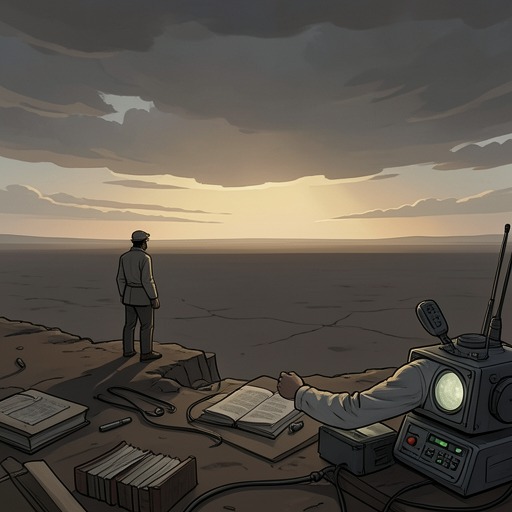
Where wast thou when I laid the foundations of the earth
Book of Job“Where wast thou when I laid the foundations of the earth?” is God’s challenge to Job from the whirlwind and the decisive opening of a reply that does not explain Job’s suffering. In the Book of Job, the question reverses the expected direction of the exchange: after Job and his friends have questioned God, God questions Job, shifting the dispute from the justice of one man’s affliction to the limits of human understanding.
The Question in Context
Then the Lord answers Job out of the whirlwind, first demanding to know who has darkened counsel with words without knowledge, and telling him to gird up his loins. The question about the foundations of the earth is followed by a challenge to declare whether he has understanding and to say who laid the earth’s measures and stretched its line. It begins a sustained sequence of questions, not a direct account of why Job has suffered.
The exchange follows Job’s own recognition of the imbalance between human and divine judgment. He asks how a person can be just with God and says that, were they to contend, he could not answer one question in a thousand. He also insists that God is not a man with whom he can meet on equal terms in judgment. The question from the whirlwind makes that inequality concrete: Job is asked to account for creation’s foundations before he can claim a comprehensive understanding of its governance.
Cross-Examination, Not Explanation
The question’s force lies in its reversal of the courtroom roles. Job has wanted God to answer him; instead, God speaks as a questioner and demands that Job answer. In the critical interpretation presented alongside the poem, this is a form of higher skepticism: God does not merely silence questions but turns questioning back upon the human questioner, exposing how little the questioner can claim to know.
That reversal does not establish a factual explanation for Job’s calamities. God’s speech, as interpreted in the accompanying commentary, refuses the mechanical assurance offered by Job’s friends that the world can be explained as a rational pattern. Its questions direct attention instead to creation’s strangeness and to phenomena beyond human control or comprehension, including rain falling in places where no person lives. The question about the earth’s foundations thus opens a wider challenge to the assumption that human reason can judge the whole design from its limited vantage point.
Job’s Response and the Question’s Significance
The commentary stresses the contrast between what God says and what Job receives from it: God has not disclosed the reason for his suffering, yet Job is comforted after hearing the speech. The riddles remain unresolved, but their very impenetrability becomes significant to him. The question therefore marks a change in the terms of the encounter, not the delivery of a solution to the original dispute.
The speech also rebukes both Job’s accusers and those defending God, rather than simply endorsing the friends’ confidence. Afterward, God tells Eliphaz that he and his two companions have not spoken rightly of him, while describing Job as his servant. The question’s place in this larger reversal helps define its force: it humbles Job’s claim to comprehend the order of the world without making the friends’ tidy account of suffering the poem’s final judgment. Its enduring significance lies in holding together human protest, the limits of human knowledge, and the possibility of finding comfort without receiving an explanation.