Moroni–Pahoran alliance
Book of MormonThe Moroni–Pahoran alliance is the military and political partnership between Moroni, chief commander of the Nephite armies, and Pahoran, the governor responsible for the civil government. Its decisive significance lies in the way it converts conflict within the state into coordinated resistance against a usurping enemy: Moroni brings military force and uncompromising concern for liberty, while Pahoran supplies constitutional authority, political knowledge, and the means to mobilize support. The alliance emerges only after a painful misunderstanding, and its success depends on both men placing the freedom and welfare of their country above personal grievance.
Political and Military Background
The partnership develops within a Nephite society already organized around contested ideas of legitimate rule. Earlier, the people had voiced a desire for Aaron to become king, showing that kingship remained an available political alternative even after the system of judges had been established. Against this background, the government had to defend both national independence and the principle that authority should answer to the people rather than to hereditary ambition or coercive power.
Religious and civic boundaries were also under pressure. Alma condemned priestcraft as a newly introduced danger among the people, identifying the attempt to use religious authority for personal advantage as a threat to public order. Elsewhere, Aaron and his brethren moved from city to city and from one house of worship to another, establishing teaching and worship among the Lamanites. These episodes frame the alliance within a wider struggle over the sources of legitimate influence: government, military command, religious persuasion, and collective covenant all compete to shape communal life.
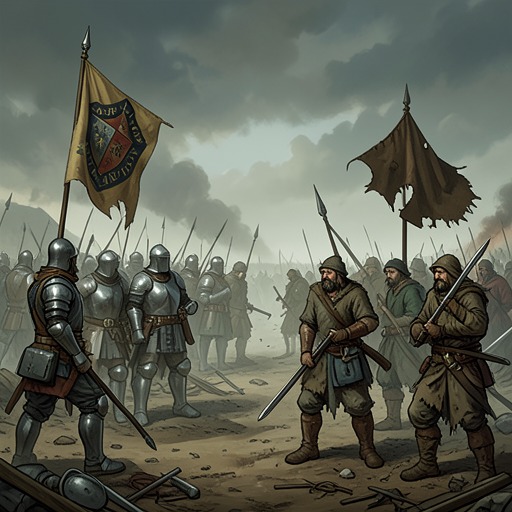
The immediate crisis is caused by dissension within the Nephite polity and by the rise of Amalickiah. When Moroni hears of these divisions, he becomes angry with Amalickiah, recognizing that internal fracture is not a private dispute but an opening through which an enemy can threaten the entire land. Moroni responds by raising the title of liberty, calling those who will defend their rights to enter a covenant before the Lord. The banner and covenant turn political defense into a public moral commitment, gathering military resistance around the linked claims of liberty, religion, and country.
Suspicion, Letters, and Recognition
The alliance is preceded by a breakdown in confidence. While Moroni is directing military operations, the armies suffer from inadequate support, and he writes to the governor in anger. His letters accuse the civil government of indifference toward the freedom of the country. The charge is severe because Moroni understands the army's losses and weakness as consequences of political neglect; in his view, soldiers cannot defend the nation if the government does not sustain them.
Pahoran's reply reverses Moroni's understanding of the crisis. He explains that he has not withheld support out of indifference. Instead, he has been driven from the judgment seat and is contending against men who have taken possession of Zarahemla. The civil authority Moroni thought negligent has itself been displaced. What appeared to be bureaucratic failure is revealed as political seizure, and the governor whom Moroni suspected becomes a fellow defender of the lawful order.
This recognition changes the emotional and strategic meaning of the correspondence. When Moroni receives Pahoran's epistle, his heart takes courage and is filled with exceedingly great joy because of Pahoran's faithfulness. The alliance therefore begins not with effortless agreement but with the correction of a false accusation. Moroni's willingness to respond to newly disclosed facts, and Pahoran's ability to answer suspicion with an account of his own resistance, allow military and civil leadership to reunite around a common enemy.
Coordinated Recovery of Zarahemla
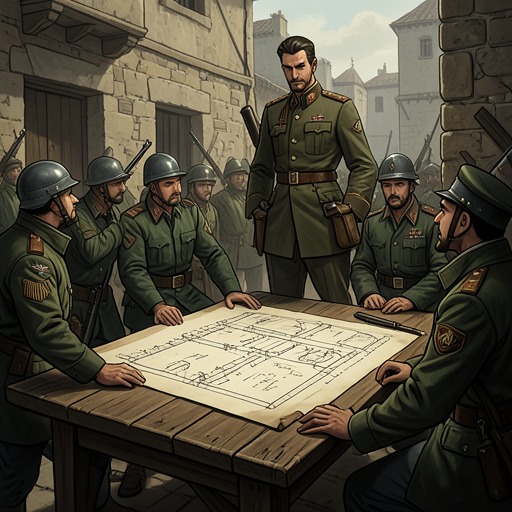
After receiving Pahoran's letter, Moroni reorganizes his command. He takes a small number of men according to Pahoran's request, while giving Lehi and Teancum command over the remainder of the army. This division of authority is practical rather than symbolic: Moroni uses a limited force to join Pahoran, while trusted commanders continue other operations. The arrangement preserves military pressure across multiple fronts without sacrificing the political objective of restoring the government.
Moroni and Pahoran then descend with their armies into the land of Zarahemla and advance against the city. There they meet the men of Pachus, who have taken possession of the land. The encounter makes the alliance's purpose concrete. Moroni does not merely defend a distant frontier, and Pahoran does not merely reclaim an office; together they confront an internal occupying force whose control of Zarahemla threatens the center of Nephite government.
The recovery of the city demonstrates the complementary nature of their roles. Moroni contributes the disciplined force necessary to overcome Pachus's men, while Pahoran represents the political order that the military action is meant to restore. The alliance thus avoids treating victory as conquest for its own sake. Its objective is the return of the land to lawful government and the protection of the people's rights.
Terms of Cooperation and Restraint
The title of liberty establishes the moral language that makes the alliance intelligible. Moroni calls on the people to maintain the banner and to enter a covenant that they will maintain their rights and their religion. Political action is consequently presented as a shared obligation rather than as the private ambition of a commander. The covenant binds individual fighters to a public cause and gives military resistance a recognized ethical purpose.
The alliance also exists within a culture that distinguishes legitimate force from uncontrolled violence. When Moroni captures prisoners of war, they cast down their weapons at the feet of the Nephites and plead for mercy. Moroni takes them prisoner, takes possession of the city, and directs the aftermath rather than treating surrender as an invitation to indiscriminate revenge. This episode shows the practical limits placed on military power: victory restores control, but surrender creates a different obligation.
That restraint contrasts with the secret combinations spreading among the people. Their members use secret signs and words to distinguish those who have entered the covenant, connecting organized crime and hidden political loyalty. The Moroni–Pahoran alliance operates openly through proclamations, letters, public covenants, and recognized offices; the secret combinations operate through concealment and exclusive recognition. The contrast clarifies why the alliance is portrayed as restorative: it seeks a public order whose commitments can be named, witnessed, and defended.
Broader Significance
The alliance shows that national survival in the narrative depends on cooperation between institutions rather than on military heroism alone. Moroni's anger is initially directed at the wrong source, but his subsequent joy at Pahoran's faithfulness marks a movement from suspicion to solidarity. The episode gives political reconciliation a strategic consequence: once the commanders understand one another, they can combine forces and act against Zarahemla's usurpers.
The partnership also links private character to public legitimacy. Moroni's devotion is explicitly directed toward the glory of God and the freedom and welfare of his country, while Pahoran's faithfulness is demonstrated through resistance to those who have displaced him. Neither man's authority is validated merely by title. Their legitimacy is measured by whether they preserve liberty, defend the people, and subordinate personal standing to the common good.
For that reason, the Moroni–Pahoran alliance is more than an episode of wartime coordination. It is a model of repaired political trust under pressure. The military commander learns that apparent governmental indifference may conceal governmental captivity; the governor proves that civil leadership can share the burdens of the battlefield; and their reunion restores the possibility that force and law may serve one another rather than compete. The alliance's lasting narrative force comes from that integration: liberty is defended most successfully when moral conviction, public covenant, civil authority, and military action converge.