
The Reader’s Call to Preparedness
Book of RevelationThis flow traces Shorey’s shift from interpreting prophecy to urging spiritual and practical preparation for hardship.
increasing Bearing strength in each event
 decreasing
Bearing strength in each eventdecreasingThe Signs of the Times

The Signs of the Times
A present-tense interpretation
Shorey says the world has entered the birth pains of the last days and cites the rebirth of Israel as a sign.
His reading turns Revelation from a remote vision into a warning about the reader’s own era.
Watchfulness as response
He argues that believers should not wait until crisis is obvious before acting.
The call to watchfulness connects prophetic interpretation with everyday decisions.
Noah’s Example

Noah’s Example
Preparation before the storm
Shorey recalls Noah building the ark while the sun was still shining and others could dismiss his warning.
The story illustrates preparation undertaken before danger becomes undeniable.
A family responsibility
He interprets the ark as an example of concern for one’s household rather than panic at the last moment.
The analogy grounds his advice in a familiar biblical story of foresight and preservation.
The Soul Comes First
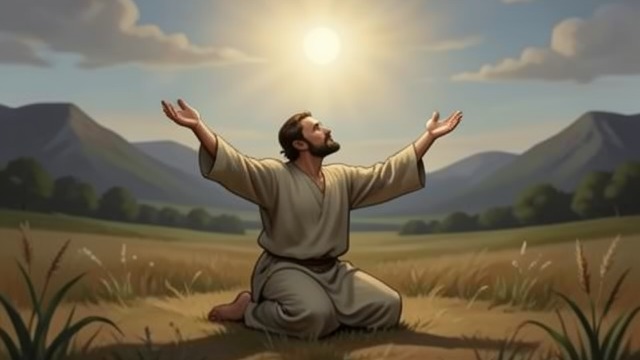
The Soul Comes First
Spiritual readiness
Shorey places repentance, belief in Jesus Christ, and confession of faith before material preparations.
He warns that familiarity with Christian teaching alone does not guarantee a transformed heart.
A sincere conversion
The invitation to pray is presented as a request for forgiveness and a changed life.
For Shorey, preparation for the end begins with a relationship to God, not with supplies.
The Widow Shares

The Widow Shares
A last meal
Shorey recalls Elijah’s encounter with a widow who has only enough food for herself and her son.
Her decision to feed the prophet precedes the continuing provision of flour and oil.
Generosity under scarcity
Shorey applies the story to believers who may have little food during future hardship.
He urges them to share with a hungry neighbor and use the encounter to offer the gospel.
Service Instead of Self-Preservation

Service Instead of Self-Preservation
A survival temptation
Shorey uses the film Hunger Games to describe the danger of treating survival as the highest goal.
He contrasts that instinct with the example of Paul and Silas, whose suffering led to a jailer’s conversion.
The servant’s reward
He concludes that believers should place others’ needs ahead of self-protection and seek to be faithful servants.
The book closes with humility: Shorey admits that he struggles to live by the principle he recommends.
In the book’s closing commentary
As Shorey urges preparation before crisis
Before Shorey’s practical survival advice
In Shorey’s discussion of food scarcity
In Shorey’s final reflections
