
Preparing Without Losing Compassion
Book of RevelationThis flow traces Shorey’s attempt to balance practical preparation with generosity and service during anticipated hardship.
increasing Bearing strength in each event
 decreasing
Bearing strength in each eventdecreasingFear of Unpreparedness

Fear of Unpreparedness
A crisis imagined
Shorey warns that economic collapse could make food and water difficult to obtain.
He fears that waiting until panic spreads would leave families and communities unready.
Preparation as responsibility
He compares preparation to building before the storm rather than reacting after it begins.
The warning is intended to prompt foresight, though the timing remains his prophetic expectation.
A Family’s Needs

A Family’s Needs
Protection and provision
Shorey acknowledges wanting to prepare for his own family and recognizes the moral difficulty of that desire.
He does not present self-protection as wrong, but cautions against making it the only concern.
A wider obligation
The needs of neighbors and other believers complicate any private plan.
Preparation, in his view, must remain accountable to the people for whom Christ died.
The Church’s Food Plan
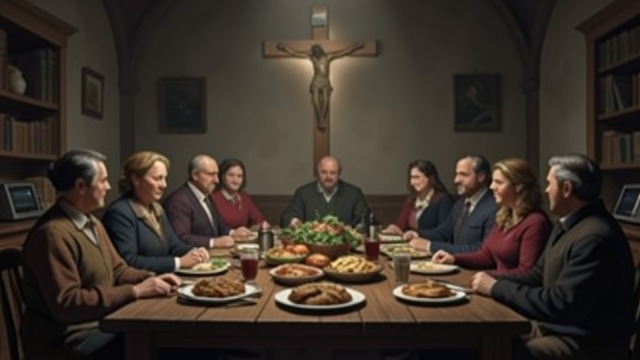
The Church’s Food Plan
Beyond private stockpiles
Shorey questions whether a church could store enough food for every member and every person in the surrounding community.
He nevertheless urges congregations to prepare for outreach rather than assuming help will appear without planning.
A communal meal
His proposed answer is a large community gathering with food and a message about Jesus Christ.
The imagined meal makes preparation an opportunity to serve and reassure fearful neighbors.
Provision through Sharing

Provision through Sharing
The widow’s example
Shorey recalls the widow who shared her remaining food with Elijah and saw her supplies continue.
He presents the story as a model of trust and generosity, not as a guarantee of effortless abundance.
A practical moral choice
A family facing scarcity can keep its last meal to itself or invite a neighbor and share the gospel.
Shorey urges the latter, even when the outcome is uncertain.
A Faithful Servant

A Faithful Servant
The danger of survival alone
The closing reflection rejects an attitude that treats being the last survivor as victory.
Shorey contrasts that impulse with Paul and Silas, whose suffering became an occasion for another family’s salvation.
An unresolved struggle
He admits that he wants to protect his family and also knows he must care about others.
His desired conclusion is the approval of a faithful servant, not mastery over the crisis.
In the closing discussion of economic collapse
As Shorey considers the household’s preparations
During Shorey’s proposal for congregational preparation
When scarcity reaches a household’s last meal
In Shorey’s final personal reflection
