Angelic interruptions as overlays
Book of RevelationAngelic interruptions as overlays is the author’s interpretive method for reconciling Revelation’s sequence of visions with a chronological account of end-time events. It treats material delivered to John the Apostle by angels as supplementary explanations that can be fitted around a foundational sequence, rather than assuming that every passage appears where its events occur in time. The method depends on distinguishing the order in which revelations are presented from the order in which the author believes their events will happen.
The chronological problem
The author describes recognizing that parts of Revelation do not follow chronological order as a turning point in his study. In his view, reading every chapter as a continuous timeline has contributed to competing interpretations, including at least five proposed timings for the rapture. His initial difficulty came from Revelation 14, where Jesus Christ appears with the 144,000 Sealed from Israel on Mount Zion before his return to Earth. The author’s understanding that Jesus Christ’s first contact with Earth would be at the Mount of Olives made that placement seem out of sequence. He says that repeated reading led him to consider whether sections of the book were explanatory material inserted at the time they were revealed, rather than chronological continuation.
The distinction matters because the author does not regard the interruptions as dispensable. He sees them as added insight into the same events described elsewhere. Their placement, however, can make events appear to occur earlier or later than they do in his proposed timeline. The reading task is therefore twofold: identify where the angelic passages interrupt the main account, then determine how their contents relate to that account.
The two angelic passages
The first interruption is associated with Revelation 10. An angel gives John the Apostle the Little Scroll and tells him to prophesy again about peoples, nations, languages, and kings. The author treats the instruction to speak again as a clue that some of the coming material revisits events already addressed. He identifies Revelation 11–14 as the principal body of this first supplementary passage, while keeping the account of the Little Scroll in its original location. In his reading, the intervening chapters gather several subjects whose events belong at different points in the larger timeline, rather than forming one uninterrupted sequence.
The second interruption begins after the account of the Seven Bowl Judgments in Revelation 16. Instead of moving directly to Jesus Christ’s appearance on a white horse in Revelation 19:11, the text turns to an angel’s account of the great prostitute and Mystery Babylon. Revelation 17–18 describes the subject and its destruction, followed by material through Revelation 19:10. The author considers this passage internally connected: the repeated transition marking what happens “after this” links the chapters, even though he believes their events do not belong at that point in the overall chronology. He places the chronological continuation at Revelation 19:11, with Jesus Christ and the armies of heaven proceeding to Armageddon.
Reordering without removing the text
The author’s procedure is to take the two interrupting passages out of the main sequence, close the resulting gaps, and read what remains as the account given to John the Apostle by Jesus Christ. Under this arrangement, the narrative of divine judgment proceeds from the trumpet material in Revelation 8–9 to the bowls in Revelation 15–16 without the intervening supplementary chapters. He reasons that the flow supports this placement because, once the wrath of God begins, it would not pause midway through its outpouring. The angelic passages are then retained as overlays that clarify events and can be placed alongside the appropriate points in that sequence.
This is a rearrangement of reading order, not an attempt, the author insists, to change Scripture. He compares the method to harmonizing the Gospels: assembling related accounts from different presentations to make their relationship easier to follow. He also distinguishes the first interruption, whose chapters contain topics he distributes across the timeline, from the second, which he regards as chronological within itself but misplaced in the book’s larger sequence. Thus, “overlay” refers both to the explanatory function of the passages and to the practical act of reading them alongside the proposed chronology.
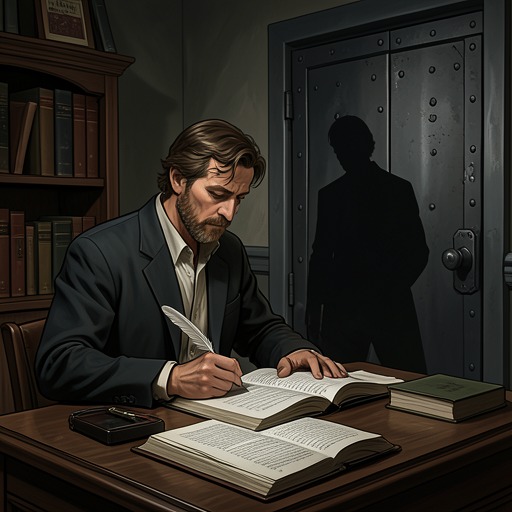
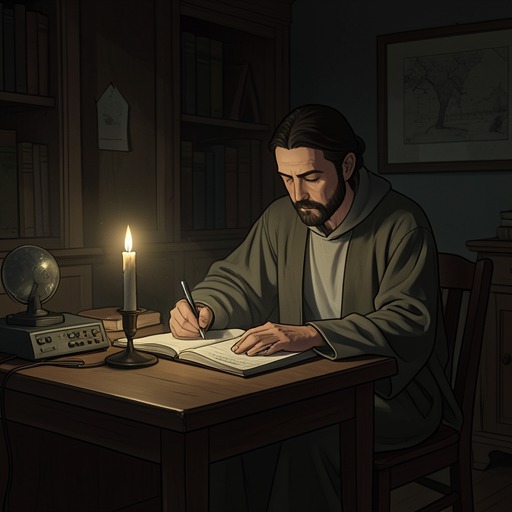
The book also offers a scene of composition to help explain why the passages might appear where they do. The author imagines John the Apostle writing on Patmos, receiving angelic revelations while working, and incorporating each new assignment in the order it arrived rather than relocating it to match the events’ chronology. This is presented as the author’s reconstruction of how the text came together, not as a separately established account of the writing process.
How the overlays clarify events
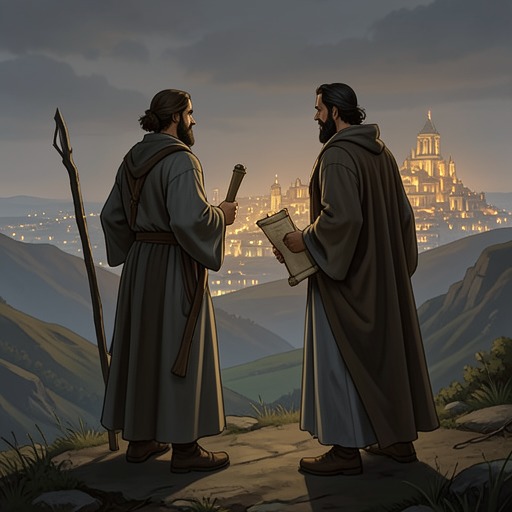
The author uses the chapters in the first interruption to distribute distinct subjects across his chronology. He places the war in heaven and Satan’s being cast down just before the Antichrist is revealed, and associates the beast’s fatal wound with the opening of the first seal. He places the meeting of Jesus Christ and the 144,000 Sealed from Israel on Mount Zion after Jesus Christ has returned to Earth, probably following the victory at Armageddon. These placements address the chronological tension that first prompted his reconsideration of Revelation 14.
Other connections rest on repeated signs and thematic correspondences. The author notes that the close of Revelation 11 describes judgment and a sequence of heavenly and earthly disturbances that he also finds in Revelation 8, just before the first trumpet sounds. He treats this echo as evidence that Revelation 11 revisits the onset of the judgments rather than simply continuing after the earlier chapters. In the same way, references to the Seven Trumpets, the bowls, and the angelic warnings help him connect passages that are separated in the book’s printed sequence.
Scope and interpretive significance
For the author, the overlays function like explanatory footnotes: they preserve material he considers essential while preventing its position in the text from being mistaken for the timing of its events. The method makes sequence itself an interpretive question. Transitions, repeated descriptions, and parallels between passages become clues for deciding which account is foundational and which supplies additional detail.
The proposed chronology is the author’s reading of Revelation, not a claim that the book’s printed arrangement already presents an uncomplicated timeline. Its conclusions depend on identifying interruptions and then matching their component topics to other passages. The method’s significance is therefore both practical and interpretive: it supplies a way to read apparently displaced visions together, while making clear that the chronological placement of those visions is being argued rather than taken for granted.