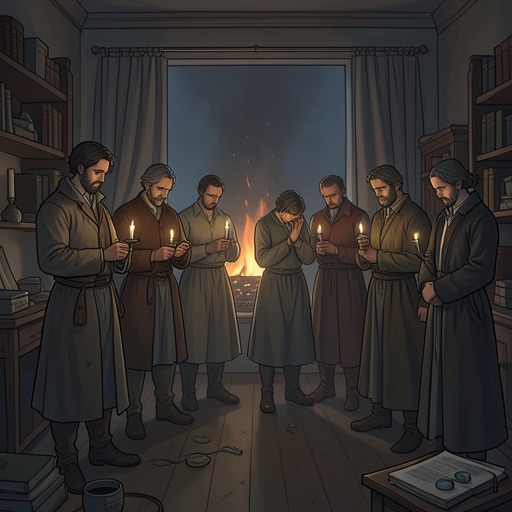
Church of Laodicea
Book of RevelationThe Church of Laodicea is one of the seven churches named in Revelation and the recipient of a message that turns on the contrast between self-sufficiency and spiritual need. Its condition is described through the image of lukewarmness: the church sees itself as prosperous and lacking nothing, while the message exposes it as wretched, pitiable, poor, blind, and naked. The rebuke does not end in rejection; it leads into counsel, a call to repentance, and a promise of fellowship and honor for the one who overcomes.
Identity and Address
The Church of Laodicea appears in the list of seven churches to which John is instructed to send what he sees. In its own address, the message is directed to the angel of the church of the Laodiceans. The speaker identifies himself as the Amen, the faithful and true witness, and the beginning of God's creation, establishing the authority behind the evaluation that follows.
The message closes its address to the churches by urging whoever has an ear to hear what the Spirit says. Laodicea's words therefore belong to a set of messages directed to particular churches but framed as something for a wider audience to heed.
Diagnosis and Self-Perception
The church is criticized for being neither cold nor hot, but lukewarm. The message treats this state as intolerable and warns that the church will be rejected from the speaker's mouth. Its spiritual condition is sharpened by the contrast between appearance and reality: Laodicea claims to be rich, increased with goods, and in need of nothing, yet is told that it is impoverished, blind, and unclothed.
That contrast makes its complacency central to the rebuke. The issue is not merely that the church lacks resources; it does not recognize its need. Its confident assessment of itself is directly opposed by the message's assessment, which names the deficiencies that its own prosperity has obscured.
Counsel, Repentance, and Promise
The message answers this diagnosis with an image of provision: Laodicea is counseled to obtain refined gold to become rich, white garments to cover its nakedness, and eye salve so that it can see. These remedies answer the earlier charges point by point, turning the language of poverty, exposure, and blindness into a call to receive what the church lacks.
The rebuke is presented as an expression of love. The church is urged to become zealous and repent, and Christ is depicted standing at the door and knocking. Whoever hears and opens is promised shared fellowship at a meal. The invitation gives the warning a relational conclusion: correction offers a way back to communion rather than closing the door.
Overcoming and Narrative Significance
The final promise extends beyond restored fellowship. Whoever overcomes is promised a place with Christ on his throne, in parallel with Christ's own overcoming and sitting with his Father on his throne. The message thus moves from a diagnosis of complacency to the possibility of repentance, intimate fellowship, and participation in rule.
Laodicea's message is shaped by that sequence: a mistaken claim of having need of nothing is exposed, concrete remedies are offered, and the church is called to respond. Its warning against spiritual self-satisfaction remains joined to an invitation grounded in love and a promise for those who overcome.