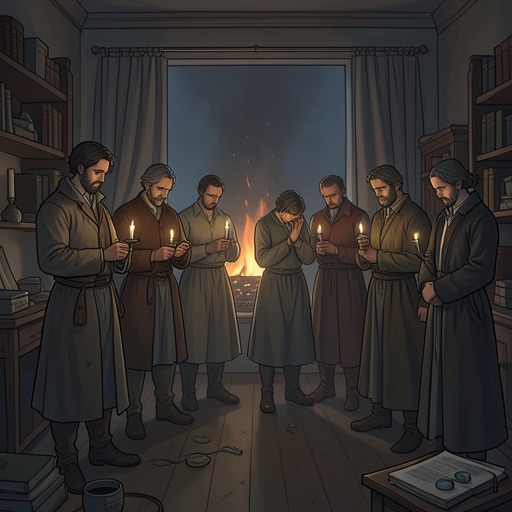
Church of Philadelphia
Book of RevelationThe Church of Philadelphia is one of the seven churches addressed in Revelation, and its message turns on a striking contrast: its strength is small, yet its fidelity is affirmed. The promises made to it—an open door, preservation through a worldwide trial, and an enduring place in God’s temple—define the congregation not by power but by its steadfastness.
Identity and Scriptural Setting
The Church of Philadelphia appears within the series of messages directed to seven churches in Asia. In the vision, the speaker commands that what is seen be written in a scroll and sent to the churches, naming the Church of Philadelphia among the recipients. The study reproduces the message to the congregation from Revelation 3, presenting it as part of that larger address rather than as an account of a separate episode in the chronological sequence of end-time events.
The message identifies its speaker through titles of holiness and truth and through possession of the key of David. The speaker’s authority is expressed in the image of a door that can be opened or shut beyond the control of others. This image establishes the terms of the address: the congregation’s circumstances may be limited, but its access and future are governed by the one who speaks. The passage does not provide a history of the church, describe its buildings, or name its members; its identity in the study comes through the message and the commitments attributed to it.
Conduct and Recognition
The congregation is commended for keeping the speaker’s word and not denying his name. Its strength is described as little, a qualification that makes the praise specific: the passage does not celebrate worldly influence or institutional force, but continued adherence despite limited capacity. An open door is set before the church, and no one is said to be able to shut it. The assurance places divine authority against any opposition that might seek to restrict the congregation’s way forward.
The message also promises that those who falsely claim Jewish identity, described in the biblical passage as belonging to the synagogue of Satan, will come and acknowledge that the speaker has loved the church. The promise gives the congregation public vindication, but the text does not present it as a victory achieved through its own power. Recognition follows from the speaker’s declaration of love and authority. The church’s faithful conduct and its eventual vindication are thus linked, while the initiative remains with the one addressing it.
Protection, Perseverance, and Reward
Because the congregation has kept the word of patience, the speaker promises to keep it from the hour of temptation that is to come upon the whole world and test those living on earth. The study presents this promise alongside an urgent announcement of the speaker’s swift coming: the church is told to hold fast to what it has so that no one takes its crown. Protection is therefore paired with continued perseverance. The promise does not remove the call to remain faithful; it makes holding fast the congregation’s immediate responsibility as it awaits what has been announced.
The reward is described through several connected images. The one who overcomes will become a pillar in God’s temple and will not go out again. The victor will bear the name of God’s city, the New Jerusalem, which comes down from heaven, as well as the speaker’s new name. These marks of belonging answer the earlier image of the open door: the congregation is promised not merely passage through an entrance, but permanence and recognized identity in the divine city and temple. The passage closes by calling anyone with an ear to hear what the Spirit says to the churches, widening the message beyond its immediate recipient without erasing its particular commendation and promises.
Place in the Study’s Reading
The study argues that Revelation is not wholly arranged in chronological order and that treating every passage as sequential has contributed to competing interpretations, including disagreements over the timing of the rapture. In its opening account of John’s vision, it emphasizes the instruction to send the scroll to the seven churches; the Church of Philadelphia is one named recipient within that frame. The study does not give this church a separate role in its proposed rearrangement of end-time events, so its significance here rests chiefly on the message itself: a small-strength congregation is praised for fidelity and assured that divine authority, rather than opposition, determines its access, protection, and lasting place.