Heaven’s Half-Hour of Silence
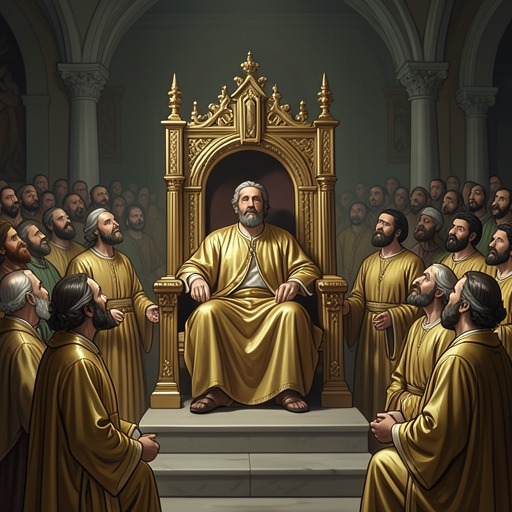
Book of RevelationHeaven’s Half-Hour of Silence is the interval in Revelation 8:1 that follows the opening of the seventh seal. In this book’s chronological reading, it becomes more than a pause before the trumpet judgments: the author understands it as the raptured saints arriving before God’s throne, and uses it to mark the transition from their deliverance to the outpouring of divine wrath.
The Seventh Seal and Its Place in the Sequence
The biblical text gives the interval a spare, precise measure: after the Lamb opens the seventh seal, silence falls in heaven for about half an hour. It follows the sixth seal’s upheaval, in which a great earthquake accompanies the darkening of the sun, the reddening of the moon, falling stars, and the displacement of mountains and islands. The silence thus comes after a vision of cosmic disturbance, but before the trumpet judgments begin.
The book treats sequence as essential to interpretation. Its author argues that Revelation is not entirely chronological and that reading its passages out of order has produced competing interpretations, including different accounts of when the rapture occurs. The half-hour interval matters within this argument because the author assigns it a specific place between the saints’ appearance before the throne and the beginning of God’s wrath.
The Author’s Interpretation of the Silence
The author reads the white-robed multitude in Revelation 7 as saints who have just come out of the great tribulation and arrived before God’s throne. He points to an elder’s question about who they are and where they came from as evidence, in his interpretation, that their arrival is newly visible in the heavenly scene. The silence that follows the seventh seal is therefore connected to the gathering of those saints, rather than treated simply as an unexplained pause.
The book presents the silence as an expression of awe: the gathered saints, human beings, and angelic beings stand before the throne without speaking until God welcomes the bride of his Son to her new home. This is the author’s theological explanation of the interval, not an explicit explanation supplied by Revelation 8:1 itself. His reading gives the half-hour both a dramatic function—a stillness after the saints’ arrival—and a chronological one, locating the rapture before the trumpet judgments.
The Elders and the Transition to Wrath
To clarify the transition, the author moves Revelation 11:16–19 into the sequence between Revelation 8:1 and 8:2. He links the passage to the half-hour because it again depicts the twenty-four elders before God, now falling on their faces in worship. In this rearrangement, their scene follows the silence and precedes the distribution of the trumpets.
The elders’ declaration identifies the change in the scene’s stakes: God’s wrath has come, the time has arrived to judge the dead and reward God’s servants, and those who destroy the earth are to be destroyed. The passage also describes the heavenly temple opening and the ark of God’s covenant becoming visible, amid lightning, voices, thunder, an earthquake, and great hail. The book uses these details to make the elders’ scene a hinge between the saints’ arrival and the judgments that follow.
From Silence to the Trumpets
After this interval and the inserted elders’ passage, the seven angels prepare to sound their trumpets. The first trumpet brings hail and fire mixed with blood; a third of the trees and all the green grass are burned. The contrast gives the silence its structural force in the author’s account: it is a moment of heavenly stillness immediately before a sequence of destruction on earth.
The half-hour is therefore both a textual interval and an interpretive boundary. Revelation 8:1 names the silence and its duration; the book’s larger arrangement makes it the moment when the saints stand before the throne and the narrative turns toward divine wrath. That reading depends on the author’s proposed chronology and his placement of Revelation 11, rather than on the duration alone.