John Receives the Little Scroll and Is Told to Prophesy Again
Book of RevelationJohn Receives the Little Scroll and Is Told to Prophesy Again is the vision in Revelation 10 in which a mighty angel presents John the Apostle with an open little scroll and instructs him to eat it and prophesy again. In the book’s interpretation, this is more than a striking episode within the vision: it signals an interruption in the presentation of Revelation and helps explain why some of its material must be read out of sequence. The event thus joins a prophetic commission to the author’s central argument about chronology.
The Angel’s Appearance and the Interruption
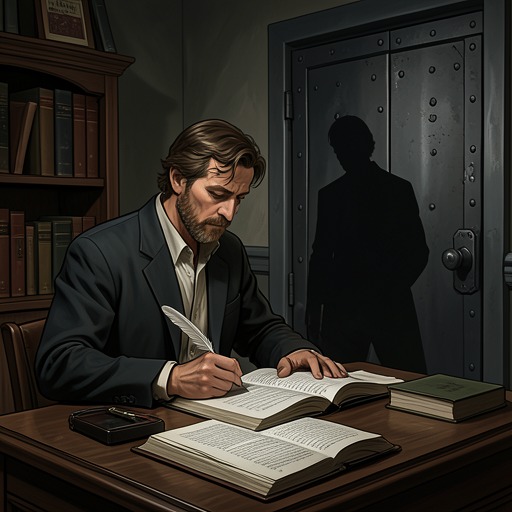
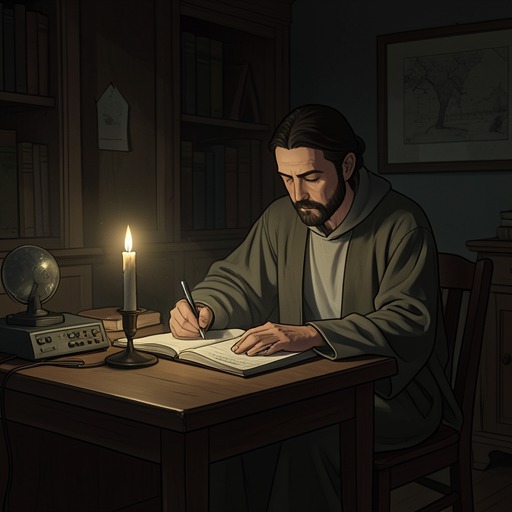
The author identifies the episode as an interruption by an angel while John is recording Revelation. The angel descends from heaven clothed with a cloud; a rainbow is upon his head, his face is like the sun, and his feet are like pillars of fire. Holding an open little book, he places his right foot on the sea and his left foot on the land. His loud cry is compared to a lion’s roar, after which seven thunders speak. These features establish the scale of the vision before the attention turns to John’s task: the scroll is not simply displayed but becomes the object of a direct command.
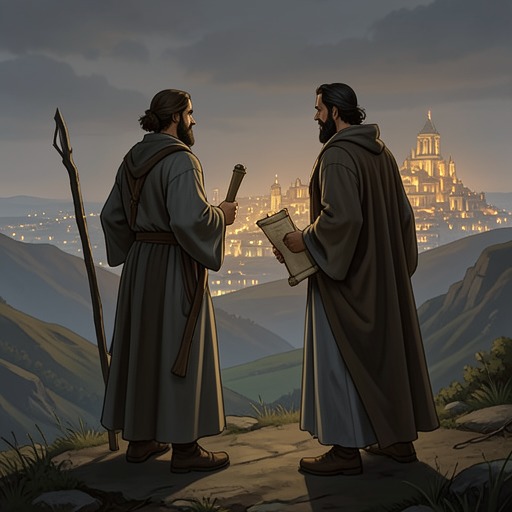
The voice from heaven tells John to take the open book from the angel. John approaches and asks for it; the angel instructs him to eat it, warning that it will be sweet in his mouth but bitter in his stomach. John does so, and the stated contrast follows: sweetness in his mouth, bitterness afterward. The angel then tells him that he must prophesy again before many peoples, nations, languages, and kings. The sequence makes the prophetic charge inseparable from receiving and consuming the scroll. The commission is renewed, but it is also widened toward an audience spanning peoples and rulers.
The Scroll’s Meaning in the Author’s Reading
The book’s author presents the little scroll as material for new revelation added to what John was already writing. He reads the instruction to prophesy again as evidence that John is being directed to address matters already covered in some form, rather than simply continuing a single, uninterrupted timeline. That conclusion is the author’s interpretive account of the vision; the chapter’s described actions are John’s receiving, eating, and being recommissioned.
The contrast between sweetness and bitterness gives the act a two-part character without the author assigning a separate explanation to each sensation. What is explicit is that the scroll tastes sweet in John’s mouth and becomes bitter in his stomach. What follows is the command to speak again. In the book’s larger argument, the scene therefore functions as both a transfer of prophetic material and a marker that the sequence of the written visions may not match the sequence of the events they describe.
Chronology and the Reordering of Revelation
The author connects this interruption to his claim that Revelation is not wholly chronological. He says he realized that chapters 11–14 were out of order when he understood that the angelic interruption brought John material covering a timeline that ranged across different moments. In his reading, the command to prophesy again is a clue to a shift in subject and chronology, not an indication that the events of the book must proceed continuously from one chapter to the next.
This realization arose from a specific difficulty in Revelation 14: John sees Jesus Christ with the 144,000 Sealed from Israel on Mount Zion, while the author understands Jesus Christ’s first return to earth to occur when his feet touch the Mount of Olives. He says this apparent placement confused him as he worked on an earlier book. After praying for an explanation and reading Revelation repeatedly, he describes gaining clarity on his third reading. He then treats the angelic interruption in chapter 10 as one of the clues that resolves the difficulty: the scene with the 144,000 belongs later than its position in the chapter sequence suggests.
The author applies the same chronological reasoning to other material in the intervening chapters. He says the account of war in heaven and Satan being cast to earth should appear just before the Antichrist is revealed, and that the beast’s fatal head wound belongs at the opening of the first seal because, in his interpretation, it leads to Satan becoming the Antichrist. He also identifies the attack against the children of Israel and Satan’s casting to earth as material covered in Revelation 12:1–13:18. These are placements proposed by the author, not actions occurring within the scroll-taking scene itself; their relevance is that he uses the scene to justify reading Revelation’s visions as overlapping or reordered material.
Place in the Book’s Structure
The episode’s structural importance comes from the way the author distinguishes the sequence of John’s vision from the chronology he believes the visions describe. He reads the renewed commission as a sign that the narrative turns back to prophetic material, while the chapters surrounding it cannot automatically be treated as the next events in time. In particular, he argues that the trumpet judgments should not be understood as stopping for a separate stretch of events: his reading of the angel’s interruption is one clue that helped him conclude chapters 11–14 had been placed out of chronological order.
The event consequently serves as a hinge in the book’s interpretive method. The open scroll, the act of eating, and the command to prophesy again give the author a textual basis for treating the vision as an inserted prophetic unit. His own account emphasizes the change in his understanding: a passage that had seemed confusing became evidence for reading the book by an underlying timeline rather than by chapter order alone. The little scroll is therefore significant both within John’s vision, where it renews his prophetic task, and within the author’s exposition, where it helps explain the rearrangement of Revelation’s end-times sequence.