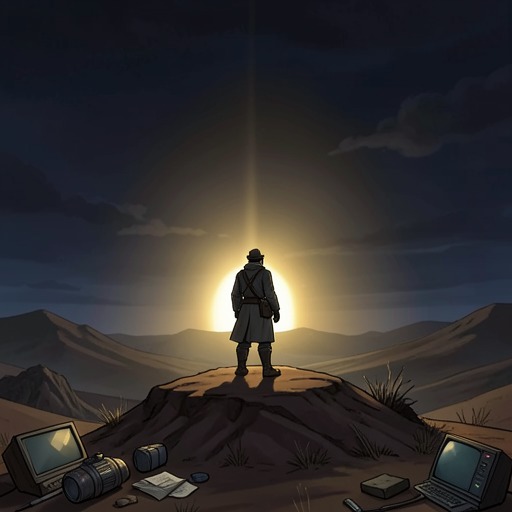
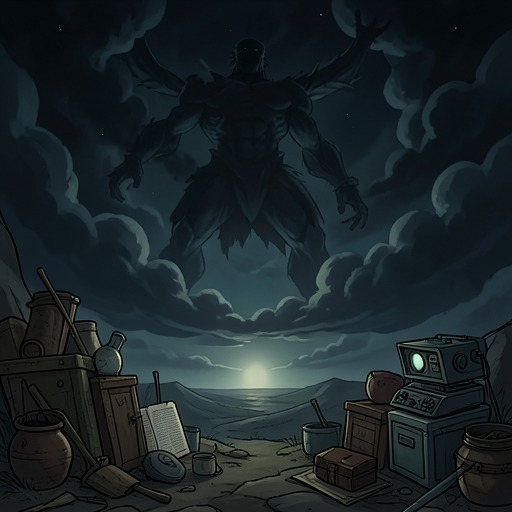
Satan Is Released and Incites a Final Rebellion
Book of RevelationSatan’s release and the rebellion he incites form the last uprising in the book’s account of the thousand-year reign. The episode reverses the apparent security of a long period of peace: Satan is freed, gathers deceived nations for battle, and is decisively defeated. The rebellion ends not with a prolonged war but with fire from heaven; Satan is then cast into the Lake of Fire, and the narrative moves toward the judgment of the dead.
Background and Timing
The event takes place when the thousand years have expired. The account presents Satan as being released from his prison at that point, after the period in which he had been bound. In the book’s surrounding explanation, this release follows a thousand years of peace, not the final judgment itself. The sequence matters: the renewed rebellion comes after the millennial period, while the judgment of the dead follows Satan’s defeat.
The author interprets that peaceful interval as a time when the earth is repopulated by mortals. In this reading, people living during the thousand years have an opportunity to choose whether to stand with God or with the devil. The final revolt therefore occurs after an extended period of peace, yet that peace does not prevent a multitude from being deceived when Satan is released. The author also connects the preceding judgment and reign with the faithful who endured tribulation, including those killed for their witness to Jesus and for the word of God, who refused the beast, its image, and its mark and then lived and reigned with Christ.
The Rebellion
Once released, Satan goes out to deceive the nations in the four quarters of the earth. The account names them as Gog and Magog and describes their number as being like the sand of the sea. The scale of the gathering is thus set against the long peace that preceded it: the final opposition is not presented as a small remnant but as a multitude brought together through deception.
Satan gathers these nations for battle. They advance across the breadth of the earth and surround the camp of the saints and the beloved city. The account identifies the targets as a community and a place under threat, but does not provide further detail about the campaign or describe an extended exchange of attacks. Instead, the encirclement is the decisive image before the rebellion is abruptly broken: fire comes down from God out of heaven and devours the attackers. Their assault ends through divine intervention rather than through a reported victory by Satan’s forces.
Satan’s Defeat and the Aftermath
The rebels’ destruction is followed by Satan’s final punishment. The devil who deceived the nations is cast into the Lake of Fire and brimstone, where the beast and the False Prophet are already present. The account states that they will be tormented there day and night forever. Satan’s release, therefore, does not restore his power permanently: it leads directly to the end of his deception and his unending punishment alongside the beast and the False Prophet.
The author emphasizes this finality in explaining the sequence after the thousand years: once Satan has been cast into the Lake of Fire, all who have died are to be judged according to their works. The subsequent vision describes the dead standing before God as the books are opened, along with the book of life; the sea, death, and Hades give up their dead, and death and Hades themselves are cast into the fire. The last rebellion is consequently a hinge between the end of Satan’s activity and the universal judgment that follows. It does not conclude the book’s account of judgment, but clears the narrative path to it.
Narrative Significance
The episode is built on a sharp reversal. A thousand years of peace gives way to a final mobilization of nations, and a vast encirclement gives way immediately to destruction by fire from heaven. The language of multitude and worldwide reach magnifies the threat, while the sudden end of the attackers denies the rebellion the shape of a prolonged contest between equal powers. The narrative’s emphasis falls instead on the limits of Satan’s release: he can deceive and gather, but the uprising is ended by God.
The author also uses the episode to warn against assuming that a period of peace makes later rebellion impossible. In the author’s interpretation, mortals living through the thousand years still face a choice, and Satan’s deception turns that choice into a final collective revolt. The event thus completes the book’s sequence of Satan’s restraint, brief release, and permanent punishment, while setting the stage for the judgment of every person who has died.