Satan’s Final Rebellion
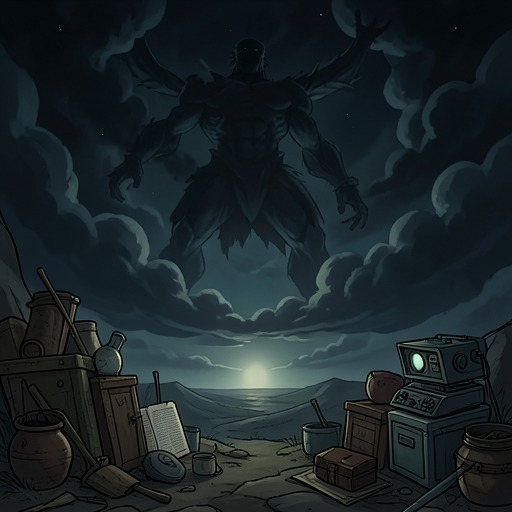
Book of RevelationSatan’s Final Rebellion is the last revolt in the book’s end-times sequence: after a thousand years of peace, Satan is released, gathers deceived nations for battle, and is defeated by fire from God. The episode reverses the apparent security of the preceding age, but it does not reopen an uncertain struggle. The revolt is crushed, Satan is cast into the Lake of Fire, and the narrative proceeds toward judgment of the dead.
Background and Release
The rebellion follows the thousand-year reign in which, as the author explains it, the martyrs who refused to worship the Beast, its image, or receive its mark live and reign with Christ. The account presents that era as a time of peace, but not the end of human history or of the possibility of opposition to God. The author emphasizes that the earth will be repopulated by mortals during the thousand years. In his interpretation, their presence helps explain how rebellion can arise again after so long an interval: they have a final opportunity to stand with God or with the devil.
At the close of the thousand years, Satan is loosed from his prison. The release is the immediate turning point. The enemy who had been confined is permitted to act again, and his action is directed not toward a private escape but toward deception on a vast scale. The episode’s placement after the peaceful reign makes the return of conflict startling, while its stated cause keeps the sequence explicit: Satan goes out to deceive the nations and gather them for battle.
The Gathering and Assault
The nations come from the four quarters of the earth, and their gathering is associated with the names Gog and Magog. Their number is compared to the sand of the sea, an image that gives the uprising enormous scale without supplying a count. Satan’s deception turns this multitude into a force assembled for combat; the text does not describe separate armies, leaders, or stages of a campaign. Its attention stays on the breadth of the gathering and the target of its advance.
The gathered forces spread across the earth and surround the camp of the saints and the beloved city. That encirclement is the rebellion’s decisive threatening gesture: the revolt has moved from deception and mobilization to a direct confrontation with the community and city it seeks to overcome. Yet the account does not narrate a prolonged siege or a battle between opposing forces. Before the attackers can achieve victory, fire comes down from God out of heaven and devours them. The scale of the attackers is answered not by a larger human army but by divine intervention, which ends the assault at once.
Defeat and Aftermath
The destruction of the attacking multitude is followed by the judgment of its instigator. Satan, identified as the deceiver, is cast into the Lake of Fire and brimstone. The account states that the Beast and False Prophet are already there, and that torment continues day and night forever. The ending therefore differs sharply from Satan’s temporary imprisonment: after release and a final attempt to deceive the nations, he is assigned an irreversible punishment. The rebellion produces no new dominion and no extended contest; its consequence is the permanent defeat of the one who organized it.
The book then turns toward the Great White Throne Judgment. The author links the close of the thousand years and Satan’s casting into the Lake of Fire with the judgment of all who have died, and describes the dead as judged according to their works. He also stresses the significance of the Book of Life and presents forgiveness through Jesus Christ as essential to escaping condemnation. This aftermath broadens the episode’s importance: the failed revolt is not the final event in the sequence, but it closes Satan’s last attempt to gather opposition before the dead stand for judgment.
Narrative and Interpretive Significance
The account’s structure makes the rebellion a final test of the apparent permanence of peace. A thousand years pass; Satan is released; a multitude is deceived; the saints and beloved city are surrounded; heavenly fire ends the threat; and Satan is sent to everlasting punishment. Each step narrows the possibility of renewed resistance. The sheer number of the rebels cannot alter the outcome, and the story gives no interval in which the assault might succeed.
The author uses the episode to underline both human vulnerability and divine finality. Even after an age described as peaceful, mortals can be deceived into joining a revolt; peace alone does not erase the possibility of choosing opposition. But the rebellion’s brief course also marks a firm boundary: once God’s fire destroys the attackers and Satan is cast into the Lake of Fire, the narrative moves on to judgment rather than another cycle of conflict. The event thus serves as the last uprising in the book’s chronology and the immediate prelude to the final accounting of the dead.