The Marriage Supper of the Lamb
Book of RevelationThe Marriage Supper of the Lamb is the heavenly celebration that the author treats as a decisive sign of the saints’ presence with God. In the vision, praise over the judgment of the great prostitute gives way to the announcement that the wedding has come and the bride is ready. The book’s distinctive chronological reading places this scene after the destruction of Mystery Babylon and connects it to the gathering of the saints in heaven, making the celebration a marker in its proposed sequence of end-time events.
Setting and participants
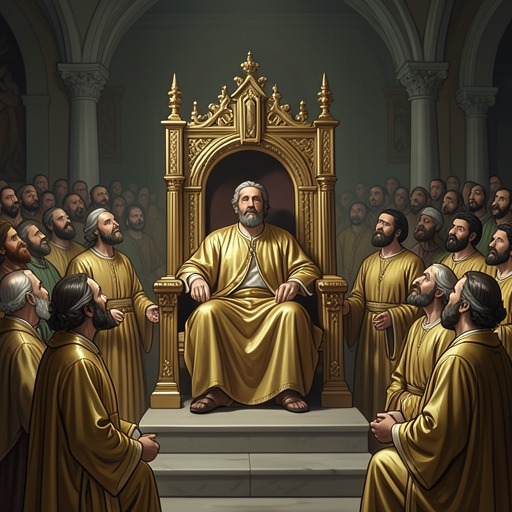
The scene unfolds in heaven. A great multitude praises God for salvation, glory, honor, power, and righteous judgment; the voices celebrate the end of the corrupting influence of the great prostitute and the vindication of God’s servants. The Twenty-Four Elders and the Four Living Creatures around the Throne fall down and worship God, while a voice from the throne calls all God’s servants, both small and great, to praise. The celebration thus gathers several groups around the throne: the multitude, the elders, the living creatures, and those summoned to worship.
The announcement at the center of the scene concerns the bride. The wedding has come, and she has made herself ready. She is granted clean, bright fine linen, which the passage identifies with the righteousness of the saints. The imagery links the bride’s readiness to the condition and identity of the saints rather than describing a private ceremony or the details of a feast. The vision also pronounces blessed those invited to the marriage supper, presenting participation as a significant promise within the heavenly scene.
The celebration’s place in the sequence
The author argues that Revelation 17:1–19:10 should be read as one chronological unit, moved from its printed location into the sequence where it belongs. The account begins with the judgment of the prostitute and the destruction of Mystery Babylon; it ends with heavenly praise and the marriage announcement. On this reading, the wedding scene follows Babylon’s destruction, rather than serving merely as an event that occurs later in the book’s written order. The placement makes the celebration a hinge between judgment on the corrupting power represented by Babylon and the saints’ life in heaven.
The book supports this rearrangement by comparing the closing verses of the unit with Revelation 7. It points to shared descriptions of a great multitude, loud voices, salvation, and a heavenly gathering around the throne. It also connects the bride’s clean linen with the white robes of people described as having come through the Great Tribulation. These parallels are presented as evidence that the passages refer to the same heavenly company and that the marriage celebration belongs with the account of the saints’ arrival in heaven.
On that basis, the author identifies this point in the sequence with the rapture. The reasoning is explicit: the wedding cannot take place in heaven with the bride ready unless the saints—the people represented by the bride—are there. The marriage supper therefore functions not only as an image of celebration but also as confirmation, within the book’s interpretation, that the gathering of the saints has already occurred. This conclusion belongs to the author’s chronological reading of Revelation, which holds that some of its visions interrupt or revisit the sequence rather than continuing it in strict chapter order.
Judgment, praise, and the bride
The celebration does not appear in isolation from judgment. The multitude praises God because the great prostitute has been judged and the blood of God’s servants avenged; the smoke of her destruction is described as rising forever. The transition from that verdict to the wedding announcement sets two outcomes beside each other: the destruction of a power that corrupted the earth and the readiness of the bride. In the author’s reading, the order matters. Babylon’s fall comes before the rapture and the heavenly marriage scene, so the celebration follows a period of hardship rather than an early escape from it.
The book also connects the passage to the harvest imagery immediately following its discussion of Mystery Babylon. It reads the harvest of the earth as further confirmation that the gathering occurs after Babylon’s destruction. This interpretation reinforces the event’s place in the proposed timeline, though the wedding passage itself centers on praise, readiness, and the invitation to the supper. The sequence is thus built from comparisons among passages, not from a detailed account of the ceremony’s actions.
Interpretive significance and limits
The author’s account distinguishes the scene’s scriptural imagery from the larger chronological conclusions drawn from it. The heavenly multitude, the throne-side worship, the bride’s linen, and the blessing on those invited are presented as features of the vision. Their identification with the raptured church, and the placement of the wedding after Mystery Babylon’s destruction, are interpretive claims made by the study. The author further associates Mystery Babylon with the United States, arguing that its power, many peoples, and international reach fit the description better than present-day Iraq. The study acknowledges a complication: the passage also associates Babylon with the blood of prophets and saints, which leads the author to consider whether the United States might turn against Christians. This modern identification is part of the author’s argument about what precedes the wedding, not a detail established by the marriage scene itself.
The event’s significance in the book therefore rests on both its imagery and its placement. Its praise answers judgment; its prepared bride represents the saints; and its announcement of the wedding signals, in the author’s chronology, that the saints are already in heaven. A voice declares the reign of the Lord God Almighty, and the scene looks beyond Babylon’s fall toward the marriage supper. The passage offers no extended description of the feast itself. Its emphasis is on who is ready, who is invited, and what the heavenly celebration means within the proposed order of Revelation.