The Second Coming of Christ
Book of RevelationThe Second Coming of Christ is the climactic return in the book’s end-times sequence: after the seven bowls complete God’s wrath, Jesus appears as a victorious rider leading heaven’s armies toward the final battle. The author’s chronological reading makes this return a turning point in both the structure of Revelation and its conflict between divine rule and the Beast government. It is not presented as an isolated vision: its placement follows the judgments, answers the rise of the Antichrist and his assault on the saints, and leads into the defeat of the forces assembled for Armageddon.
Place in the Chronology
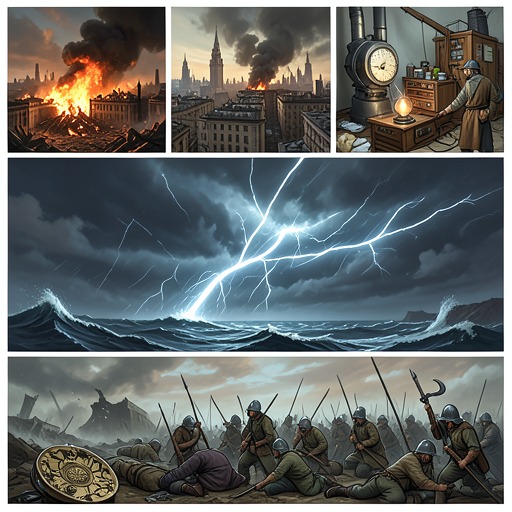
The author argues that Revelation’s order on the page does not always match the order of events. At the end of chapter 16, the seven bowls have been completed; in the author’s proposed timeline, Christ’s return should follow. Instead, chapter 17 opens with an angel who had one of the bowls showing John the punishment of the great prostitute. Chapters 17 and 18 continue with the angel’s account of Mystery Babylon, including the call for God’s people to come out of her and the announcement of her destruction. The author treats these chapters as an interruption that supplies additional information, not as events that must occur after the bowls.
On this reading, the main chronological account resumes at Revelation 19:11, when heaven opens and the rider appears. The distinction between the sequence of the vision and the sequence of the events is central to the author’s interpretation: the Babylon material explains more about the end times while interrupting the forward movement toward the return. The author consequently reads Christ’s arrival as following the completion of the bowls, rather than following the destruction of Babylon as a newly ordered event. This structural claim also supports the book’s broader project of rearranging passages into a continuous timeline.
The Rider and the Heavenly Army
In the cited passage, the rider sits on a white horse and is called Faithful and True. He judges and makes war in righteousness; his eyes are described as flame, and many crowns are on his head. He bears a name known only to himself, wears a garment dipped in blood, and is called the Word of God. These titles and images present the return not as a private appearance but as the arrival of an authority who judges and acts against the nations.
The armies of heaven follow on white horses, wearing fine, clean linen. The author identifies these followers as the saints in white robes and emphasizes their place in the returning host. Their presence gives the scene a collective shape: Christ leads, while the heavenly company follows him toward the conflict. The rider’s sharp sword comes from his mouth; with it he strikes the nations, rules them with an iron rod, and treads the winepress of God’s fierce wrath. The name written on his garment and thigh, King of Kings and Lord of Lords, states the passage’s contrast between his sovereignty and the power claimed by earthly rulers.
Conflict and Judgment
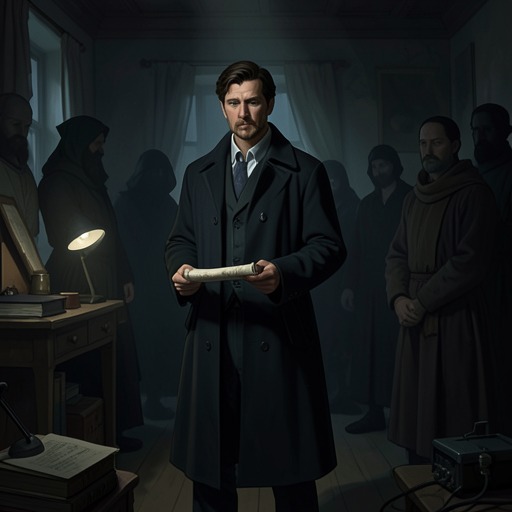
The return is set against the preceding rise of the Beast government. In the author’s interpretation, Satan is cast down to earth and turns against God’s people; the beast then receives authority to wage war on the saints and to rule over peoples, languages, and nations. The author connects the beast’s forty-two months of authority with a three-and-a-half-year period of persecution. A second beast, identified as the False Prophet, enforces worship of the first beast and its image and requires the mark for buying and selling. Those who refuse are threatened with death. This account supplies the political and religious opposition that makes the returning rider’s judgment decisive in the author’s timeline.
The author links Christ’s victory with the defeat of Satan and the setting up of Christ’s reign on earth. The nations are not simply witnesses to the arrival: the passage depicts them as subject to judgment and rule. The account of the rider therefore completes a reversal of the Beast’s apparent global authority. The system that demanded worship and enforced compliance encounters a power whose title declares a higher kingship.
The Harvest and Armageddon
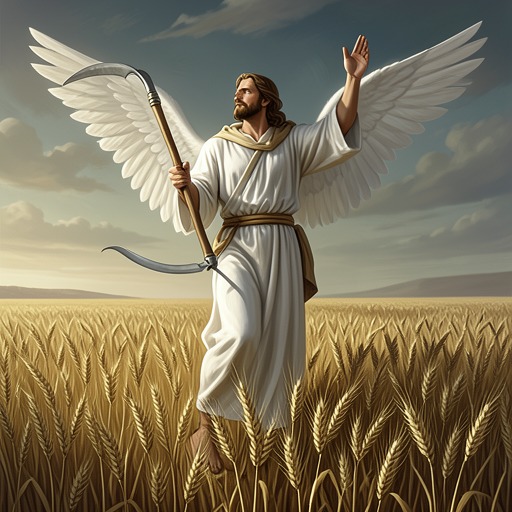
After describing the rider’s return, the author’s commentary turns back to Revelation 14:17–20 and places that passage in the same end-times sequence. There, angels with sickles gather the earth’s ripe grapes and cast them into the winepress of God’s wrath. The author interprets this harvest as the gathering of the unrepentant and the destruction of the armies assembled for Armageddon, connecting its winepress imagery with the rider’s work of judgment. The cited vision measures the resulting flow of blood as reaching the horses’ bridles for a distance of 1,600 stadia; the author uses that detail to identify the passage with the battle.
This return thus serves as the hinge between the completion of divine wrath and the final defeat of evil. Its narrative force depends on both the white-horse arrival and the sequence established around it: the bowls conclude, the angelic account of Babylon is read as supplementary, and the main account advances to Christ and his followers. In this arrangement, the return is at once a military confrontation, a judgment on the nations, and the assertion of Christ’s rule over the global power that opposed God.