Barrier instability
Bound by DarknessBarrier instability is the recurring state in which the Barrier between the human world and Kalithia weakens or briefly fails, turning an ordinarily hidden boundary into an immediate threat. Its fluctuations summon the Paladins to the tunnels, endanger civilians and warriors on both sides, and make the boundary a lived reality rather than an abstract border. Because the Barrier also enabled Larem q’Jones’s forced passage into Seattle, every new disturbance reopens the question of belonging, loyalty, and whether either world can remain secure.
Nature and Warning Signs
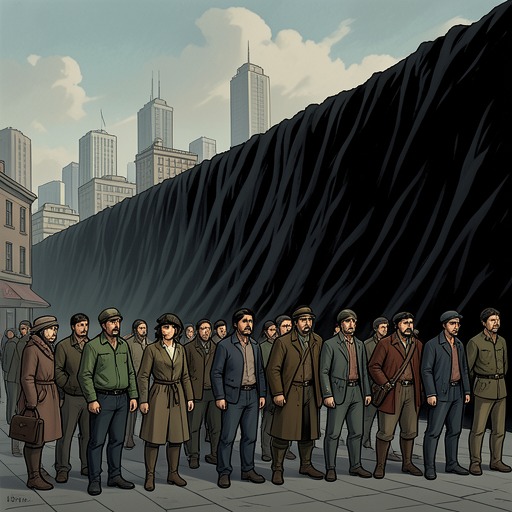
The Barrier is normally experienced from Seattle as an opaque, powerful presence associated with the subterranean Paladin defenses. When instability begins, its condition becomes legible through physical and visual changes. One warning sign is thinning: the formerly opaque curtain grows translucent and reveals shadows moving beyond it. Another is chromatic corruption, as vivid colors give way to sickly yellows and greens that spread across the Barrier. The sequence makes danger perceptible before the full failure occurs, but it gives those caught nearby very little time to respond.
The threat is not confined to the Barrier itself. The Paladins maintain a network of tunnels beneath Seattle and rush toward those passages when the warning klaxons sound. The subterranean headquarters is built into the hillside beside the Seattle Underground, a space that tourists believe to be abandoned while Paladins use it as a concealed military environment. The contrast between public sightseeing above and lethal emergency work below emphasizes how much ordinary civilian safety depends on a hidden system of vigilance.
Crisis in the Tunnels
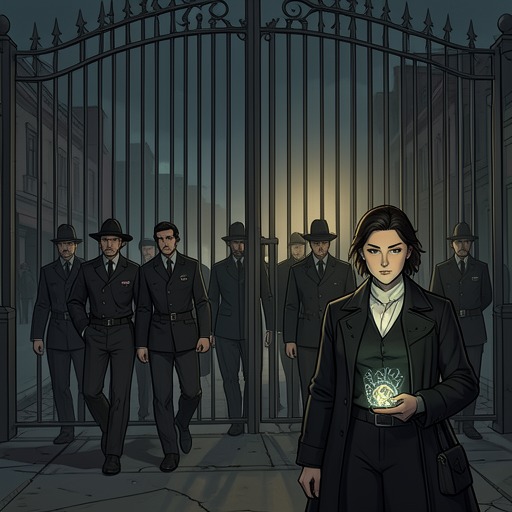
During one disturbance, Larem q’Jones hears the klaxons just as he is leaving a meeting. He steps aside while Paladins hurry to answer the call, envying their clear purpose even as he hates the necessity of their mission. His fear is divided between worlds: he wonders how many Kalith will die before the Barrier is restored and how many of his Paladin friends will bleed in the tunnels. Hunter Fitzsimon and D.J. Clayborne follow Lonzo Jones underground, their expressions and movements showing the transformation from ordinary conversation to disciplined emergency action.
The danger later reaches Sasha Willis when she descends alone in an elevator toward the Barrier. The elevator drops with such force that she grips the handrail while the damp, silent tunnels make the destination feel physically removed from the city above. After she fails to locate Lonzo, the Barrier’s hum grows louder. She sees it become translucent, then watches the diseased colors spread from the ceiling across its expanse. The elevator does not immediately respond when she enters her security code, converting a warning into an enclosure: the danger is no longer something she can observe and retreat from, but a condition that traps her inside the underground space.
The scene also connects Barrier instability to memory and personal loss. In the tunnels, Sasha recalls David Booker, her first love and a Paladin who died twice: first by an Other’s sword and then through poison administered by his Handler. The Barrier’s beauty and power therefore coexist with the memory of Paladin death, and Sasha cannot separate the subterranean wonder from the violence it conceals. Her fear is not merely a civilian’s unfamiliarity with a secret installation; it is informed by intimate knowledge of what the Paladins’ war has already taken from her.
Stabilization and Paladin Response
Instability does not always culminate in collapse. In Lacey Sebastian’s laboratory, monitors and seismographs register a disturbance severe enough to be called bad, though the readings indicate that the Barrier should stabilize within seconds. Barak q’Young, whose affinity for the Barrier is stronger than that of other Kalith, grips the counter until his knuckles turn white and his face becomes gray and stony. His body makes the crisis measurable as an embodied strain rather than a distant technical reading.
The instruments jump once more before settling at normal levels. Barak releases the counter and confirms that the Barrier is back up and holding strong. Larem, Lacey, and Barak all exhale, knowing that the fighting far below will soon end. Lacey records the final data and then offers Larem tea and a chocolate chip cookie, a domestic gesture that follows the emergency without erasing it. The laboratory thus becomes both a monitoring station and a place of recovery, where scientific observation, Kalith sensitivity, and ordinary hospitality meet.
The political response to instability is equally significant. Larem attends a Paladin meeting as the sole Kalith representative, while Barak and Lusahn q’Arc are kept away on Devlin Bane’s advice. Lonzo stands near an exit because he must be the first to reach the tunnels if the Barrier crashes. Even in a conference room, the possibility of failure dictates seating, movement, and authority. Larem is tolerated by many Paladins rather than welcomed, yet his presence is necessary because the crisis cannot be understood or managed solely through the human institution that guards the boundary.
Cross-Border Consequences
The Barrier is the mechanism through which Larem q’Jones’s entire present life came into being. As the Blademate to a Sworn Guardian, he once knew his place in Kalithia and served his people with honor. After Lusahn q’Arc chose a human Paladin, Cullen Finley, he and Larem were condemned as traitors and sentenced to execution. During the rescue and return across the Barrier, Lonzo Jones was badly injured, and Larem saved his life. In return, Lonzo offered him a home and the use of his family name on forged documents, allowing Larem to function in Seattle.
That passage transformed more than Larem’s location. In Seattle, he accepts a Paladin paycheck for teaching weapons practice only a few hours each month and feels that he is living on charity. He hopes eventually to leave and make his own choices, while sometimes considering a return to Kalithia in the hope that his death sentence might be rescinded. The Barrier therefore produces a legal and emotional condition of suspended identity: it separates worlds, but it also creates people whose lives cannot be restored to a single side.
The instability is further tied to the history of Colonel Kincade’s misconduct. Kincade’s involvement in the theft of the blue stones from Kalithia led directly to the destruction of Larem’s old life and his forced relocation to Seattle. His actions affected lives on both sides of the Barrier while remaining concealed well enough that no one appeared to suspect him. Larem believes the Paladins either refused to hear warnings or allowed someone to cover up the truth. In this history, the Barrier is not a neutral natural division. It is entangled with theft, institutional secrecy, political failure, and the consequences of decisions made by people who treat cross-border power as something to control.
Escalation and Narrative Significance
Later attacks reveal that Barrier-related danger can move outward from the tunnels and into domestic space. When Chance senses danger at Sasha Willis’s condominium, Larem calls Devlin Bane after the guards outside fail to answer. Before help can arrive, the front door takes a heavy blow, the window shatters, and two gas canisters fill the living room with smoke. Larem identifies the attackers as guards and reports that the surviving assailant claimed all Kalith were already dead, whether or not they knew it. Devlin responds by ordering trusted protection for Sasha, Mr. Willis, and the Kalith families, while arranging for the guards at headquarters to be confined until their loyalties can be investigated.
This episode turns the boundary’s instability into a crisis of trust within the Paladins themselves. The danger is no longer only that Others may cross or that warriors may die while restoring the Barrier; the institution charged with protection may have been penetrated by agents prepared to attack civilians and Kalith alike. Devlin’s orders to warn Barak q’Young and Cullen Finley and to move Lacey Sebastian, Lusahn q’Arc, and the children to safety show how quickly a defensive emergency becomes a campaign of internal security.
The recurring condition also casts a long shadow over the novel’s imagery of mountains and city space. From her hotel room, Sasha Willis sees Mount Rainier, Mount St. Helens, and Mount Adams above the Cascades. Their beauty is inseparable for her from the knowledge that they shelter trained warriors and Others, and that the apparently stable landscape can conceal lethal, unpredictable forces. At the far end of the narrative, the discovery of an unknown person in darkness, followed by a scream that stops abruptly, extends the same pattern of unseen presence and threatened passage. Barrier instability matters because it makes the world’s apparent surfaces unreliable: behind the tourist route lies a military headquarters, behind mountain beauty lies danger, and behind a protected home may stand an enemy already inside the guard system.