Chance
Bound by DarknessChance is a large, badly injured shelter dog whose recovery gives Larem q’Jones a practical form of belonging and turns an apparently incidental animal into a meaningful companion. Through Chance, the narrative makes care reciprocal: Larem uses the Kalith Healing Gift to ease the dog’s pain, while Chance’s growing trust helps Larem endure exile, loneliness, and uncertainty about his future.
Identity and Condition
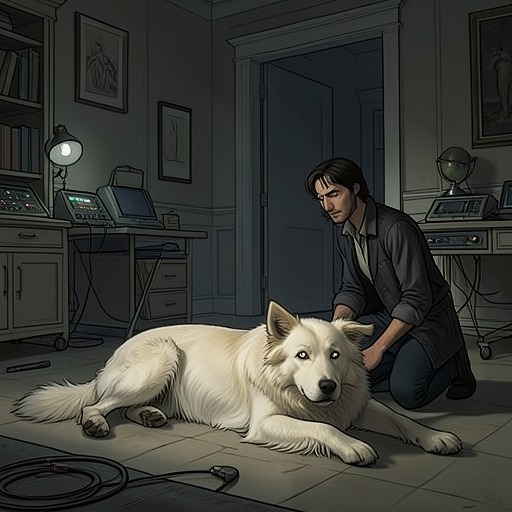
Chance arrives at the animal clinic in terrible shape, reduced to bones and dried blood after being abused. By the time Larem works with him, he has regained considerable weight, though he still needs to put on more. He stands about thirty inches high at the shoulder, has an intelligent face, and resembles a white wolf strongly enough to intimidate people on the streets. His exact ancestry is unknown. Dr. Isaac suspects some Great Pyrenees and shepherd in him, but describes Chance as essentially his own kind of animal and a natural loner.
Chance’s physical appearance initially makes him frightening to strangers, but the story distinguishes his intimidating body from his actual behavior. He distrusts humans generally, and his early reactions at the shelter include huddling in a corner and growling whenever Larem approaches. His suspicion is presented as a consequence of abuse rather than as evidence of inherent viciousness. The dog’s injuries and fear therefore establish the ethical problem Larem faces: healing requires not only medical attention but also the creation of enough safety for Chance to accept it.
Recovery Through Care
Larem’s relationship with Chance develops through repeated, carefully limited acts. At the clinic, Larem has a special touch with frightened animals and works for poor pay, receiving mostly tentative licks and tail wags in return. Those small responses matter because the clinic is one of the few places where no one judges him for being nonhuman. His usefulness is measured not by his sword arm but by his ability to reach a traumatized animal.
Chance’s progress is gradual. The first time Larem coaxes him into an outdoor run, the dog remains pressed into one corner, growling whenever Larem moves. Later, Chance is able to explore the enclosure while Larem sits quietly on a bench. Ignoring Larem becomes a sign of improvement rather than rejection: the dog is sufficiently confident that he no longer needs to monitor him as a threat. After circling the pen, Chance approaches, pauses to decide what to do, and finally rests his head on Larem’s knee.
That gesture permits a deeper exchange. When Larem raises his hand, Chance sighs and accepts the offer of friendship. Larem then channels the sun’s healing warmth through himself, easing Chance’s pain and helping the injured leg bones knit. Because Larem’s gift is still new, he cannot always judge how much healing an animal can withstand, particularly when it is as weakened as Chance. He therefore often limits the gift to pain relief and the calming of traumatized spirits. In Chance’s case, persuading the dog to accept care remains as important as accelerating the physical repair.
Companion to Larem q’Jones
Chance and Larem recognize one another through damage rather than through easy similarity. Larem has been betrayed by his own people, lost the secure identity he once possessed as a Blademate to a Sworn Guardian, and now survives in Seattle while resisting the temptation to return to Kalithia and face a possible death sentence. Chance, meanwhile, has been abused by humans and remains wary of nearly everyone. Their bond grows because both are wounded beings trying to find peace after trust has failed them.
Walking becomes part of that bond. Once Chance can tolerate a leash, Larem rewards him with long walks, and later the dog trots beside him through Seattle’s streets. Larem already walks to outdistance his own restlessness; with Chance beside him, the city feels less lonely. The dog is not merely a passive recipient of healing. His willingness to walk, approach, and remain near Larem gives Larem companionship and confirms that his care has produced a relationship rather than only a medical result.
Public Presence and Possible Separation
Chance’s size makes him a conspicuous figure when he and Larem appear together outside the clinic. During one walk, the enormous white dog comes around a corner dragging Larem behind him, causing pedestrians to scatter because of his teeth and imposing weight. Sasha Willis is first absorbed by the animal’s striking appearance and only then realizes that Larem is holding the leash. The encounter redirects her attention toward Larem and reveals how Chance can mediate human contact even when Larem himself wishes to remain distant.
The bond is threatened because Chance does not belong to Larem. Once his injuries improve, the veterinarian lists him for adoption, making separation a practical certainty unless a suitable home is found. Larem cannot adopt him because he has no place of his own and shares an apartment with Lonzo Jones that is barely large enough for the two of them. Chance now needs space, a large yard, and a family. The possibility of losing him exposes how precarious Larem’s new life remains: even the companionship that makes Seattle bearable depends on institutions and living arrangements beyond his control.
Narrative Significance
Chance’s presence complicates the story’s language of enemies, Others, and supposedly dangerous bodies. Human characters repeatedly treat Kalith as threats, describing them as “pets,” questioning why resources are spent treating an injured Kalith, and fearing what they might learn from human weapons. Against that atmosphere, Chance’s own intimidating body is not used to justify abandonment. His fear is met with patience, his injuries with treatment, and his distrust with consent-based care. The contrast makes the prejudice directed at Kalith more visible without turning Chance into a simple symbol.
Chance also gives the healing motif an intimate scale. Larem’s gift can mend damaged bones, but the dog’s recovery depends equally on time, restraint, and the animal’s decision to trust. That pattern echoes Larem’s own condition: physical or political rescue cannot immediately restore a life shattered by betrayal. Chance’s slow movement from a corner of the run to Larem’s knee, and from guarded contact to shared walks, makes recovery a process of mutual recognition.
His role remains small in terms of formal power, yet he affects the emotional structure of the narrative. Chance provides Larem with work, purpose, and a reason to remain connected to Seattle; he draws Sasha into another encounter with Larem; and his possible adoption turns ordinary companionship into a source of suspense and grief. Even the later announcement of Sasha Willis’s pregnancy is accompanied by Hunter Fitzsimon’s warning that Sasha is returning, placing Chance’s earlier function within a larger web of personal loyalties and domestic futures. He is therefore not simply a wounded animal waiting to be saved, but an active presence through whom the story tests whether care can cross species, political borders, and histories of violence.