Mount Adams
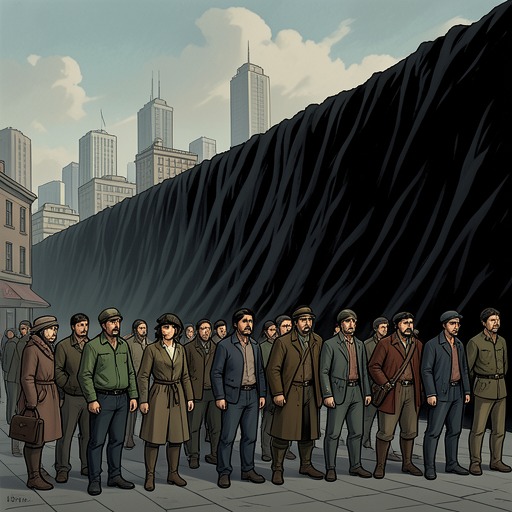
Bound by DarknessMount Adams is presented as both a recognizable feature of the Pacific Northwest and a strategic location within the hidden conflict between the Paladins, the Kalith, and the Others. Alongside Mount Rainier and Mount St. Helens, it helps define the Seattle landscape, yet its narrative meaning comes from the violence and secrecy beneath that landscape rather than from scenery alone.
A Volcanic Landmark in the Seattle Landscape
Mount Adams first appears as one of the region’s prominent volcanoes. During Sasha Willis’s flight into Seattle, the pilot points it out together with Mount St. Helens after the plane has passed disturbingly close to Mount Rainier on its route over the Cascades. From her hotel room, Sasha can see the mountain’s striking regional setting, but the view does not offer uncomplicated beauty.
For Sasha, the three peaks are magnificent and threatening at once. She understands them as unstable, unpredictable, and potentially lethal, while also associating the surrounding slopes with the Others, killers from another world. The mountains therefore become a contradiction in the landscape: they are scenic landmarks visible to ordinary travelers, but they also mark the hidden territory in which Paladins fight and die to protect people who know nothing of the danger around them.
A Concealed Frontier
Mount Adams belongs to the same spatial system as the Seattle Paladin headquarters and the underground world hidden beneath the city. The headquarters is built into a hillside near the Seattle Underground, whose apparently abandoned spaces are monitored through wall-mounted screens while tourists walk through them above. This arrangement establishes the broader logic surrounding Mount Adams: familiar public geography overlays concealed military and interworld geography.
The Barrier is the decisive boundary within that hidden geography. When Sasha descends by elevator toward it, she experiences the subterranean passage as a frightening loss of ordinary orientation before encountering the beautiful but deadly sheet of energy separating worlds. Mount Adams is significant within this same border regime because Paladin operations there are not ordinary fieldwork; they are part of the defense of a boundary whose instability can place both worlds at risk.
Paladin Operations and Risk
The mountain becomes an active operational site when Devlin Bane sends Paladins south to Mount St. Helens and Mount Adams. Sasha waits anxiously for reports on their progress, aware that the men are fighting for their lives rather than merely carrying out an administrative assignment. Her concern marks a change in how she understands Paladin work: danger that once existed for her as institutional information becomes immediate once it involves people she knows.
Mount Adams also helps expose the limits of Sasha’s authority as the Regents’ representative. Her work is shaped by containment, emergency reporting, and an effort to reform the treatment of Paladins, but the mountain reminds her that policy is inseparable from battlefield consequences. The distant site is connected to the conference-room disputes, the distrust of the Regents, and the pressure placed on Devlin’s command, even when Sasha herself is not present there.
Beauty, Trauma, and Significance
The mountain’s narrative force comes from the tension between visibility and concealment. Travelers can admire Mount Adams as part of the Cascades, while the people who understand its connection to the Others and the Paladin war cannot look at it innocently. Sasha’s response is shaped by prior loss: David Booker, her first love, died after being attacked by an Other and then poisoned by his Handler when he failed to return completely. That memory turns the region’s natural grandeur into a surface over buried violence.
Mount Adams consequently functions less as an isolated setting than as a landmark in Sasha’s altered consciousness. It joins the Seattle headquarters, the tunnels, and the Barrier as a place where access is controlled, knowledge is unevenly distributed, and safety depends on hidden labor. Its presence makes the novel’s central contrast concrete: the same landscape can signify beauty to ordinary observers and mortal danger to those who know what is concealed beneath it.