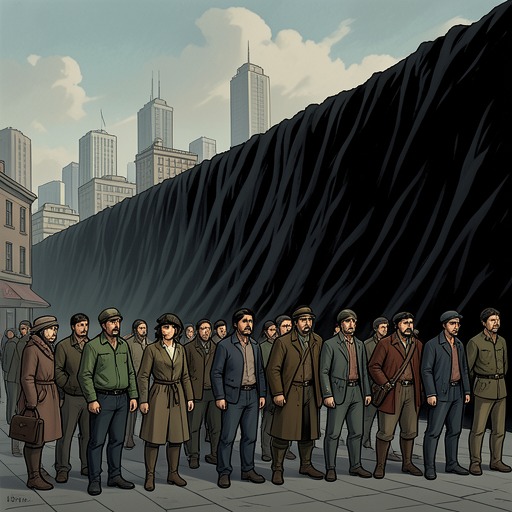
Mount Rainier
Bound by DarknessMount Rainier is presented as a beautiful but menacing landmark whose significance depends on who is looking at it and what that observer knows. For Sasha Willis, the mountain first appears from the air and then from her Seattle hotel room, but its scenic grandeur cannot be separated from the violence concealed beneath the regional landscape. It becomes an emblem of the novel’s central geography: apparently familiar spaces are layered with restricted knowledge, political danger, and the possibility of sudden death.
Appearance and First Impression
Mount Rainier enters Sasha Willis’s experience during the flight into Seattle. The plane passes disturbingly close to the mountain as it crosses the Cascades, and the view from her hotel room is described as stunning. The pilot also identifies Mount St. Helens and Mount Adams during the final approach, placing Mount Rainier within a chain of volcanic peaks that defines the region’s visual identity. Sasha feels a chill when she remembers the flight, yet resists closing the drapes because she knows that she must eventually become accustomed to seeing the mountain.
That decision gives the view an unusually personal force. The mountain is not merely scenery outside a hotel window; it is an unwanted fact that Sasha deliberately keeps before her. Her attempt to look at it until fear becomes bearable turns landscape into an instrument of psychological adjustment. The scene also establishes a contrast between the effortless beauty visible to a tourist and the dangerous history perceived by someone newly admitted to the Paladins’ concealed world.
Beauty, Instability, and Hidden Violence
Sasha understands that Mount Rainier and the neighboring peaks are unstable, unpredictable, and potentially lethal. Their magnificence therefore carries a double meaning: the same slopes that invite admiration also suggest forces capable of destruction. The mountains are further associated with the Others, murderous beings from another world, and with the trained Paladin warriors who live and die beneath the region’s scenic surfaces while protecting people who remain unaware of the danger.
This association makes Mount Rainier part of the novel’s recurring structure of concealed reality. Its visible form belongs to ordinary Seattle, but the knowledge attached to it belongs to the Paladin secrecy that Sasha has only partially entered. The mountain’s threat is not limited to natural catastrophe. It also shelters a hidden military and interworld history, so that geological instability and political violence become visually superimposed. What appears permanent and majestic is also a reminder that safety depends on forces most civilians cannot see.
A Landmark Above the Underground World
Mount Rainier’s significance expands through the novel’s vertical geography. The Paladin headquarters are built into the hillside beside the Seattle Underground, a buried urban district that tourists visit while believing the abandoned-looking world beneath the city to be empty. From monitors inside headquarters, Sasha watches sightseers moving through those underground streets. The revelation transforms the city into a stacked system of visibility: tourists occupy the public surface and its curated subterranean past, while the Paladins occupy a concealed operational level beneath both.
The descent to the Barrier makes that spatial hierarchy physical. Sasha enters an elevator alone after using her security code, and the car drops so abruptly that she feels as though the floor has vanished. It lands with a jarring thump in a damp, rock-smelling underground space, concealed behind a stone outcropping and nearly cut off from view. The silence and the distant electrical hum make the destination feel less like an ordinary facility than a guarded threshold. Mount Rainier belongs to the same broader landscape: a visible mountain above, hidden stone and conflict below.
Space, Access, and Political Belonging
The mountain also helps frame the unequal access through which the novel distributes knowledge and belonging. Sasha arrives as a representative of the Regents but remains an outsider to the Paladins’ world; Larem q’Jones attends a meeting as the sole Kalith representative while many Paladins ignore him or tolerate him only under orders. Beneath Mount Rainier’s surrounding terrain, access is controlled by security codes, escorts, conference-room authority, and the Barrier itself. Movement through these spaces changes a person’s political position: Sasha moves from protected ignorance toward dangerous knowledge, while Larem moves from honored warrior of Kalithia to an exiled instructor dependent on Paladin charity.
Larem’s history makes the landscape’s border logic especially stark. After Lusahn q’Arc’s relationship with Cullen Finley and the resulting accusations of treason, Larem was condemned to execution and forced into this world. He saved Lonzo Jones during the group’s return across the Barrier, and Lonzo repaid that debt by offering him a home and the use of his family name in forged paperwork. Larem still imagines crossing back into Kalithia despite his death sentence, but Mount Rainier’s region is where he must negotiate a new identity among former enemies, not a neutral refuge outside the conflict.
The Mountain’s Threatening Echo
The mountain’s ominous meaning is reinforced by later violence in the Seattle setting. When attackers assault Sasha Willis’s condominium, the front door is struck while a window shatters and gas canisters flood the room with smoke. Larem realizes that the guards may be involved and warns Devlin Bane that the attackers claimed all of Larem’s kind were already dead. He demands trusted protection for Sasha and Chaz Willis, calls for Barak q’Young and Cullen Finley to be warned, and asks that Lacey Sebastian, Lusahn q’Arc, and the children be moved to safety.
The assault does not occur at Mount Rainier itself, but it confirms the pattern the mountain first establishes: apparent shelter can conceal organized lethal danger. The peak’s instability becomes a landscape-level counterpart to the novel’s unstable alliances, while the hidden headquarters and Barrier reveal that Seattle’s apparent security is produced by secrecy, surveillance, and armed intervention. Even the Paladin gym, where Sasha waits in a hallway to watch Larem train, belongs to this same concealed infrastructure of violence and intimacy.
Narrative Significance
Mount Rainier functions less as a site of a single decisive action than as a charged landmark organizing the novel’s sense of place. It marks Seattle as beautiful, volcanic, militarized, and connected to another world. Its slopes look open to everyone, yet the knowledge of what they conceal is restricted to people drawn into the Paladins’ secret war. The mountain therefore joins natural danger to the novel’s larger concerns with borders, exile, surveillance, and the cost of protection.
Its strongest effect comes from the contrast between Sasha’s first visual encounter and the reader’s accumulating knowledge. At first, the mountain is an unforgettable sight from a hotel room; immediately afterward, it becomes inseparable from killers, the Others, and warriors buried beneath the landscape. That movement from spectacle to threat establishes Mount Rainier as a symbol of Seattle’s divided reality: a public world of scenic wonder resting above a hidden world where belonging is contested and safety is never guaranteed.