Mount St. Helens
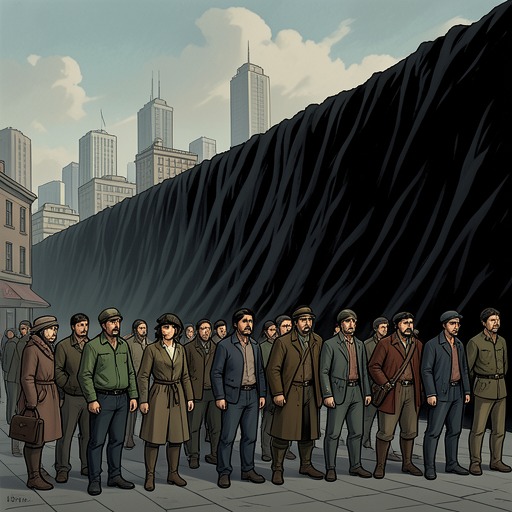
Bound by DarknessMount St. Helens functions in the story as more than a volcano. Seen from the air, it belongs to the magnificent chain of peaks surrounding Seattle; beneath that beauty, however, it is associated with lethal instability, the Others, and the hidden warrior society that protects ordinary people. More decisively, the area becomes a recurring crisis point where the Barrier goes down, combat begins, reinforcements are sent, and the fragile arrangements between Paladins, Kalith, and human authorities are exposed.
A Landmark Concealing a Threat
Mount St. Helens first appears within Sasha Willis’s uneasy arrival in Seattle. Her plane passes close to the mountain while approaching over the Cascades, and the pilot points it out alongside Mount Rainier and Mount Adams. From her hotel room, the view is stunning, but the beauty cannot remain innocent for her. Sasha Willis knows that the mountains conceal the Others, whom she understands as killers from another world, as well as trained Paladin warriors who live and die beneath the scenic slopes to keep people like her safe.
That double image establishes the mountain’s central significance. It is publicly available as scenery and privately understood as a dangerous frontier. Tourists can admire the landscape without knowing what lies beneath or what violence is being contained there. The contrast resembles the hidden structure of the Seattle Paladin headquarters, where monitors show sightseers moving through the supposedly deserted Seattle Underground while a secret society occupies the spaces below. Mount St. Helens therefore belongs to the same spatial order: a familiar surface conceals a militarized, heavily restricted world.
Barrier Failures and Paladin Deployment
The mountain becomes an active emergency site when the Barrier near St. Helens remains down. Lonzo Jones is called out again, and a second wave is sent to support the Paladins who have been fighting since noon. The report reaches Larem q’Jones by telephone and makes the danger immediate even before he enters the tunnels; his physical reaction shows how intensely the threat affects him because the endangered fighters include a friend and because the conflict involves his former people.
Mount St. Helens is also the reason Sasha Willis’s planned tour of the tunnels changes. Devlin Bane is called away because the mountain is once again causing problems, so he arranges for Lonzo Jones to meet her instead. The substitution links a seemingly ordinary orientation visit to an unfolding military emergency. Sasha Willis expects to see the Barrier for herself, but the route toward that hidden boundary leads through an empty headquarters, a descent by elevator, damp rock, heavy silence, and uncertainty about where her escort has gone. The mountain’s crisis thus alters access to the Paladin world before Sasha Willis fully understands its danger.
When the battle is in full swing, Larem q’Jones moves through the tunnels chanting prayers for the dead and dying. The fighting recalls the life he once led as Lusahn q’Arc’s Blademate, when he would have joined a battle to defend his own kind. At St. Helens, however, he has friends among the Paladins while the Kalith regard him as a traitor. The mountain’s conflict converts his divided identity into a practical dilemma: he belongs fully to neither side, yet he has a purpose within the battle and must navigate the tunnels rather than simply return to the people he once served.
A Continuing Zone of Instability
The threat does not end with a single battle. Later, Lacey Sebastian calls Devlin Bane from the geology lab to report fluctuations in energy levels down near St. Helens. Cullen Finley and Sasha Willis immediately prepare to strengthen coverage in case the disturbance develops into another emergency. Sasha Willis’s memory of the earlier battle remains vivid enough to make her shudder, showing that the mountain’s danger persists psychologically after the immediate violence has stopped.
The same region becomes a temporary assignment for Craig, who is stationed near Mount St. Helens while Larem q’Jones waits to begin weapons lessons with him. Lonzo Jones is also sent on the mission and is expected back only after the operation ends. In this way, the mountain repeatedly draws Paladins away from headquarters and interrupts ordinary plans. Training, companionship, and institutional routine remain subordinate to the need to reinforce the Barrier whenever its energy becomes uncertain.
Political and Personal Consequences
Mount St. Helens exposes the cost of the Barrier system’s instability. Every failure demands armed intervention, but the resulting danger is not limited to combatants. The area is tied to the wider pattern in which people cross between worlds, are classified as allies or traitors, and become vulnerable to institutional decisions made by Paladins and Regents. Larem q’Jones’s exile is inseparable from that system: the theft of the blue stones from Kalithia, associated with Colonel Kincade’s manipulation of lives on both sides of the Barrier, destroyed his former life and forced him into Seattle. The mountain’s recurring emergencies are therefore part of the same political geography that made his displacement possible.
The passage of time does not make the location safe. Three weeks after Larem q’Jones’s last confrontation with Devlin Bane, Craig remains assigned near St. Helens, Lonzo Jones is still away on the same mission, and Larem q’Jones spends his nights walking Seattle while studying Kalith healing. His work at Dr. Isaac’s animal clinic offers a quieter form of purpose, especially through his bond with Chance, but the mountain continues to structure his life through absence, waiting, and interrupted plans. The crisis zone is distant from the clinic, yet its consequences reach into his most ordinary routines.
Symbolic Boundary and Narrative Function
The mountain’s repeated appearance makes it a geographic marker for the unstable relationship between worlds. It is beautiful enough to invite admiration, dangerous enough to provoke fear, and strategically important enough to require constant surveillance. Its energy fluctuations and Barrier failures turn geology into political pressure: a natural landmark becomes the visible location of a border that is neither secure nor neutral.
The association between Mount St. Helens and hidden violence also foreshadows the broader collapse of trust. When attackers later assault Larem q’Jones and Sasha Willis’s home, Larem q’Jones warns Devlin Bane that the crisis may involve guards and asks for trusted men to protect Sasha Willis and Mr. Willis while the Paladins investigate. The attack is not located at Mount St. Helens, but it belongs to the same atmosphere of breached defenses and uncertain loyalties. The mountain has trained the characters and the reader to understand that apparent security can fail without warning.
Mount St. Helens ultimately embodies the story’s refusal to separate natural beauty from danger or private life from geopolitical conflict. Its slopes are seen by tourists, its underground spaces are contested by warriors, and its Barrier failures repeatedly force characters into battle. For Larem q’Jones, it marks the world he lost and the world in which he is trying to build a place; for Sasha Willis, it is one of the landscapes through which fear must gradually become knowledge. The mountain’s decisive role lies in making the hidden border tangible: spectacular on the surface, lethal beneath it, and never entirely under anyone’s control.