Screen Emergency Defense Agreement
Bound by DarknessThe barrier emergency response protocol is the operational rule governing Seattle’s immediate response to Barrier instability. When the Barrier begins to fail, the protocol converts the Paladin headquarters and its tunnels from a workplace into a defensive system: alarms call the Paladins to battle, civilian access is suspended, and the tunnels become the point at which the human world must be defended against an incursion by the Others. The rule protects the city, but it also exposes civilians, Kalith, and Paladins to unequal risks and makes every failure of the Barrier a test of political trust.
Definition and Operating Conditions
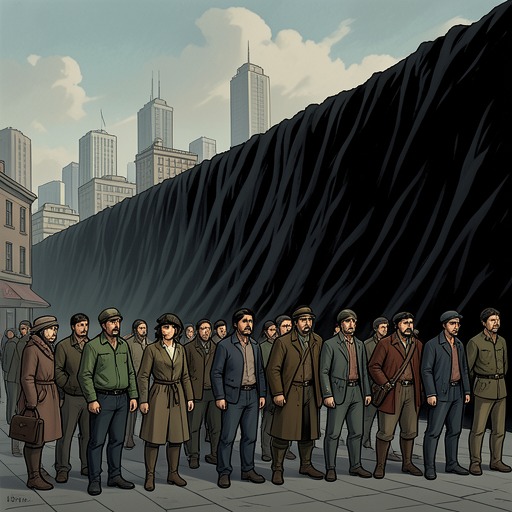
The protocol is activated by visible and measurable signs that the Barrier is close to collapse. The first warning is a change in its physical appearance: the formerly opaque curtain becomes translucent, allowing shadows from the world beyond to show through. This thinning is one of the two common indications that the Barrier is about to go down. The second is a rapid corruption of its colors, as healthy brightness gives way to sickly yellows and greens spreading across the tunnel’s upper expanse. The combination turns a technical fluctuation into an unmistakable emergency.
The system also responds to changes in energy levels. Lacey Sebastian reports fluctuations near Mount St. Helens, prompting Cullen Finley and D.J. Clayborne to reinforce coverage before the disturbance becomes an open attack. That precaution shows that the protocol is not limited to the instant of collapse; it includes monitoring, interpreting warnings, and moving defensive personnel toward vulnerable points. Barrier defense therefore depends on both specialized observation and the willingness of the Paladins to act before the danger is fully visible.
Alarm, Access, and Civilian Restrictions
Once the Barrier’s energy begins to weaken, the emergency alarms summon the Paladins to defend their world. The warning blast sends them rushing toward the tunnels, where their ordinary identities give way to the focused readiness of combat. The same alarm that reassures civilians that trained defenders are coming also announces that the tunnels are no longer governed by ordinary rules.
During active fighting, civilian security codes do not operate the elevators, including Sasha Willis’s own code. She must wait for the first group of Paladins to arrive and disembark before the elevator can carry her back to safety. The restriction is absolute in the moment of crisis: personal authority and familiarity with the headquarters cannot override the emergency system. Its practical purpose is to keep the access route available to combat personnel, but its consequence is to trap a civilian below ground while the threat approaches.
That consequence is especially severe because the Others are already positioned on the other side of the failing Barrier. As the center rips apart, they pour through in large numbers, carrying curved blades and displaying pale eyes and gray skin beneath clothing that otherwise makes them appear human. The protocol thus creates a stark sequence of priorities: the Paladins receive the first route to the battle, while civilians must survive long enough for the defense to secure the passage.
Defensive Stakes and Immediate Consequences
The protocol exists because Barrier failure is not merely a local mechanical problem. A collapse opens a route through which the Others can enter Seattle, and the response determines whether the breach becomes a mass invasion. Larem q’Jones, watching the Paladins answer the alarm, envies their clear purpose even as he hates the necessity that gives them that purpose. He measures the emergency in lives, asking how many Kalith will die before the Barrier is restored and how many Paladins will bleed defending it.
The aftermath confirms that the protocol cannot guarantee a bloodless defense. After the all-clear sounds, emergency medical personnel wait for the wounded, and Laurel Young and the other Handlers prepare to care for the dead and ease their return to life. Two guards are reported killed in one battle, while another guard nearly kills one of Seattle’s sheltered Kalith. The emergency therefore produces casualties on several sides and sharpens the question of whom the Paladins consider worth protecting.
The Paladin Resurrection Cycle complicates the meaning of those casualties. A Paladin’s death is not necessarily permanent, but revival does not ensure that the person will awaken unchanged. Larem’s Kalith Healing Gift has already returned Hunter Fitzsimon from death, yet Larem doubts that the Handlers would permit him to stab a patient through the heart merely to test whether the gift might work again. The protocol’s medical aftermath is consequently shaped by uncertainty: survival, resurrection, and identity do not align neatly.
Political and Ethical Pressure
The emergency rule operates within a fractured institution. Larem q’Jones is paid by the Paladins to teach weapons practice, but he remains a former enemy and an exile from Kalithia, where he fears that his death sentence may still stand. His history as the Blademate to a Sworn Guardian gives him a principled understanding of service, while his present dependence on Paladin charity makes every emergency a reminder that he has not yet found a stable place in the human world. His rescue of Lonzo Jones during the struggle to cross the Barrier has created an unexpected friendship, but it has not erased the political meaning of his presence.
The protocol is also strained by corruption and distrust. Sasha Willis discovers that Paladin financial records contain salaries for three supposed Paladins whose names appear on no duty rosters and for whom no personal information exists. She concludes that the recipients are actually Kalith who crossed from another world, and she is furious that Regent funds may be supporting them. At the same time, D.J. Clayborne traces Kincade’s offshore accounts and finds transfers connected to the Regents’ server. These financial irregularities make emergency defense inseparable from the question of who has been secretly funded, sheltered, or armed.
The political response is further hardened by anti-Kalith hostility. George treats one injured Kalith as a disposable enemy and regards the resources spent treating him as a scandal. Chaz Willis receives reports that fighting along the I-5 corridor has been bloody and that a guard nearly killed one of the “pet Kalith.” Such reactions reveal a conflict inside the protocol itself: its formal purpose is defense against the Others, but frightened or radicalized guards may broaden the category of enemy until Kalith allies become targets. The emergency framework can preserve the Barrier while simultaneously damaging the coexistence it is supposed to protect.
Command, Trust, and Escalation
Later attacks show how the protocol expands beyond the tunnels when the danger is identified as an internal conspiracy. After two attackers strike the condo, Larem q’Jones tells Devlin Bane that they must have been guards. The surviving attacker claims that all Larem’s kind are already dead, whether anyone knows it yet or not. Larem therefore asks Devlin to place only trusted men around Sasha Willis and her father, and he names Barak q’Young, Cullen Finley, Lacey Sebastian, Lusahn q’Arc, and the children as people who must be moved to safety.
Devlin Bane responds by ordering the guards at headquarters rounded up and locked away until their loyalties can be sorted out. This is an emergency extension of the same principle that disables civilian elevator codes: normal institutional procedures yield to immediate containment. Yet the measure also exposes the cost of that principle. The defense apparatus itself has become suspect, so protection requires restricting the very personnel trained to provide it.
The rule’s broader significance lies in this instability. It is indispensable whenever the Barrier thins, changes color, or begins to admit the Others, but every activation brings the worlds into closer and more violent contact. It directs bodies, shuts doors, summons warriors, and organizes medical recovery; it does not resolve the historical betrayals, illicit funding, anti-Kalith ideology, or competing loyalties that make each breach more than a military incident. The barrier emergency response protocol preserves the boundary in the short term while revealing how precarious the political and moral order on both sides has become.