Delilah resolves her guilt over Peter's death with her father
Box Set: Samsons Sterbliche Geliebte & Samson's Lovely Mortal (Deutsch·Englisch) (Scanguards Vampire) (German Edition)Delilah resolves her guilt over Peter's death with her father in one of the book's decisive scenes of emotional recognition. With Gabriel Giles's supernatural gift, a father whose late-stage Alzheimer's disease has made him unable to recognize his daughter briefly recovers the memories sealed inside his failing mind. The resulting conversation does more than revisit a childhood death: it overturns Delilah's interpretation of her family, releases her from survivor's guilt, and gives her permission to stop living inside the past.
Causes and Background
The wound began when Delilah was left alone with her infant brother Peter, who died of Sudden Infant Death Syndrome. She had seen him dead in his crib and carried the image into recurring nightmares. Her mother's lasting sadness and the family's silence convinced Delilah that her parents blamed her for failing to protect him. Because the adults never explained their own guilt, the child filled the silence with self-accusation; the death therefore remained active in her life long after the event itself.
The trauma also connects with Delilah's wider pattern of sleeplessness and frightening bodily vulnerability. Her insomnia returns her to experiences that cannot yet be narrated clearly, while the family loss remains something she has carried for more than twenty years without a confirming witness. The problem is not simply that she remembers Peter's death, but that she has remembered it under a false moral interpretation: she has treated herself as responsible for an infant's death that no one could have prevented.
Gabriel Giles's Intervention
The opportunity for reconciliation comes through Gabriel Giles, who leads Scanguards New York headquarters and is a vampire with a special gift for unlocking memories. Samson Woodford asks Gabriel to visit Delilah's father, assuring Delilah that her father will be safe and that the purpose is personal rather than connected with the financial investigation involving Milo and Ilona. Gabriel explains that the old memories still exist, although they are inaccessible, and that he can open them only for a few minutes.
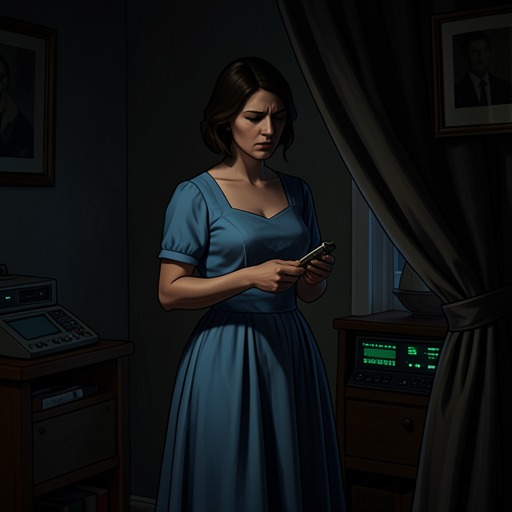
The encounter is conducted through a monitor rather than in the same room. Delilah first sees her father sitting with an empty gaze and bent shoulders, apparently beyond recognition. Gabriel then stands behind him and holds his hands over the old man's head. After several seconds, life returns to his eyes; he looks directly into the camera and recognizes Delilah. The supernatural act functions as a temporary restoration of testimony. It does not cure his Alzheimer's disease or permanently restore his mind, but it creates a brief interval in which the person who witnessed the family tragedy can answer the question that has governed Delilah's life.
The Conversation and Revelation
Delilah begins by confessing her guilt over Peter. She says that she should have done something, but her father immediately rejects the premise. Peter died from Sudden Infant Death Syndrome, he explains, and even if Delilah's parents had been home that night, they could not have saved him. He and Delilah's mother had blamed themselves for leaving her in charge, but they had never blamed Delilah. He remembers the horror on her face and regrets that she had to see her brother die.
This clarification reverses Delilah's reading of her mother's grief. She had taken her mother's sadness as evidence against herself; her father tells her that the parents' sorrow was directed inward. Delilah had been their only light during the darkest period, not the cause of it. He also identifies the family's failure: they did not know how to respond to her nightmares, did not seek professional help, and assumed that silence and time would heal what they had left unspoken. His confession therefore contains both reassurance and an admission that the adults' silence allowed the trauma to harden.
The exchange becomes mutual absolution rather than a one-sided exoneration. Delilah apologizes, but her father asks what she believes needs forgiveness and then acknowledges that he and her mother failed her. Delilah answers that there is nothing to forgive, says that she loves him, and hears him return that love on behalf of both parents. The conversation gives emotional language to a family bond that had survived beneath illness, guilt, and decades of misunderstanding.
Consequences and Aftermath
Before the restored memories fade, Delilah's father asks her to stop dwelling in the past and to think about her future—her own future. She promises. His gaze then becomes empty again, marking the end of the brief period Gabriel created. The scene's temporal structure is sharply limited: memory is opened, the central testimony is delivered, and memory closes before ordinary life can resume. Yet the interval is sufficient because Delilah does not need a permanent cure for her father; she needs the truth from him once.
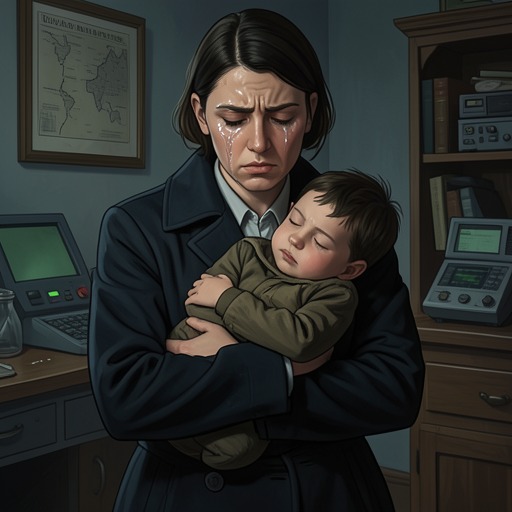
Delilah collapses in her chair and cries. The tears are not merely renewed grief but the release of guilt accumulated over years. She now knows that her father loved her and never held her responsible for Peter's death. In that recognition, the childhood event remains tragic, but its meaning changes. Peter cannot be brought back, and the lost years cannot be restored, yet Delilah is freed from the belief that she caused the loss or betrayed her family.
Samson arrives as Delilah is being lifted from the chair and sees the immediate aftermath of her release. The moment becomes part of the developing trust between them: her family history is no longer an isolated secret sealed inside nightmares, and the future her father names can include a life not organized entirely around fear and self-punishment. The scene thus turns supernatural memory restoration into an act of psychological witnessing, with Gabriel enabling the encounter but Delilah and her father supplying its human truth.
Narrative Significance
The event is a trauma narrative organized around delayed speech, repetition, and recognition. For more than twenty years, Delilah has repeated the death internally through nightmares while the family repeats silence externally. Gabriel's intervention breaks that repetition by making a witness available, and the father's explanation converts an accusation into shared mourning. The plot's discovery is therefore emotional as well as factual: Delilah learns not only how Peter died, but what her parents felt and what she meant to them.
The scene also contrasts two forms of bodily and mental vulnerability. Samson Woodford's sexual impotence is interpreted as the result of emotional defenses collapsing before a mortal woman, while Delilah's sleeplessness and nightmares arise from an unprocessed childhood wound. In both cases, the body carries a truth that conscious explanations have avoided. Delilah's healing begins when the hidden history is spoken plainly, just as Samson's difficulty is linked to the defenses he refuses to acknowledge.
The event's significance finally lies in its refusal to make closure identical with forgetting. Gabriel does not erase Peter, the death, or the years of suffering. He makes remembrance accurate for a few minutes, and accurate remembrance is enough to alter Delilah's future. Her father's final instruction becomes the scene's governing movement: the past must be faced, witnessed, and understood before it can stop ruling the present.