Samson becomes a vampire
Box Set: Samsons Sterbliche Geliebte & Samson's Lovely Mortal (Deutsch·Englisch) (Scanguards Vampire) (German Edition)Samson becomes a vampire through a violent threshold event that joins forbidden love, sudden bereavement, physical survival, and irreversible transformation. The change begins when he has recognized that he loves Elizabeth, his employer’s seventeen-year-old daughter, and finds her sheltering in a stable during a storm. Their love leads them to flee together, but their attempted escape lasts only an hour before three attackers ambush them. Elizabeth’s death and Samson’s failure to protect her become the defining wound from which his vampiric existence emerges.
Causes and Background
Samson’s transformation is preceded by a decisive choice to abandon the life available to him and run away with Elizabeth. He meets her at the moment when his realization of love coincides with the arrival of rain, a cooling change in the oppressive air that briefly offers shelter and emotional release. At midnight, Elizabeth finally appears wearing a dark cloak and carrying a small bag. Samson embraces and kisses her, understanding her arrival as a willingness to give up everything and share an uncertain future with him. Their horses are saddled, and the lovers ride away together, but the apparent beginning of freedom immediately becomes a passage toward catastrophe.
The attack arrives without warning after only an hour on the road. Three men emerge and fall upon the couple so quickly that flight is impossible. Samson’s horse is killed first, its throat slashed, and Samson must struggle free before the animal can crush him. In that instant, the practical danger of the ambush becomes a personal failure: he hears Elizabeth’s desperate screams while he is unable to reach her. The scene turns the promise of escape into a test of protection, and Samson cannot fulfill the promise he has made to her.
The Attack and the Turning
What Samson sees next destroys the ordinary logic of the night. One attacker has buried his teeth in Elizabeth’s throat and is drinking her blood, an image so impossible that Samson doubts his own sanity before grief and rage overtake disbelief. He fights the other two men with everything he has, but the struggle keeps him from reaching her. The value of the escape reverses completely: the future he and Elizabeth had chosen becomes a scene of helplessness, and his promise to protect her becomes an accusation against himself.
Unable to save Elizabeth, Samson redirects his remaining strength toward revenge. He fights with a violence he has never known in himself, biting and striking until one attacker’s fangs sink into his arm and draw out his blood. Even then he refuses to yield. His final clear memory is of Elizabeth’s dead body and of biting off and spitting out the attacker’s ear; the man’s blood leaves a metallic taste in his mouth. The act is both resistance and threshold, because Samson’s attempt to answer Elizabeth’s death with violence ends with his own body marked by the same predatory world that has taken her.
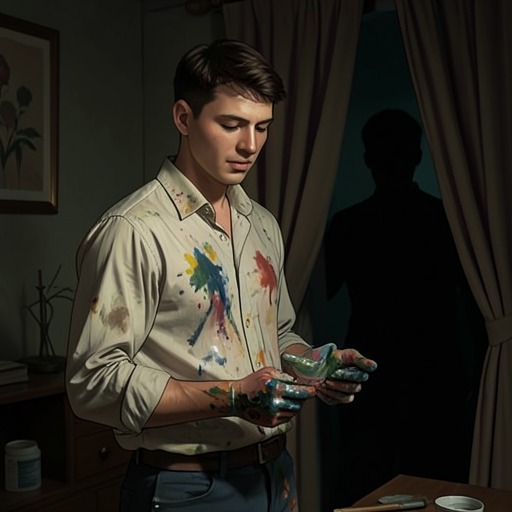
Samson wakes the next day in a shed, with no knowledge of how he arrived there. The wounds inflicted during the attack have vanished, but healing has not restored him to his former life. When sunlight touches his arm through the opened door, burning pain forces him backward. This bodily contradiction—injury erased, daylight made intolerable—provides the evidence through which he recognizes what has happened: he has been condemned to a life as a vampire. The transformation therefore functions as a dark rebirth rather than a chosen initiation. Samson survives the attack, but survival delivers him into an identity he understands as a curse, and he immediately interprets himself as one of the evil beings responsible for the loss of Elizabeth.
Later Ritual and Thematic Echoes
The later blood-bond between Samson and Delilah gives his original transformation a deliberate relational counterpoint. His becoming a vampire begins with an attack, involuntary blood loss, Elizabeth’s death, and the shock of waking into a cursed existence; the bond with Delilah is presented as a mutually acknowledged choice. Before the ritual, Samson explains that she will remain human, continue to walk in the sun and eat ordinary food, but will become his wife and mate for life, with both partners sharing sensations and keeping no secrets from one another. He gives her an opportunity to refuse because the bond is permanent. Delilah answers without hesitation by exposing her neck and telling him to bite her, turning the bodily threshold of vampirism from an act of predation into an act of consent.
Meaning and Narrative Consequences
Samson’s transformation establishes the governing contrast between vampirism as violation and vampirism as chosen intimacy. The attack leaves him with no ceremony, explanation, or consenting community: Elizabeth is killed, Samson is wounded, and he wakes alone in a shed to infer his new condition from vanished injuries and the pain of sunlight. By contrast, his later blood-bond with Delilah is carefully explained, mutually accepted, and sealed through reciprocal exchange. Samson cuts his own shoulder with the ceremonial dagger and tells Delilah to drink from him; then he drinks from her neck, making the bond an act in which blood passes in both directions rather than being taken from an unwilling victim. The scene’s erotic intensity does not erase its danger, but gives the bodily signs of his original turning a radically different meaning: the bite is no longer only an instrument of death, and blood is no longer merely the evidence of loss.
This distinction also clarifies why Samson treats the bond as irreversible. He tells Delilah that the partners will become part of each other, that each will sense what the other senses, and that there will be no secrets between them. Her response is not passive surrender; she exposes her neck and answers without hesitation, accepting the permanent consequence he has placed before her. The later ritual therefore revises the meaning of the first transformation without undoing its trauma. Samson cannot recover Elizabeth or return to the life that ended on the road, but he can construct a relationship in which the exchange that once destroyed his future becomes a consciously shared promise.
The transformation remains a foundational explanation of Samson’s later identity and conduct. His vampirism is associated from the beginning with grief, failed protection, rage, predation, and the conviction that he has entered the ranks of the wicked. The later bond with Delilah does not make that history disappear; instead, it creates a counter-image of permanence based on trust rather than ambush. Samson’s cursed awakening and his chosen union thus form the event’s central pattern: an externally imposed metamorphosis is followed, much later, by an intimate ritual through which he and Delilah decide what an immortal life together will mean.