Vampire integration into human society
Box Set: Samsons Sterbliche Geliebte & Samson's Lovely Mortal (Deutsch·Englisch) (Scanguards Vampire) (German Edition)Vampire integration into human society is the collective practice of adapting to human habits and institutions while keeping the existence of two species concealed. In San Francisco, vampires can move freely among people who do not recognize the difference; what seems unusual can be dismissed as eccentricity. The arrangement is more than a disguise. It shapes social life, work, feeding, and even the emotional difficulties vampires face as they live by human conventions. Its tensions emerge in Samson Woodford’s carefully managed public life and in the supernatural signs that Delilah Sheridan eventually recognizes.
Public Life and Social Adaptation
The vampires of San Francisco do not withdraw into a separate visible world. Their social elite follows the city’s human calendar: balls, opera, symphony concerts, gallery openings, ballet, readings, and film premieres. As in human high society, being seen matters. Shared venues and familiar rituals allow vampires to participate in civic life without announcing what they are; in a city where eccentricity attracts little notice, their presence can pass without explanation.
This adaptation also reaches into everyday presentation. Samson rejects the idea that a modern vampire should lie in a coffin, treating it as an outdated convention rather than a necessary part of vampire life. He is accustomed to brandy and values its warmth and its usefulness at social occasions with mortals, although it does not affect his senses as it would a human’s. Such accommodations make his life legible to human company while leaving his underlying nature unchanged.
The social arrangement is not frictionless. Dr. Drake tells Samson that, since vampires began adapting to human ways, his own work has quadrupled: emotional problems long buried are now demanding attention. The observation connects integration to a cost beyond concealment. Living within human patterns brings vampires into contact with emotional needs they had previously suppressed or regarded as settled. Samson recognizes that the doctor has touched a nerve, but leaves rather than accept help, showing that the pressures of adaptation are not automatically resolved by entering human society.
Work, Money, and Everyday Infrastructure
Samson’s career turns adaptation into an institution. After becoming a vampire in the early nineteenth century, he realized that he still needed money to live. He began by hiring himself out to protect travelers at night. Security proved profitable, and the work offered another advantage: criminals encountered while protecting wealthy travelers and valuable deliveries could become sources of food. The business therefore joined a human economic need to a vampire’s practical requirements.
Samson later expanded the one-man operation into Scanguards, hiring other like-minded vampires. As a human, he had not achieved the success he found as a vampire. The irony of the company’s purpose is central to his identity: vampires work to protect people from the danger posed by other vampires. For Samson, that protective role is a way of preserving his humanity, even though the organization is staffed in part by the beings from whom its clients may need protection.
In its present form, Scanguards supplies security personnel and bodyguards to companies, celebrities, foreign dignitaries, and other prominent clients. Samson keeps the headquarters in New York while living in San Francisco for a quieter, more ordinary existence. Many employees are vampires, commonly working night security or bodyguard assignments. Human managers represent the firm during the day and handle public relations, allowing the organization to operate on a human business schedule without exposing its concealed structure.
The separation between public business and private knowledge is deliberate. Few mortal employees know Samson or have met him, and he would scarcely recognize most of them on the street. Oliver, a mortal who knows Samson’s identity, serves as his eyes and ears during daylight. Carl, a vampire, works as his driver, butler, and personal assistant at night. Samson pays and treats his personal staff well because he understands that loyalty matters; dependable relationships help keep the arrangement functioning across the human and vampire worlds.
Feeding and the Limits of Assimilation
Adaptation extends to how vampires obtain food. Samson usually drinks blood purchased from a blood bank. It does not equal warm blood taken directly from a living person, but it satisfies his hunger and sustains his body. This established supply allows him to avoid feeding on people except in an emergency, reducing both the need for predation and the occasions when he might have to conceal it.
That restraint was learned over time. When Samson was a young vampire, before blood banks existed, he drank directly from humans and sometimes took too much, accidentally killing them. As commercially available blood became easier to obtain, he changed his practice and learned greater control. He also rarely uses mind control, the ability vampires can employ to plant thoughts that ease access to a victim and later erase the victim’s memory of what happened. His ordinary reliance on stored blood makes that predatory method unnecessary in most circumstances. Integration, in this respect, is supported by new human infrastructure and by choices about how vampire power is used.
But accommodation cannot erase the body’s limits. Samson can stay awake during the day, though his senses are less sharp and he has less energy than at night. He can move about inside his house as long as direct sunlight does not touch him; going outdoors into the sun would reduce him to ash. These restrictions shape his schedule and require help from a daytime representative, even as the wider company remains active. The vampires can imitate many human routines, but they cannot simply inhabit every human condition.
Visibility, Disclosure, and the Boundary of Integration
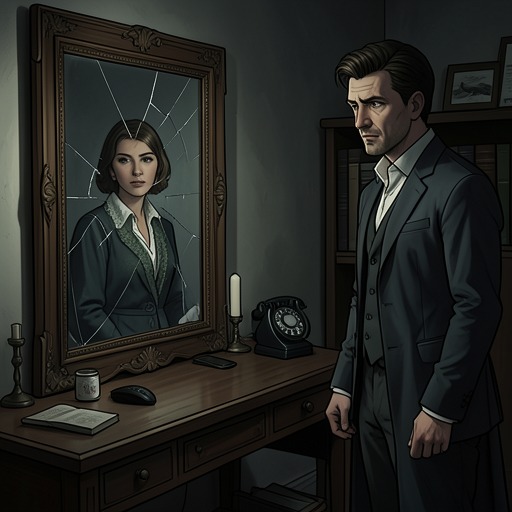
The boundary between passing and being recognized is vulnerable to small, conspicuous signs. Delilah sees Samson’s eyes glow red when he shouts at Ricky, then later sees the same red eyes and two protruding fangs. In the car, she connects these observations with the absence of a bathroom mirror, Samson’s inability to spend the day with her, the men’s lack of fatigue after staying awake all night, the apparent lack of edible food in his refrigerator, and his extraordinary strength. Individually, these details had been easy to overlook or explain away; together, they make his hidden identity intelligible to her.
The revelation shows both the effectiveness and the limits of vampire integration. Samson’s social and business arrangements have allowed him to live among humans while concealing what he is, but intimacy brings Delilah close enough to notice contradictions in the performance. The relationship does not simply restore the old boundary between human and vampire. When Samson discusses the blood bond, he tells her that she will remain human, able to go into the sun and eat ordinary food, while becoming his mate for life. Their eventual ritual makes the distinction explicit: they share blood and sensation, but the terms he describes do not make her physically subject to the same restrictions. Integration, then, is not a complete merging of species or a disappearance of difference; it is an ongoing negotiation between concealment, shared life, and limits that remain real.